Oven and Range Maintenance Checklist: Cleaning and Safety Tips
Written by
Editorial Team
Research and editorial staff
Dates
Published
Last updated
What changed: Expanded the model-aware cooking-appliance guide with controls, ventilation, performance, and recordkeeping checks.
Checked by our editors.How we estimate repair costsEditorial policy
Sources
- Cleaning and Maintenance of Range — Whirlpool Product Help
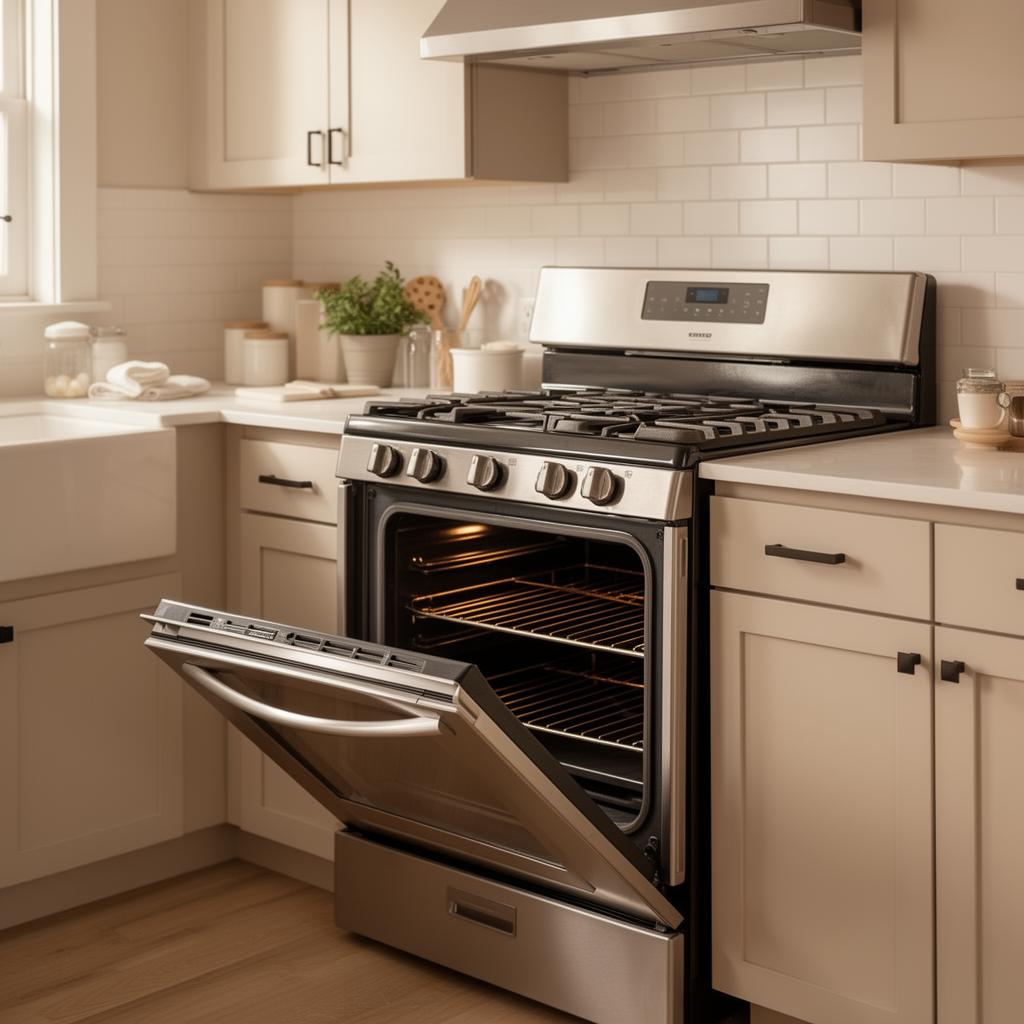
Ovens and ranges combine heat, electricity or gas, grease, food residue, glass, and moving parts. Small, frequent cleaning is safer than allowing heavy deposits to carbonize. Procedures differ for gas burners, electric coils, glass cooktops, convection fans, and self-cleaning ovens, so the exact manual controls.
Planning checklist
| Task | Planning frequency | Check |
|---|---|---|
| Wipe spills after cooling | After cooking | Grease, sugar, and food residue |
| Clean caps, grates, or drip areas | Weekly or as needed | Blocked ports and buildup |
| Inspect controls, door, and gasket | Monthly | Cracks, looseness, and poor closing |
| Clean oven interior | When residue builds | Smoke and carbonized spills |
| Check flame or element behavior | Monthly | Uneven flame, arcing, irregular glow |
| Clean hood filters | Per hood manual | Grease and restricted airflow |
| Verify cooking temperature | When results change | Calibration or service need |
These intervals are prompts. Cooking volume, spills, fuel, appliance design, hood type, and manufacturer instructions may require a different plan.
Start with safe cleaning
Turn every control off and let the appliance cool. Disconnect power only when the manual directs and access is safe. Keep liquid out of controls, igniters, burner ports, elements, fans, and receptacles. Use products compatible with the finish. Avoid abrasive powders, steel wool, harsh pads, and improvised blades.
Remove only components identified as owner-removable. Keep track of cap, grate, rack, and knob positions so each returns to the correct location. Do not soak electrical parts, switches, igniters, probes, or connectors. Dry cleaned components fully before reinstalling them.
Maintain gas burners and electric surfaces
For a gas range, remove grates and caps only when cool and identified as removable. Wash and dry them fully, then seat each cap correctly. Moisture or misalignment can cause clicking, weak ignition, or uneven flame. Use a soft brush or approved method on ports; never enlarge them with a metal object.
A flame that remains yellow, lifting, noisy, delayed, or uneven after correct cleaning needs service. If you smell gas, do not operate electrical switches or create a flame. Leave and contact the gas provider or emergency service under local guidance.
For electric coils, look for scorching, cracks, looseness, or wobbling at accessible areas. Do not bend an element to make it fit. Stop using an element that arcs or glows abnormally. On a glass cooktop, clean spills with the manufacturer-approved method; cracked glass requires prompt assessment.
Induction surfaces can look cool while cookware remains hot. Follow the residual-heat indicator and cleaning instructions. Do not operate a cracked surface or use abrasive products that can make damage harder to evaluate.
Clean the oven without blocking heat or airflow
Remove loose crumbs after cooling and wipe spills before they become heavy carbonized residue. Do not cover the oven floor with foil or add a liner unless the exact manual permits it. Foil can block airflow, reflect heat, damage finishes, and create a hazard. Keep vents, fans, and sensors clear.
Before using commercial cleaner, confirm compatibility with the liner, gasket, glass, and cleaning system. Ventilate as directed and keep children and pets away. Never mix cleaners. Clean the gasket only by the method provided; aggressive scrubbing may damage its fit or surface.
Avoid spraying cleaner directly toward slots, controls, fans, vents, or the space between door-glass panels. If liquid enters an inaccessible area, stop and follow service guidance rather than operating the appliance to dry it.
Use self-clean only as documented
Self-clean cycles reach very high temperatures. Read the manual first. Remove racks, pans, foil, and other items when instructed; some model-specific racks may be permitted, but that is not universal. Clear loose heavy soil if directed, ventilate, remain nearby, and do not use the cooktop simultaneously unless allowed.
If smoke becomes excessive or fire develops, turn the appliance off when safe and follow fire-safety guidance. Never force open a locked door. A failed lock, control error, or repeated trip after self-clean needs qualified diagnosis.
Households with respiratory sensitivities, birds, or pets should pay close attention to manufacturer ventilation and safety instructions. Self-clean is not required simply because a button exists; approved routine cleaning may be the better choice for a particular model and household.
Inspect the door, gasket, and controls
Check the gasket for cuts, hardening, flattening, or displacement. Inspect hinges and confirm the door closes evenly, but do not remove spring-loaded parts without the service procedure. Do not put weight on an open door. Stop using an oven with cracked inner glass until it is repaired.
Confirm knobs attach securely and point to the correct settings. A loose, cracked, or sticking control can make shutdown uncertain. Keep control panels dry and do not pry off touch surfaces. If a burner continues heating after it is switched off, disconnect power or gas only by the safe documented method and arrange service.
Check temperature and cooking performance
Slow preheating, one-sided burning, large temperature swings, or constant cycling may indicate calibration or repair needs. An oven thermometer can document performance across several cycles, but it cannot identify the failed part. Place and read it according to its instructions and avoid drawing conclusions from one moment in a normal heating cycle.
Record the set temperature, measured reading, rack position, cookware, preheat indicator, and cooking result. Use the model calibration procedure only when the manual provides it. Do not attempt work on gas valves, igniters, control boards, sensors, or high-voltage components without appropriate training.
Maintain ventilation and surrounding clearance
Clean or replace the range-hood filter as its manual specifies. A saturated filter restricts airflow and holds grease. Wash reusable metal filters only with a compatible method and replace disposable media rather than trying to restore it. Confirm the fan operates and an exterior termination is not visibly blocked.
Keep towels, paper, plastic, aerosols, oils, and flammable cleaners away from hot surfaces. Do not use the oven for room heating or storage. Make sure cookware handles, cords from small appliances, and loose clothing cannot cross an active burner.
Know when cleaning is not enough
Arrange service for gas odor, delayed ignition, persistent abnormal flame, sparking, irregular element glow, electrical burning odor, repeated breaker trips, cracked glass, unsafe controls, failed door closure, or heavy smoke not explained by a known spill. Stop using the affected area rather than repeating tests.
See the oven and stove repair cost guide when maintenance does not restore safe, consistent operation. Keep dates, error codes, temperature observations, photos, and prior service reports for the technician.
Related guides
Safety note: Follow the exact model manual and local gas, electrical, and fire rules. Gas odor, sparks, smoke, repeated breaker trips, or electrical burning require stop-use action and qualified help.
Frequently asked questions
Related guides
Dishwasher Maintenance Checklist for Cleaner, Longer-Lasting Appliances
Use this dishwasher maintenance checklist for filters, spray arms, seals, drainage, racks, cleaning cycles, warning signs, and model-specific care.
Dryer Vent Maintenance and Warning Signs Every Homeowner Should Know
Learn dryer vent maintenance, restricted-airflow warning signs, lint-screen care, exterior vent checks, duct safety, and when to stop using the dryer.
Refrigerator Maintenance Checklist: Monthly and Annual Tasks
Follow a practical refrigerator maintenance checklist for coils, seals, temperature, filters, airflow, leaks, cleaning, and early warning signs.
Disclaimer: Pricing reflects US national averages as of the publication date and varies by region, brand, and labor rates. This article is informational and does not replace professional inspection or repair advice. See our full disclaimer.