Oven & Stove Repair Cost Guide
Typical range across repairs in this guide
$100–$450
7 common repairs, parts and labor, US national averages. Your local price will differ.
Updated October 21, 2026 · How we estimate costs
Written by
Editorial Team
Research and editorial staff
Dates
Published
Last updated
What changed: Added a sourced cost table with ranges reconciled from independent published cost guides (average of two sources, or the median of three or more, rounded to the nearest $25), and updated the quick answer to match.
Checked by our editors.How we estimate repair costsEditorial policy
Sources
- Stove and oven repair cost (HomeAdvisor) — HomeAdvisor
- How much does oven repair cost? (Angi) — Angi
- Oven repair cost (Fixr) — Fixr
- Consumer Product Safety Commission recalls — U.S. Consumer Product Safety Commission
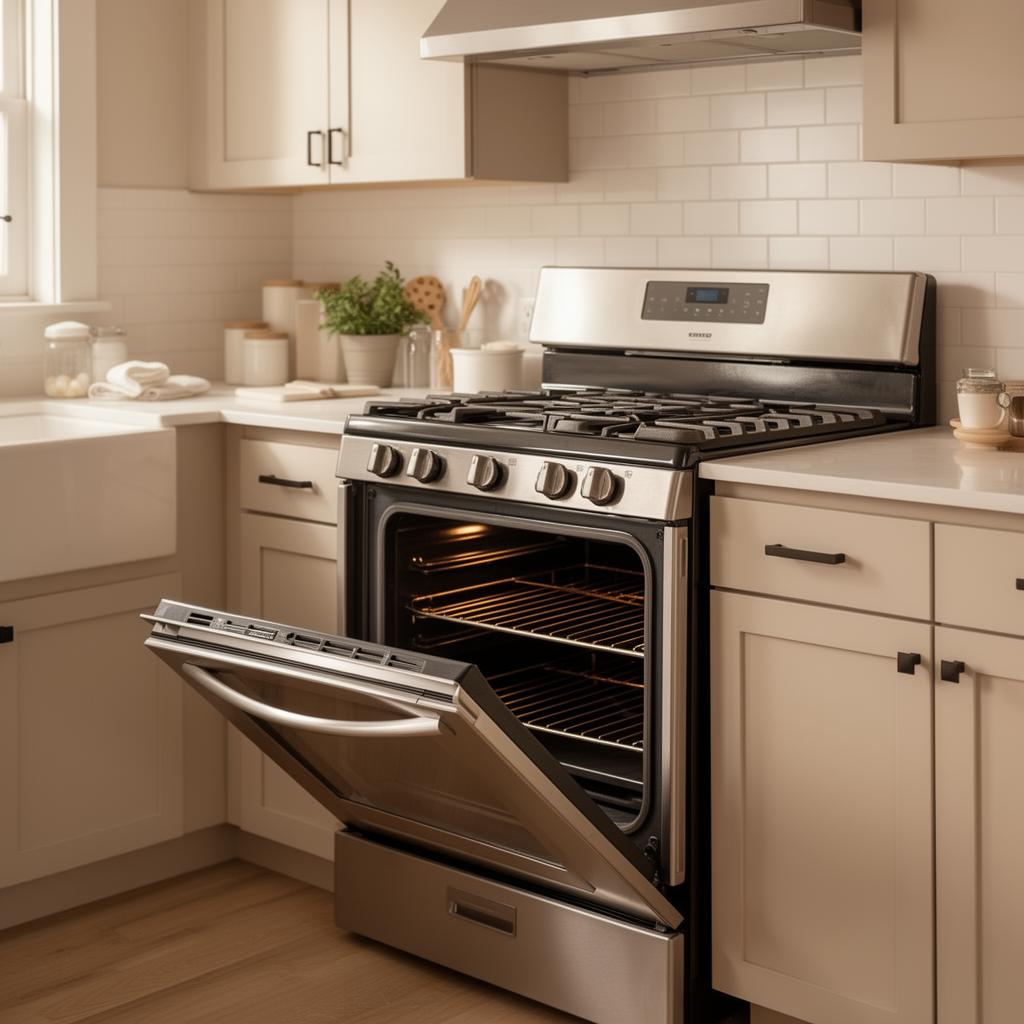
Estimated US repair costs, parts and labor
| Repair | Low | High |
|---|---|---|
| Bake or broil heating element | $150 | $400 |
| Igniter (gas ovens) | $150 | $300 |
| Thermostat | $100 | $275 |
| Control board | $150 | $450 |
| Door repair or replacement | $100 | $425 |
| Gas valve | $100 | $200 |
| Convection fan | $100 | $275 |
Estimates reconciled from the published guides listed under Sources. Actual quotes vary by brand, region and part availability.
Oven, stove, range, and cooktop repair costs cannot be estimated accurately from a symptom alone. A no-heat complaint can involve a heating element, ignition component, sensor, control, wiring, fuel supply, utility connection, or settings. The same symptom can have different causes across gas, electric, dual-fuel, and induction models.
Start with safety, identify the exact model, and obtain a written diagnosis and itemized local quote.
Safety first
If you smell gas, follow gas-utility and emergency guidance. Leave the area when directed, avoid flames, and do not operate switches or attempt a repair. Stop using equipment for smoke, arcing, repeated breaker trips, damaged wiring, uncontrolled heat, or a cracked cooking surface.
Ranges can involve gas, high voltage, hot surfaces, sharp metal, and heavy built-in equipment. Internal electrical measurements, gas-valve work, fuel conversion, and hardwiring require qualified service.
Record the appliance
Save the manufacturer, full model and serial number, fuel type, installation style, purchase date or approximate age, symptoms, error codes, prior repairs, and existing warranty. Photograph the rating label and installation.
Distinguish a freestanding range from a slide-in range, wall oven, cooktop, combination unit, or commercial-style product. Access and replacement scope can differ greatly.
What a repair estimate should include
Request:
- Diagnostic or service charge
- Failed component and cause
- Exact part number and price
- Labor
- Travel or minimum charge
- Removal and reinstallation
- Gas or electrical work
- Shipping and tax
- Permit or code work where applicable
- Repair warranty
- Complete authorized total
Clarify whether the diagnostic fee is credited toward repair.
Oven will not heat
An electric oven may have a supply, element, sensor, relay, wiring, control, or settings issue. A gas oven may have ignition, flame-sensing, valve, supply, wiring, or control problems.
A visible symptom does not establish the failed part. Do not perform live-voltage or gas tests without suitable qualifications and service information.
Temperature is inaccurate
Cooking results can be affected by preheating, cookware, rack position, door opening, calibration, sensor condition, airflow, elements, ignition, and controls.
Use the model's official calibration guidance. A household thermometer can help document a pattern, but it is not a complete diagnosis. Ask the technician to explain test conditions.
Surface burner problems
Gas burner concerns can involve moisture, food debris, cap alignment, ports, ignition, switches, wiring, controls, or supply. Electric radiant and coil elements can involve receptacles, elements, controls, wiring, or power. Induction models can involve cookware compatibility, sensors, fans, controls, or power modules.
Follow only safe owner-cleaning instructions. Never enlarge gas ports or bypass ignition and safety devices.
Oven will not start
Check the manual for control lock, delayed start, Sabbath mode, timer settings, and reset instructions. Persistent faults can involve power, latch, control, wiring, or thermal protection.
Do not repeatedly reset a tripping breaker. Protection devices can indicate a hazardous fault.
Door, hinge, and gasket concerns
A door that will not close can affect heat, controls, and safety. Causes include hinges, springs, alignment, latch, gasket, glass, or installation.
Oven doors and glass are heavy and can contain tensioned assemblies. Ask whether complete door removal, glass, trim, and calibration are included in the estimate.
Self-clean problems
High-temperature cleaning can expose weak components, but a failure after self-clean does not by itself prove one cause. Review official instructions and the diagnosis.
Do not force a locked door. Allow the appliance to cool and follow the manual.
Error codes
Record the complete code and identify the full model. Codes are platform-specific and can indicate a detected condition rather than a failed part.
Use manufacturer documentation. Do not order a sensor or control from a generic chart alone.
Gas, electric, and induction scope
Fuel type changes the technician qualifications, parts, tests, utility work, and safety checks. Dual-fuel products can require both gas and high-voltage service. Induction and connected appliances can use specialized modules and software.
Verify local service before approving a repair or replacement.
Parts cost
Part prices vary by model, supplier, revision, availability, and whether a component is new, authorized, aftermarket, rebuilt, or used. Confirm the exact part number and warranty.
Electronic parts may have strict return policies. Do not buy a costly board without diagnosis.
Labor and access
Built-in wall ovens, heavy ranges, downdraft cooktops, tight cabinetry, stone counters, anti-tip devices, and hardwired connections can add labor. Removal may require multiple people or specialty equipment.
Ask whether floor protection, cabinet work, disconnection, reconnection, leveling, anti-tip verification, and operational testing are included.
Utility and code work
A repair or replacement may reveal unsuitable wiring, receptacles, breakers, gas connectors, shutoffs, ventilation, clearances, or conversions. Appliance work and building-system work may require different qualified trades.
Request an itemized separation of appliance repair, utility correction, permits, and optional upgrades.
Diagnosis quality
Ask what failed, what caused it, what tests support the conclusion, whether another condition could damage the new part, and whether the appliance is safe until repaired.
A parts list without cause analysis is incomplete when overheating, wiring, supply, airflow, or installation may be involved.
Manufacturer coverage and recalls
Check parts and labor terms, registration, component-specific coverage, installer warranty, recall notices, and authorized-service requirements. Use the exact model and serial range.
Contact the manufacturer before outside repair when coverage may apply.
Home-warranty coverage
A service contract may cover a listed range, oven, or cooktop and eligible components, subject to fuel type, cause, effective date, fee, limits, exclusions, and authorization. Coverage is not automatic.
Confirm whether knobs, racks, doors, glass, rotisserie parts, ventilation, commercial-style equipment, and code work are treated separately.
Comparing quotes
Give each servicer identical model, fuel, symptoms, access, and installation information. Compare diagnosis, part, labor, utility work, tax, timing, and warranty rather than the total alone.
A lower quote may omit removal, gas reconnection, calibration, or safety testing.
Repair or replace
Compare the written diagnosis, complete repair total, installed replacement total, safety condition, parts availability, prior failures, remaining coverage, configuration, features, and household needs.
Do not use one age, price, or percentage threshold automatically. A modest repair can suit an older product with available parts, while extensive damage can make a newer appliance impractical to repair.
Installed replacement cost
Replacement can include delivery, haul-away, carpentry, countertop work, trim kits, gas or electrical changes, ventilation, floor protection, anti-tip installation, permits, code work, and tax.
Confirm opening dimensions, fuel, voltage, clearances, and ventilation. The retail appliance price is not the complete comparison.
Temporary cooking and timing
Ask about parts availability, diagnostic lead time, and safe temporary alternatives. Never continue using a product with a gas, electrical, glass, or uncontrolled-heating hazard.
Time pressure should not replace a written scope.
Estimate worksheet
Record diagnostic charge, diagnosis, part, labor, access, utilities, permits, shipping, tax, repair warranty, repair total, replacement total, timing, and unknowns.
Keep photographs and all written quotes.
Questions for the technician
- What failed and why?
- What evidence supports the diagnosis?
- Is gas, electrical supply, or installation involved?
- Is the appliance safe?
- Is the part available?
- Is all access included?
- What testing follows repair?
- What warranty applies?
- Could another component fail from the same cause?
- What is the complete total?
Final guidance
A dependable oven or stove repair estimate is model-specific, fuel-specific, diagnosis-based, local, and itemized. Address gas and electrical hazards first, then compare complete repair with installed replacement and existing protection.
Avoid fixed national prices, symptom-only diagnoses, and automatic age thresholds.
Related articles
Disclosure: This article is informational and not a substitute for manufacturer instructions or qualified service. The site may earn a commission from eligible links. Commercial relationships do not determine the guidance.
Frequently asked questions
Related guides
 Typical repair$50–$800
Refrigerator Repair Cost Guide
Refrigerator repair cost guide for 2026: average prices by part, what drives the bill, DIY vs pro, and when to replace instead. Real US cost ranges.
 Typical repair$100–$450
Washing Machine Repair Cost Guide
Estimate washing-machine repair cost using a written diagnosis, model-specific parts, local labor, water and electrical scope, access, warranty, and replacement quotes.
 Typical repair$50–$600
Dishwasher Repair Cost Guide
Estimate dishwasher repair cost using a written diagnosis, model-specific parts, local labor, access, installation, warranty, and replacement quotes.
Disclaimer: Pricing reflects US national averages as of the publication date and varies by region, brand, and labor rates. This article is informational and does not replace professional inspection or repair advice. See our full disclaimer.