Refrigerator Repair Cost Guide
Typical range across repairs in this guide
$50–$800
7 common repairs, parts and labor, US national averages. Your local price will differ.
Updated October 21, 2026 · How we estimate costs
Written by
Editorial Team
Research and editorial staff
Dates
Published
Last updated
What changed: Added sourced price ranges by repair, reconciled from HomeAdvisor, Fixr and Angi (median of three published ranges, rounded to $25), and updated the quick answer to match.
Checked by our editors.How we estimate repair costsEditorial policy
Sources
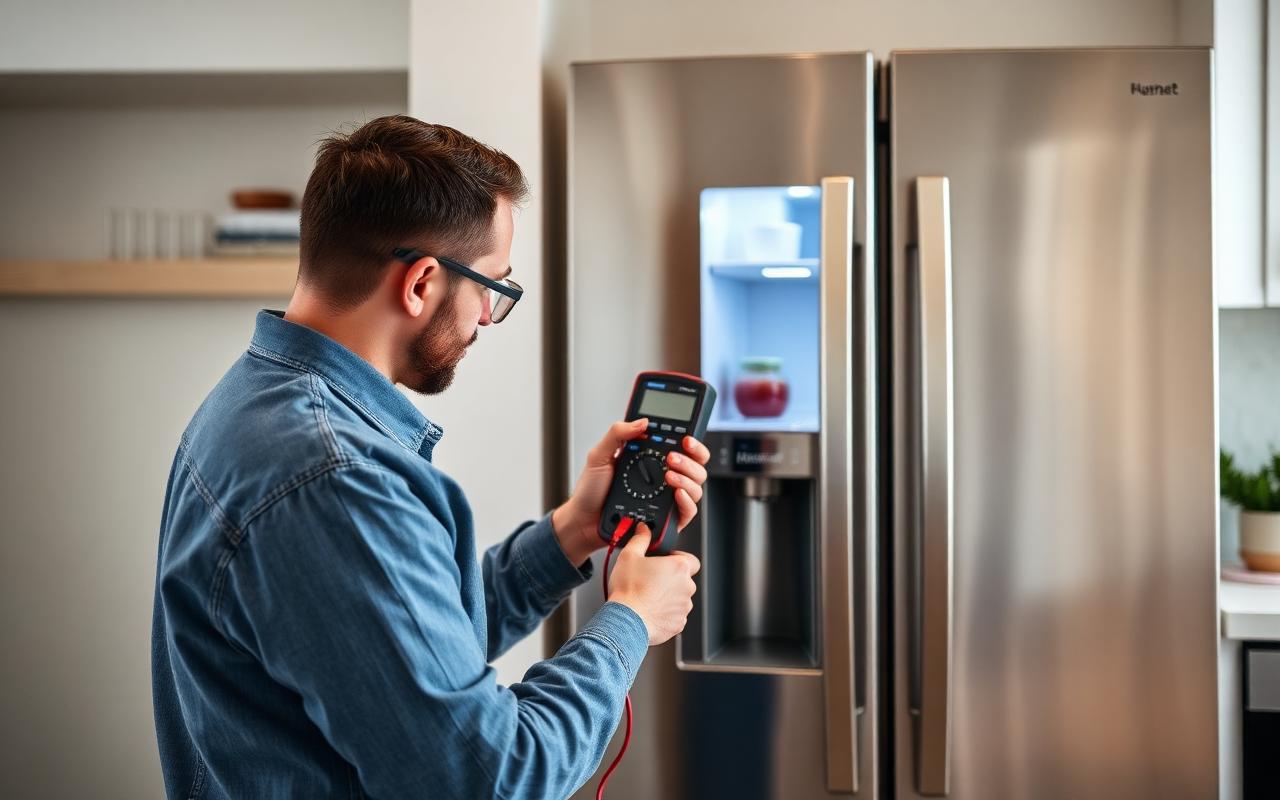
Estimated US repair costs, parts and labor
| Repair | Low | High |
|---|---|---|
| Compressor | $300 | $800 |
| Main control board | $200 | $800 |
| Defrost heater or defrost motor | $100 | $350 |
| Thermostat / temperature control | $100 | $250 |
| Ice maker | $100 | $325 |
| Evaporator or condenser fan motor | $100 | $225 |
| Door gasket / seal | $50 | $200 |
Estimates reconciled from the published guides listed under Sources. Actual quotes vary by brand, region and part availability.
A failing refrigerator is one of the most stressful appliance problems a homeowner can face: it runs 24/7, it's protecting hundreds of dollars of food, and the repair bills can swing wildly depending on what broke. The good news is that refrigerator problems fall into a predictable set of categories, and once you know the typical cost of each, you can judge whether a repair quote is fair and decide confidently between fixing and replacing.
This guide breaks down 2026 refrigerator repair costs part by part, explains what drives the price up, covers what you can safely check yourself, and shows you exactly when replacement beats repair.
What you're paying for
Every refrigerator repair bill is built from three pieces, and understanding them helps you spot a fair quote:
- Service / diagnostic fee: $75–$150 just for the technician to come out and identify the problem. Most companies credit this toward the repair if you proceed.
- Parts: A door gasket might be $40, while a compressor or control board can run $200–$400 on its own. Genuine OEM parts cost more than aftermarket equivalents.
- Labor: $50–$150 per hour. Sealed-system work (anything involving refrigerant) takes longer, requires EPA-certified handling, and costs the most.
A mid-range repair — say, an evaporator fan motor — typically lands around $250–$400 once you combine a modest part, an hour of labor, and a partly-credited service fee.
The most common refrigerator problems
Fridge isn't cooling but the light works
This usually points to a defrost-system failure, a faulty evaporator fan, or a thermostat issue — generally $200–$450 to fix. It's rarely the compressor if the unit still hums and has power. This is one of the most common and most fixable refrigerator complaints.
Fridge is running constantly / too warm
Often caused by dirty condenser coils, a failing condenser fan, or worn door gaskets letting cold air escape. Coil cleaning is free to do yourself; a fan or gasket repair runs $100–$400.
Water leaking on the floor
Usually a clogged defrost drain or a cracked water line/inlet valve. A defrost-drain clear is cheap (sometimes DIY); a water inlet valve replacement is $150–$350.
Ice maker not working
Ice makers are notorious for failing. Depending on whether it's the inlet valve, the module, or the whole assembly, expect $150–$500.
Loud noises or clicking
Clicking with no cooling can signal a failing compressor relay or the compressor itself — the most expensive scenario, $300–$1,000+.
Safety note: Never attempt sealed-system or refrigerant repairs yourself. In the US, refrigerant handling is federally regulated (EPA Section 608) and must be done by a certified technician. Unplug the fridge before any DIY checks, and never bypass electrical safety components.
What you can check yourself (before calling a pro)
A few quick, safe checks can save you a service call entirely:
- Clean the condenser coils. Dusty coils are a leading cause of poor cooling and overworking. Unplug, vacuum the coils (usually behind or beneath the fridge), and restore airflow.
- Check the door seals. Close the door on a dollar bill — if it slides out easily, the gasket may need replacing.
- Verify the temperature settings. Someone may have bumped the dial; aim for ~37°F in the fridge and 0°F in the freezer.
- Make sure airflow isn't blocked. Overpacking can block vents and cause warm spots.
- Clear the defrost drain. If water pools inside, a clogged drain tube may be the culprit.
If cooling doesn't improve after these, it's time for a professional diagnosis.
What drives refrigerator repair costs up
- Brand and type: High-end and built-in/counter-depth models (and French-door units with through-the-door ice/water) have pricier parts and more complex repairs.
- Sealed-system involvement: Any refrigerant work is the most expensive category because of certification, specialized tools, and labor time.
- Part availability: Discontinued parts for older fridges drive up both cost and wait time.
- Smart features: Wi-Fi modules, touchscreens, and electronic controls add expensive failure points.
- Location: Urban and high-cost-of-living areas have higher labor rates.
Repair vs replace: the refrigerator math
Refrigerators typically last 10–13 years. Use the 50% rule: if the repair costs more than half the price of a comparable new fridge, lean toward replacing — especially past the 10-year mark.
Rule of thumb: A $250 fan-motor repair on a 6-year-old fridge is an easy yes. A $900 compressor or sealed-system repair on an 11-year-old fridge rarely makes sense — that money is better put toward a new, more efficient unit.
Don't forget the energy factor: refrigerators run continuously, so a modern ENERGY STAR model can noticeably cut your electricity bill compared to a struggling 12-year-old unit. Over several years those savings offset part of the replacement cost.
Does a home warranty cover refrigerator repair?
Many home warranty plans cover the primary refrigerator, meaning you'd typically pay only the service call fee ($75–$150) instead of the full repair, up to your plan's cap. A second/garage fridge is usually an add-on. Coverage applies to wear-and-tear breakdowns, not cosmetic damage or pre-existing problems — and you generally can't choose your own technician. For owners of older refrigerators, a single covered compressor repair can offset much of a year's premium.
How to save on refrigerator repair
- Have the model and serial number ready when you call so the tech brings the right parts.
- Ask whether the diagnostic fee is credited toward the repair.
- Get an itemized quote separating parts and labor.
- Get a second opinion on any compressor or sealed-system quote over ~$500.
- Compare to replacement cost using the 50% rule before authorizing a major repair.
- Maintain it: clean coils twice a year, check seals, and avoid overpacking to prevent failures.
Safe DIY checks before you call a technician
A few checks can save you a service-call fee entirely:
- Pull the fridge out and vacuum the condenser coils. Dust-clogged coils cause a surprising number of "cooling problems."
- Check the door gasket. Close the door on a dollar bill — if it slides out easily, the seal is bad and the compressor is working overtime.
- Listen. A silent fridge usually means a failed start relay or compressor. Loud chirping points to the evaporator fan.
- Verify the temperature setting. Dials get knocked all the time.
Safety note: Never attempt repairs involving the sealed refrigerant system, the compressor, or internal wiring. Refrigerant work is federally regulated in the US (EPA Section 608), and internal components can hold a charge even when the unit is unplugged.
When to call a pro
Call a licensed appliance technician if you see any of the following:
- Cooling has fully stopped for more than 4 hours
- A clicking sound every 2–5 minutes (likely a failing start relay)
- Water pooling under or behind the unit that isn't a clogged drain line
- The compressor is hot to the touch but the fridge isn't cooling
Common causes of refrigerator failure
- Evaporator fan motor — the most common cause of a fridge that runs but doesn't cool.
- Defrost system failure — ice buildup on the freezer's back wall points to a bad defrost heater, timer, or thermostat.
- Clogged condenser coils — overdue maintenance that causes cooling loss and short-cycling.
- Main control board — usually diagnosed after cheaper options are ruled out.
- Compressor or sealed system — rare under 8 years old, expensive when it happens.
The bottom line
Most refrigerator repairs land between $200 and $600, with compressor and sealed-system work pushing past $1,000. Match your quote to the part-by-part ranges above, try the safe DIY checks first, and apply the 50% rule against your fridge's age before committing. For minor fixes on a newer unit, repair almost always wins; for major failures on a decade-old fridge, a new energy-efficient model is usually the smarter long-term spend.
Frequently asked questions
Related guides
 Typical repair$50–$600
Dishwasher Repair Cost Guide
Estimate dishwasher repair cost using a written diagnosis, model-specific parts, local labor, access, installation, warranty, and replacement quotes.
 Typical refrigerator repair$150–$1,000
Refrigerator Ice Maker Repair Cost: Estimate Guide
Estimate refrigerator ice maker repair cost using diagnosis, model, water supply, parts, labor, access, warranty coverage, and replacement alternatives.
 Typical repair$100–$450
Washing Machine Repair Cost Guide
Estimate washing-machine repair cost using a written diagnosis, model-specific parts, local labor, water and electrical scope, access, warranty, and replacement quotes.
Disclaimer: Pricing reflects US national averages as of the publication date and varies by region, brand, and labor rates. This article is informational and does not replace professional inspection or repair advice. See our full disclaimer.