Refrigerator Maintenance Checklist: Monthly and Annual Tasks
Written by
Editorial Team
Research and editorial staff
Dates
Published
Last updated
What changed: Published a model-aware refrigerator maintenance schedule with safety limits and source-backed temperature guidance.
Checked by our editors.How we estimate repair costsEditorial policy
Sources
- Refrigerator Maintenance — ENERGY STAR
- Refrigerator Thermometers: Cold Facts about Food Safety — U.S. Food and Drug Administration
- Refrigeration and Food Safety — USDA Food Safety and Inspection Service
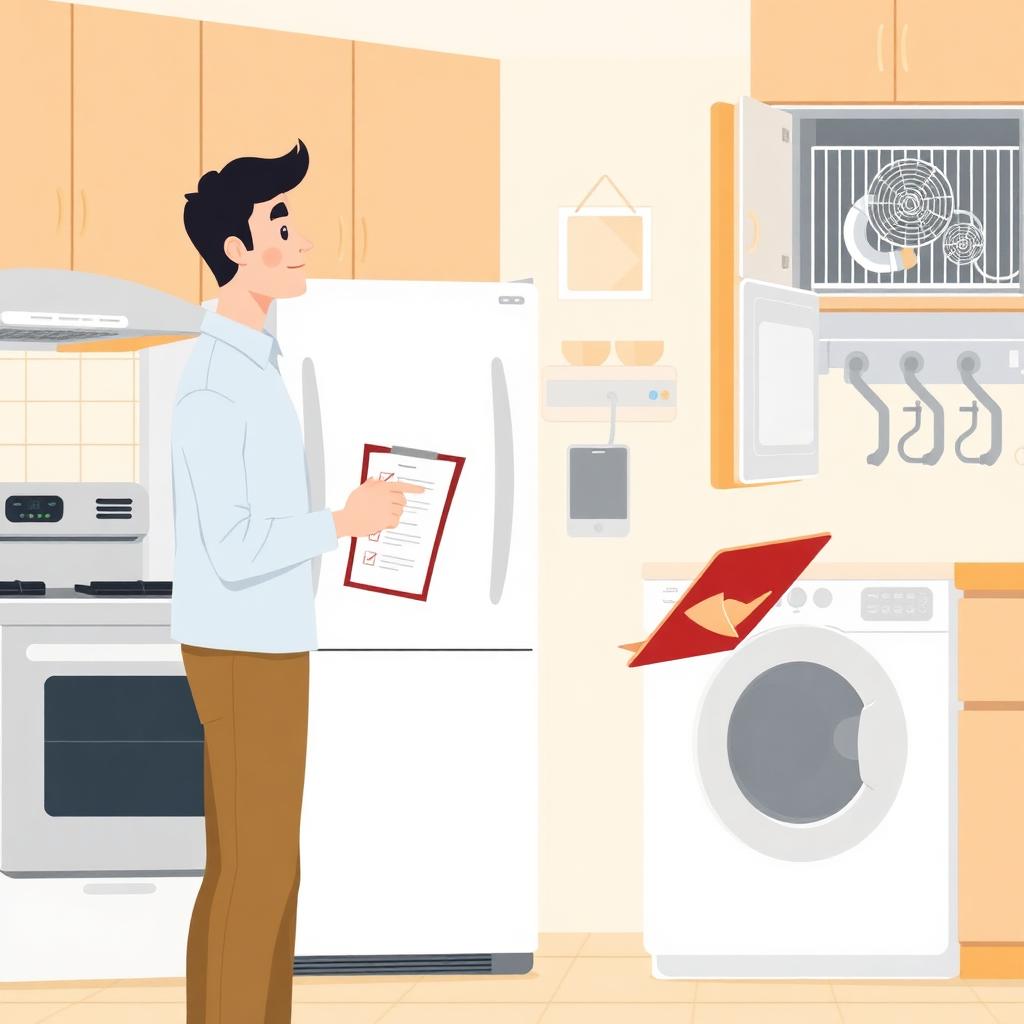
A refrigerator operates continuously, so small airflow, sealing, temperature, and installation problems can persist long before a complete breakdown. A practical maintenance routine is not about taking the appliance apart. It is about keeping owner-serviceable areas clean, confirming that food is held at a safe temperature, noticing changes early, and following the instructions written for the exact model.
The model manual should be the primary reference. Coil location, ventilation clearances, filter type, cleaning method, controls, and approved owner tasks vary widely. A checklist from the internet cannot override manufacturer instructions or make internal electrical, refrigerant, or sealed-system work safe for an unqualified person.
Quick refrigerator maintenance schedule
Use this schedule as a planning framework and adjust it to the manual, household conditions, and appliance design.
Every week
- Wipe fresh spills after disconnecting power when the manual requires it.
- Confirm that food packages are not blocking visible interior air vents.
- Look for moisture around the front edge, floor, and accessible water-dispenser area.
- Notice whether doors close without interference from shelves, bins, or containers.
- Check for a new alarm, error message, vibration, scraping sound, or burning odor.
Every month
- Check fresh-food and freezer temperatures with suitable appliance thermometers.
- Clean door-gasket contact surfaces gently with a method approved by the manufacturer.
- Review food placement so air can circulate without leaving the refrigerator nearly empty.
- Inspect the power cord and plug only where they are safely visible; do not move a heavy appliance alone.
- Check the water-filter indicator and maintenance log.
- Vacuum dust from accessible exterior vents if the manual permits it.
Every three to six months
- Inspect accessible water-supply tubing and connections for moisture, abrasion, kinks, or discoloration.
- Clean removable bins and shelves according to their material and manufacturer instructions.
- Review the required installation clearance around the cabinet.
- Check that the refrigerator remains stable and that doors close consistently.
- Replace the water filter if the manufacturer schedule, indicator, water quality, or reduced flow calls for replacement.
Annually or at the manual’s interval
- Clean accessible condenser coils if the model’s instructions call for owner cleaning.
- Inspect the area behind or beneath the appliance only when it can be accessed safely.
- Review repair history, temperature records, filter dates, and any recurring symptoms.
- Check whether unusual frost, water, noise, or run time has become a pattern.
Verify temperature instead of guessing
A control marked with a number is usually a setting, not a direct measurement of food temperature. Door openings, room temperature, loading, airflow, a recent grocery trip, and the location of the sensor can affect readings.
The U.S. Food and Drug Administration recommends keeping a refrigerator at or below 40°F and a freezer at 0°F. Place appliance thermometers where the manufacturer or thermometer instructions recommend, allow readings to stabilize, and check them over time. Avoid changing controls repeatedly in response to one brief reading.
If the fresh-food compartment remains above the recommended range, protect perishable food and investigate promptly. Check whether a door was left open, warm food was recently added, vents are blocked, or the control was changed. Persistent unsafe temperature, especially with unusual noise or repeated cycling, warrants qualified diagnosis.
Temperature tracking is also useful before a service visit. Record the date, compartment, measured temperature, control setting, room conditions, and whether the compressor or fans appeared to be running. This gives a technician better evidence than a general statement that the refrigerator “does not feel cold.”
Keep interior airflow paths open
Cold air must move through designed passages. Packages pressed against vents can contribute to uneven temperatures, frozen produce, or warm sections even when the refrigeration system is operating.
Use the shelf arrangement shown in the manual. Avoid packing food tightly against the rear or side walls where vents are present. Do not remove covers, ducts, panels, or insulation. If an interior vent is covered with solid ice, photograph the condition and follow the manual’s guidance rather than chipping ice with a sharp object.
Overfilling is not the only concern. A nearly empty compartment can change temperature behavior when the door is opened. Organize food so air can circulate and doors can close without bins or containers striking the frame.
Clean door seals without damaging them
Door gaskets help separate conditioned interior air from the room. Food residue or sticky spills can prevent consistent contact. Clean gasket surfaces gently using the method specified by the manufacturer, then dry them. Avoid solvents, abrasive tools, excessive heat, and products that the manual does not approve.
Inspect for tears, hardened sections, loose corners, or areas that do not meet the cabinet evenly. A simple visual check is safer than pulling aggressively on the gasket. If the door does not align, the hinge is loose, or the cabinet appears twisted, avoid forcing adjustments without the service procedure.
Door-seal symptoms can overlap with other problems. Condensation near the opening may result from humidity, frequent use, food blocking the door, or installation rather than a failed gasket alone. Diagnose the cause before ordering a part.
Clean condenser areas only when appropriate
Some refrigerators have accessible condenser coils under or behind the cabinet. Others use configurations that are not intended for routine owner access. The manual determines whether cleaning is required and how to reach the area.
Before any approved cleaning, follow the shutdown instructions. Protect the floor, get help if the refrigerator must move, and avoid pulling on the water line or power cord. Use only recommended brushes or vacuum attachments, and do not bend tubing, remove electrical covers, or disturb wiring.
Dust can reduce airflow around an accessible condenser area, but coil cleaning is not a universal cure for poor cooling. A refrigerator may also have a fan problem, frost-control issue, damaged seal, sensor fault, compressor concern, or installation problem. If safe cleaning does not restore normal operation, arrange diagnosis instead of repeatedly disassembling the appliance.
Maintain the water filter and supply line
Use the filter part number specified for the model. A cartridge that looks similar may fit poorly, bypass filtration, leak, or prevent normal flow. Record the installation date and follow the manufacturer’s replacement interval and flushing instructions.
After replacement, inspect the filter housing and dispenser area for leakage. If the filter will not seat with normal pressure, stop rather than forcing it. A damaged housing can be more expensive than correcting an incompatible cartridge.
Where the water line is accessible without moving the refrigerator unsafely, look for moisture, flattened tubing, abrasion, corrosion, or strain at a connection. Do not tighten fittings blindly or disturb a connection while the supply remains pressurized. Shut off the appropriate water source and obtain qualified help when the cause is uncertain.
A slow ice maker or dispenser does not prove that the filter is responsible. Supply pressure, frozen tubing, valves, controls, temperature, and model-specific conditions can produce similar symptoms. See the refrigerator ice maker repair cost guide when maintenance checks do not explain the problem.
Use safe cleaning practices
Remove expired food and clean spills before odors become difficult to trace. Follow the manual for shelves, bins, glass, stainless finishes, dispensers, and touch controls. Sudden temperature changes can damage some glass components, and abrasive products can damage coatings.
Do not mix cleaning chemicals. Keep liquid away from electrical controls, lighting assemblies, connectors, and openings. If food or liquid enters an inaccessible electrical area, disconnect power when safe and seek service guidance.
Clean the drain pan only if the manufacturer identifies it as owner accessible. Many modern units do not provide routine access. Water underneath the refrigerator may come from the supply line, filter, drain system, condensation, or another nearby source; do not assume it is normal pan overflow.
Check installation and ventilation
Refrigerator performance depends partly on the surrounding space. Built-in cabinetry, nearby heat sources, blocked exterior grilles, direct sunlight, or inadequate clearance can affect operation. Compare the installation with the manual’s clearance and ambient-temperature requirements.
Make sure the appliance is stable and doors can close naturally. Leveling procedures differ by model and can involve substantial weight, so use the documented method and assistance. Never improvise unstable supports.
If the refrigerator was recently transported or installed, follow instructions about standing time, connection, and initial cooling. Do not use food temperature as the only measure immediately after startup; the appliance may require time to stabilize.
Record early warning signs
A change matters more when it can be documented. Note when the symptom occurs, how long it lasts, and what else changes at the same time.
Useful observations include:
- Measured temperature drifting over several checks
- Food freezing in the fresh-food compartment
- Persistent frost or ice in one area
- Water beneath or inside the cabinet
- A fan-like scraping or repeated clicking sound
- Doors that no longer close consistently
- A dispenser or ice maker slowing after a filter change
- Exterior surfaces becoming unusually hot compared with prior operation
- Repeated alarms or error codes
- A large change in run time or energy use
Normal sounds vary by design, and a modern variable-speed refrigerator may run differently from an older unit. Compare changes with the manual and the appliance’s previous behavior rather than diagnosing from one sound clip.
Know when to stop
Disconnect power if the manufacturer’s instructions call for it and it is safe to reach the plug. Stop owner maintenance and arrange qualified help for burning odors, smoke, sparking, damaged wiring, repeated breaker trips, refrigerant-system concerns, internal electrical testing, a persistent leak, or unsafe temperatures that do not recover.
If a gas odor is present near another appliance, leave the area and follow local utility or emergency guidance. Do not continue troubleshooting because the odor happens to be near the refrigerator.
Do not puncture frost, tubing, panels, or sealed components. Refrigerant circuits and high-voltage sections require training and appropriate equipment. Maintenance should reduce risk, not turn a service problem into an injury or larger repair.
Keep a refrigerator maintenance record
A short record improves future decisions. Save:
- Brand, model, and serial number
- Purchase and installation dates
- Manual and warranty documents
- Filter type and replacement dates
- Coil or vent cleaning dates
- Temperature observations
- Photos of leaks, frost, or error messages
- Repair diagnoses, parts, invoices, and warranties
The record can show whether a symptom is new, recurring, or connected to a recent change. It also helps when comparing the cost of another repair with replacement. Use the appliance lifespan guide and refrigerator repair cost guide for that broader decision.
Final checklist
A sound refrigerator maintenance plan is modest: measure temperature, keep designed airflow paths open, clean seals and accessible vents, follow the model-specific filter schedule, inspect accessible water connections, and clean condenser areas only when the manual instructs you to do so. Document changes and escalate safety-critical or sealed-system concerns rather than experimenting.
Maintenance cannot guarantee a particular lifespan or prevent every failure. It can, however, make operating conditions easier to verify, reveal developing problems sooner, and give a technician better information when professional service becomes necessary.
Frequently asked questions
Related guides
 Typical dishwasher repair$100–$300
Dishwasher Maintenance Checklist for Cleaner, Longer-Lasting Appliances
Use this dishwasher maintenance checklist for filters, spray arms, seals, drainage, racks, cleaning cycles, warning signs, and model-specific care.
 Typical dryer repair$100–$300
Dryer Vent Maintenance and Warning Signs Every Homeowner Should Know
Learn dryer vent maintenance, restricted-airflow warning signs, lint-screen care, exterior vent checks, duct safety, and when to stop using the dryer.
 Typical oven repair$130–$400
Oven and Range Maintenance Checklist: Cleaning and Safety Tips
Follow an oven and range maintenance checklist for burners, elements, spills, door seals, self-clean cycles, temperature, ventilation, and safety warnings.
Disclaimer: Pricing reflects US national averages as of the publication date and varies by region, brand, and labor rates. This article is informational and does not replace professional inspection or repair advice. See our full disclaimer.