Refrigerator Ice Maker Repair Cost: Estimate Guide
Written by
Editorial Team
Research and editorial staff
Dates
Published
Last updated
What changed: Published a diagnosis-first ice-maker cost guide covering water supply, temperature, components, access, warranties, and repair decisions.
Checked by our editors.How we estimate repair costsEditorial policy
Sources
- Refrigerator and freezer energy and use guidance — U.S. Department of Energy
- Refrigerator support — GE Appliances
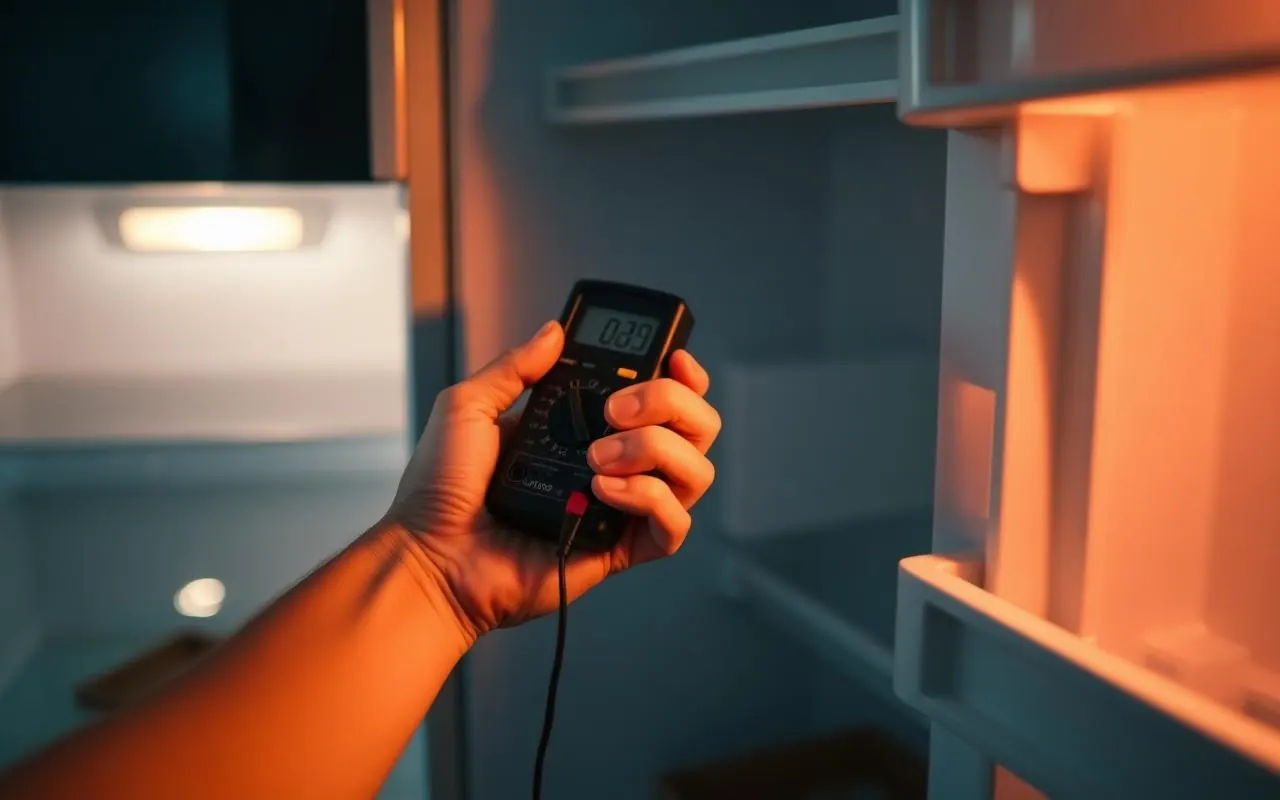
A refrigerator that stops making ice does not automatically need a new ice-maker assembly. The symptom can begin with freezer temperature, household water supply, a shutoff valve, filter condition, fill tubing, door sensing, wiring, electronic control, installation, or the ice-making mechanism itself. Each diagnosis has a different repair scope.
That is why a universal ice maker repair price is unreliable. A useful estimate begins with the complete refrigerator model and a confirmed cause, then includes every charge required to restore and test the system.
Start with the exact refrigerator
Record the manufacturer, complete model and serial number, refrigerator configuration, purchase date, installation type, and ice-maker location. A French-door refrigerator with ice production in the fresh-food door can use a different system from a top-freezer model or a unit with an ice maker inside the freezer.
Use the manufacturer support page and manual for that exact model. Similar model names can have different diagnostics, parts, and owner instructions. Do not order an assembly based only on a photograph or a partial model number.
Describe the symptom precisely
“Not working” can mean no ice, slow production, malformed cubes, failed harvest, dispenser trouble, leakage, noise, or an error code. An ice-production problem and an ice-dispenser problem are not the same repair. Record what happens, when it began, whether water dispensing still works, and whether recent filter, plumbing, moving, or power work occurred.
Food safety and temperature come first
An ice complaint can be an early sign of a wider cooling issue. Check refrigerator and freezer temperature according to the appliance manual. If food-storage temperatures are unsafe or cooling is unstable, protect food and arrange service rather than focusing only on ice.
Do not repeatedly open doors while evaluating poor cooling. Save temperature readings, alerts, and photographs. A qualified diagnosis should distinguish an isolated ice system issue from a refrigerator performance problem.
Approved owner checks
Follow only checks listed in the model's use-and-care guide. Common owner-level topics may include confirming that the ice maker is enabled, the bin is seated correctly, doors close fully, the filter is installed as directed, and the accessible water shutoff is open.
Look for an obvious kink in an accessible supply line without pulling the refrigerator unsafely. Confirm that household water service is available. If the problem began immediately after filter replacement or installation, review the manufacturer's flushing and setup procedure.
Do not remove electrical panels, defeat door switches, force a mechanism, apply uncontrolled heat, or probe energized components. Refrigerators can contain line voltage, moving parts, sharp edges, water near wiring, and refrigerant systems.
Possible causes a technician may evaluate
A technician may consider freezer or ice-compartment temperature, door sealing, airflow, household supply, shutoff valve, tubing, filter configuration, water inlet valve, fill tube, ice-level sensing, harvest components, wiring, controls, leveling, and cabinet conditions.
This list is not a diagnosis. The technician should test the relevant system and explain the evidence before recommending parts.
Why estimates vary
The same symptom can lead to a small adjustment, a water-system repair, a component replacement, or work on a larger cooling problem. Price also changes with model complexity, part availability, labor market, travel, access, and whether a second visit is required.
Built-in refrigerators, panel-ready units, tight alcoves, delicate flooring, and internal door-mounted systems may require additional handling. Ask who moves and reinstalls the appliance and whether water-line reconnection and leak testing are included.
What the written estimate should include
Request the complete diagnosis, test evidence, failed condition, exact part number, part source, diagnostic charge, labor, expected visits, shipping, water-system work, removal, reinstallation, tax, disposal, post-repair testing, and warranty.
If the estimate uses a flat total, ask whether all required steps are included. Compare complete totals, not only part prices.
Repairing the assembly versus another component
A complete ice-maker assembly should not be replaced merely because ice stopped. If diagnosis identifies the assembly, ask whether the quoted part includes sensors, mold, motor, heater, or control elements and whether any related cause could damage the replacement.
If the cause is water supply, valve operation, frozen fill path, temperature, door sealing, control, or wiring, replacing the ice maker may not solve the problem. The estimate should address the verified cause and any contributing condition.
Ice maker and dispenser differences
Many refrigerators have separate systems for making ice and dispensing it. If the bin contains normal ice but the dispenser fails, diagnosis may focus on the chute, door, auger, motor, switch, wiring, or user interface. If the bin remains empty, the technician may investigate water delivery, freezing, sensing, and harvest.
Describe the exact failure so the company sends someone prepared for the correct system.
Water leaks require prompt attention
Stop using the affected feature when water is leaking. Protect flooring and cabinets without entering wet electrical areas. Close an accessible shutoff only when safe, and document the location before cleanup.
A refrigerator leak can come from the supply connection, tubing, valve, filter housing, drain, ice system, or nearby plumbing. Property damage and appliance repair may be handled differently by warranties, insurance, installers, or service providers.
Manufacturer warranty and recalls
Check the original written warranty, retailer plan, credit-card benefits, prior repair warranty, and any manufacturer notice for the complete model. Coverage can differ between the refrigerator, sealed system, water components, and accessories.
Contact the manufacturer before unauthorized internal work when coverage may apply. Keep proof of purchase, model information, photographs, diagnosis, and invoices. Do not assume an ice complaint qualifies for a particular remedy.
Home-warranty coverage
A service contract may cover a listed refrigerator but exclude or limit ice makers, dispensers, filters, external plumbing, secondary units, cosmetic parts, or certain causes. Other contracts may include the relevant component or offer optional coverage.
Read the current agreement for the property and plan. Confirm authorization, service fee, limits, exclusions, maintenance requirements, repair-or-replacement authority, and cash-settlement rules before arranging non-emergency work.
Repair versus replacement
Compare the complete diagnosed repair with the installed cost of a suitable refrigerator. Include delivery, haul-away, water connection, shutoff work, cabinet fit, panels, trim, electrical requirements, floor protection, and food-storage disruption.
Also consider refrigerator condition, cooling performance, prior repairs, part support, repair warranty, energy use, and desired features. An ice-only fault on an otherwise sound unit can favor repair, while an ice complaint connected to major cooling or repeated water problems requires a broader decision.
Do not rely on one age or percentage rule. Installation and model type can dominate the economics.
Questions to ask the technician
- Is this an ice-production, dispensing, water-supply, or cooling fault?
- What tests support the diagnosis?
- What is the exact part number?
- Is the root cause corrected?
- Does the refrigerator need to be moved?
- Are water reconnection and leak testing included?
- How many visits are expected?
- Is the diagnostic fee credited?
- What warranty applies?
- What is the complete total?
After the repair
Keep the diagnosis, invoice, replaced-part information, and warranty. Follow the manufacturer's instructions for discarding initial ice when applicable. Monitor accessible connections for leakage and verify stable refrigerator and freezer temperatures.
Ice production may require normal operating time after service, filter work, or temperature stabilization. Use the model instructions rather than an unsupported universal waiting period.
Related guides
- Refrigerator Repair Cost Guide
- Repair or Replace a Refrigerator?
- Does a Home Warranty Cover a Refrigerator?
- Average Appliance Repair Cost by Type
Disclosure: This guide provides general estimating and safety information. It does not diagnose a refrigerator or provide a local quote. Manufacturer instructions and qualified service take priority.
Frequently asked questions
Related guides
Appliance Repair Diagnostic Fee: What It Covers
Learn what an appliance repair diagnostic fee covers, when it may be credited, which questions to ask, and how to compare written estimates fairly.
Refrigerator Repair Cost Guide
Refrigerator repair cost guide for 2026: average prices by part, what drives the bill, DIY vs pro, and when to replace instead. Real US cost ranges.
Why Appliance Repairs Cost So Much
Understand appliance repair estimates, including diagnosis, travel, labor, parts, specialized tools, access, return visits, overhead, and repair warranties.
Disclaimer: Pricing reflects US national averages as of the publication date and varies by region, brand, and labor rates. This article is informational and does not replace professional inspection or repair advice. See our full disclaimer.