Appliance Repair Diagnostic Fee: What It Covers
Written by
Editorial Team
Research and editorial staff
Dates
Published
Last updated
What changed: Published a consumer-focused guide to diagnostic fees, estimate scope, authorization, and fair repair comparisons.
Checked by our editors.How we estimate repair costsEditorial policy
Sources
- Home Appliance Repairers occupational data — U.S. Bureau of Labor Statistics
- Getting repairs and improvements — Federal Trade Commission
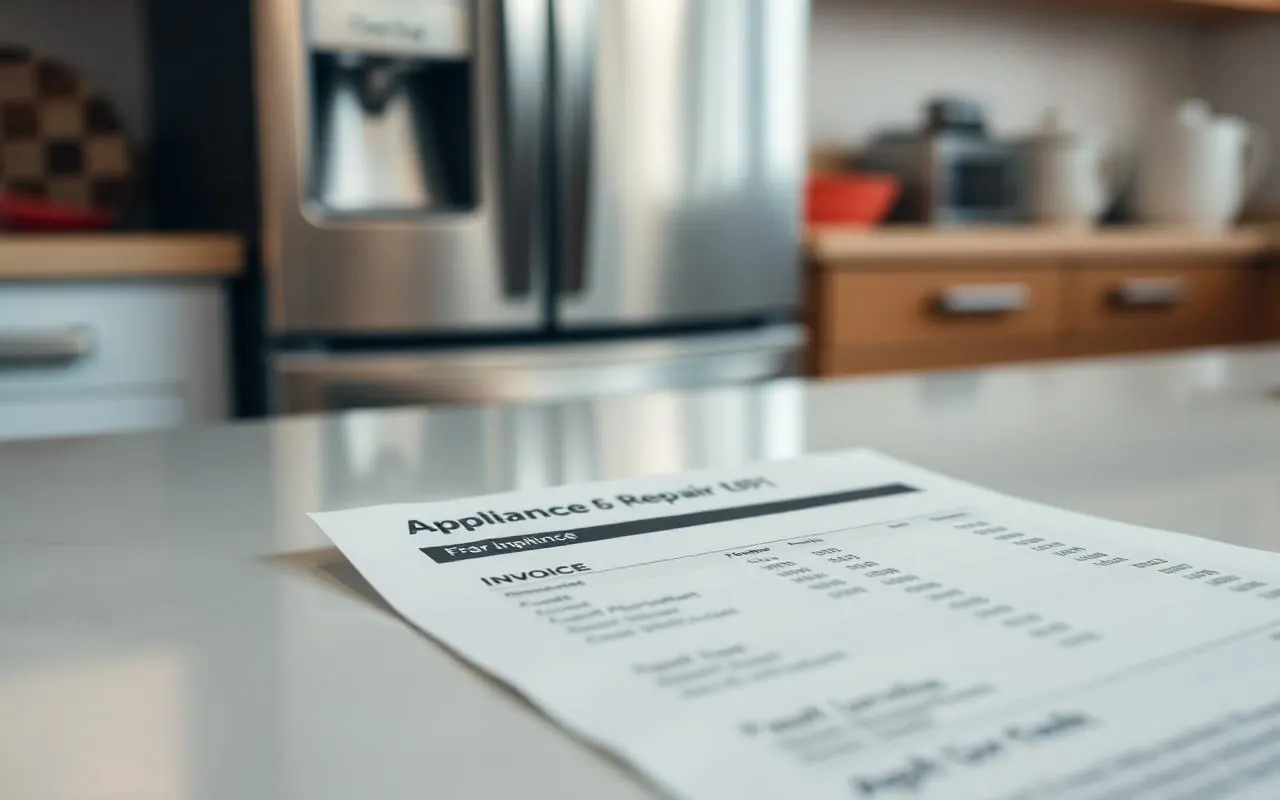
An appliance repair diagnostic fee can be confusing because companies use terms such as service call, trip charge, inspection fee, troubleshooting fee, and minimum labor charge. These labels do not always describe the same service. One provider may include travel and basic testing, another may separate travel from diagnosis, and another may apply the fee toward an approved repair.
The useful question is not whether a fee exists. It is what the fee buys, when it becomes payable, and what happens after the technician identifies the problem. Getting those details before booking makes estimates easier to compare and reduces disputes.
What the diagnostic fee usually supports
A professional service visit involves more than the minutes spent touching the appliance. The company may allocate time for scheduling, travel, vehicle and tool costs, technician training, insurance, documentation, and communication before and after the appointment. The diagnostic portion may include reviewing symptoms, confirming the model, inspecting accessible systems, taking measurements, running approved tests, and preparing a repair recommendation.
The U.S. Bureau of Labor Statistics describes appliance repair work as testing equipment, diagnosing defects, servicing components, and explaining repairs. A fee can compensate that skilled evaluation even when the customer decides not to continue.
However, a fee does not automatically guarantee a complete diagnosis. The scope should be clear. Some faults cannot be confirmed without disassembly, an operating cycle, a second visit, a manufacturer procedure, or access that was not available at the first appointment.
Service call, trip charge, and diagnosis
Ask the company to define each term it uses. A service call or trip charge may primarily cover dispatch and travel. A diagnostic fee may cover testing and a written or verbal finding. A minimum labor charge may apply when a technician performs a small repair during the visit. These charges can be combined or separate.
Before accepting the appointment, ask:
- What amount is due when the technician arrives?
- Does it include diagnosis or only travel?
- Is the fee charged per appliance, problem, trade, or visit?
- Is any portion applied to an approved repair?
- Does the credit expire?
- Is another fee due if the technician returns with a part?
- What happens if the appliance is inaccessible?
- What is owed if no defect is found?
- Are evening, weekend, rural, or emergency appointments different?
Request the answer in writing by email, text, or the booking confirmation.
What a useful diagnosis should contain
A diagnosis should connect the observed symptom to evidence. An error code, noise, leak, or failure to start is a clue, not necessarily proof that one named part has failed.
Ask the technician to record:
- The complete model and serial number
- The reported symptom and when it occurs
- Tests or observations performed
- The likely failed component or condition
- Other causes that were considered
- Installation, utility, or maintenance factors
- The proposed correction
- Safety concerns or limits on continued use
- Part number and availability when relevant
- The complete repair estimate and warranty
If the finding is uncertain, the report should say what additional work is needed. Honest uncertainty is more useful than a confident guess based only on a symptom.
When the fee is credited toward repair
Many businesses advertise that a service or diagnostic charge is applied to the repair when the customer approves the work. The details matter. The credit may apply only to labor, only when work is completed by the same company, or only within a stated period. It may not cover shipping, tax, parts, special access, or a separate visit.
Ask for the repair total both before and after any credit. This prevents a comparison in which one quote appears cheaper only because the fee is displayed differently. Compare the total amount required to complete the same diagnosed repair, not just the initial visit charge. Confirm whether proposals include the same part grade, labor, return visit, testing, reinstallation, and warranty.
What happens if you decline the repair
The diagnostic charge is commonly still due when a customer declines further work, because the visit and evaluation occurred. The signed or accepted booking terms determine the obligation.
Reasons to decline can include an expensive repair, unavailable parts, a replacement decision, disagreement with the diagnosis, or a plan to seek another estimate. Before the technician leaves, request the model information, diagnosis, estimate, and receipt. Ask whether the company will release test results and part numbers.
Do not authorize work merely to avoid “wasting” the fee. Treat the diagnostic payment as the cost of obtaining information for a larger decision.
When a second opinion may help
A second diagnosis can be useful when:
- The proposed repair is extensive
- The explanation does not match the symptoms
- No testing evidence is provided
- Several unrelated parts are recommended
- The technician cannot explain the failure cause
- The appliance has repeated problems
- The estimate approaches installed replacement cost
- Specialized sealed-system, gas, or electronic work is involved
- Another provider identifies a materially different fault
Tell the second technician the symptoms and history, but allow an independent evaluation. Do not present the first provider's conclusion as established fact.
Warranty and service-contract appointments
Manufacturer warranties, retailer plans, credit-card benefits, and home service contracts may use different fee structures. A home warranty service fee is not necessarily the same as a direct-pay diagnostic fee. The contract may charge per request, visit, item, or trade and may require an authorized provider.
Open the claim before arranging non-emergency service when the agreement requires authorization. Ask what happens if the claim is excluded, the technician finds no covered failure, another trade is needed, or a return visit occurs.
Keep the claim number, appointment confirmation, technician report, estimate, invoices, photographs, and communication. Coverage depends on the actual contract and diagnosed cause, not only the appliance name.
Access and preparation can affect the visit
A technician may be unable to complete diagnosis when the model number is missing, the appliance cannot be moved safely, utilities are unavailable, a stacked unit requires extra labor, or cabinetry blocks service access.
Before the appointment:
- Locate the complete model and serial number
- Record error codes and symptoms
- Note when the problem began
- Save photographs or video when safe
- Clear reasonable access without moving heavy equipment
- Keep proof of purchase and prior repair records
- Ask whether the appliance should remain connected
- Mention stairs, stacking, built-in panels, or parking limitations
Do not run an appliance that is leaking, smoking, arcing, overheating, or creating another safety risk merely to demonstrate the problem.
How to compare repair companies
The lowest diagnostic fee is not automatically the best value. Compare qualifications, insurance, brand experience, scheduling, communication, estimate quality, part sourcing, labor warranty, and the total repair price after diagnosis.
Useful screening questions include whether the provider services the brand and appliance type, is qualified for gas, refrigerant, or high-voltage work, supplies a written diagnosis, states the parts and labor warranty, handles removal damage, and uses subcontractors.
Check current local licensing or registration requirements where applicable. Do not rely only on a badge, directory listing, or marketing claim.
Red flags in a diagnostic visit
Be cautious when a provider refuses to explain charges, demands major work before giving a total, identifies a part solely from an error code, pressures immediate authorization, discourages written records, or cannot state the warranty.
Also question any estimate that omits access, shipping, tax, return visits, disposal, or reinstallation when those services are necessary. A low initial figure can become expensive when important scope is excluded.
Repair versus replacement after diagnosis
Use the diagnostic result to compare complete repair with complete installed replacement. Include appliance condition, age, prior failures, part availability, repair warranty, expected performance, delivery, haul-away, installation, utility work, cabinetry, and downtime.
A fixed percentage rule cannot decide every case. A costly repair may be reasonable for a built-in product with expensive installation, while a smaller repair may be poor value when several systems are deteriorating.
A simple booking checklist
Before confirming the visit, record the provider, date, appliance, fee amount, fee scope, credit policy, cancellation terms, expected arrival window, and payment methods. After diagnosis, add the finding, evidence, repair scope, complete total, part status, completion timing, and warranty.
This single page of notes allows a fair comparison and creates a useful record if the problem returns.
Related guides
- Average Appliance Repair Cost by Type
- Why Appliance Repairs Cost So Much
- Appliance Repair vs Replacement
- Appliance Warranty Claims: What to Expect
Disclosure: This guide provides general consumer information, not a quote or legal opinion. Fees, policies, licensing rules, and repair terms vary by provider and location.
Frequently asked questions
Related guides
Why Appliance Repairs Cost So Much
Understand appliance repair estimates, including diagnosis, travel, labor, parts, specialized tools, access, return visits, overhead, and repair warranties.
Refrigerator Ice Maker Repair Cost: Estimate Guide
Estimate refrigerator ice maker repair cost using diagnosis, model, water supply, parts, labor, access, warranty coverage, and replacement alternatives.

Appliance Maintenance Checklist to Avoid Expensive Repairs
Use this appliance maintenance checklist to reduce expensive repairs for refrigerators, washers, dryers, dishwashers, ovens, ranges, and more.
Disclaimer: Pricing reflects US national averages as of the publication date and varies by region, brand, and labor rates. This article is informational and does not replace professional inspection or repair advice. See our full disclaimer.