KitchenAid Oven F9 E0 Error: Meaning and Safe Response
Written by
Editorial Team
Research and editorial staff
Dates
Published
Last updated
What changed: Corrected the draft's unsupported door-latch diagnosis and reframed F9 E0 as a model-specific electrical-supply or miswiring condition requiring qualified verification.
Checked by our editors.How we estimate repair costsEditorial policy
Sources
- KitchenAid product help — KitchenAid
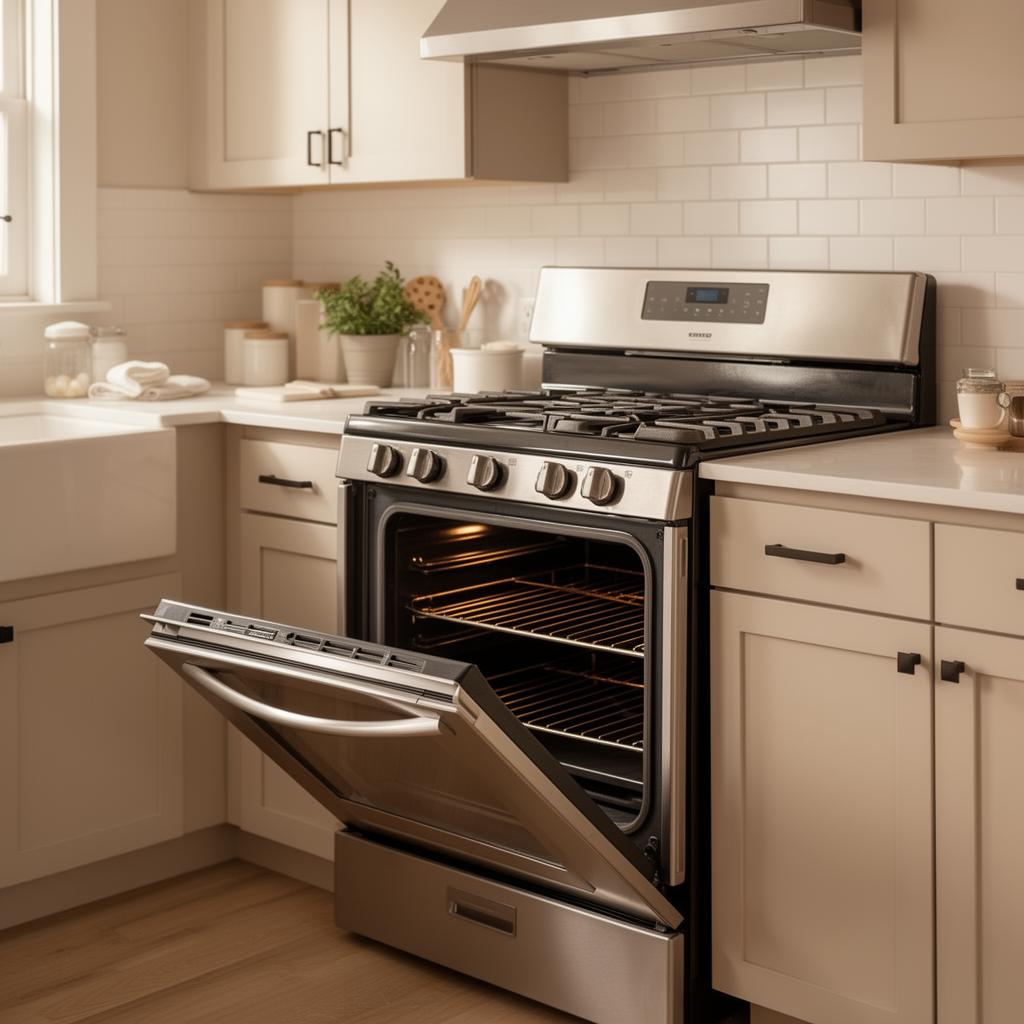
A KitchenAid oven F9 E0 error should not be diagnosed as a door-latch failure from generic advice. On many KitchenAid and related models, F9 E0 indicates miswiring or an electrical-supply condition, especially after installation or electrical work.
F9 E0 at a glance
| Observation | What it may indicate | Safe response |
|---|---|---|
| Code follows installation | Supply or terminal wiring may be incorrect | Stop operation and contact the installer or qualified electrician |
| Code follows panel or breaker work | Supply configuration may have changed | Document the timing and arrange electrical verification |
| Code returns after an approved reset | The underlying condition remains | Stop repeating resets and arrange service |
| Smoke, odor, heat, arcing, or breaker trips | Immediate electrical risk | Disconnect power when safe and seek qualified help |
The code is a diagnostic clue, not proof that the control board or any other part has failed.
Verify the exact model
Record the complete model and serial information. Use KitchenAid product help and the manual for that model because code definitions and procedures can differ.
Note whether the code began after installation, relocation, an outage, breaker replacement, receptacle work, service, or other electrical changes. That timeline helps separate installation and product issues.
Immediate safety response
Stop oven operation. For smoke, burning odor, arcing, excessive heat, or repeated breaker trips, disconnect power at an accessible breaker only when safe and follow emergency guidance.
Do not remove the terminal cover, control panel, or rear panels. Do not measure supply voltage, move wires, or probe live circuits unless appropriately qualified. Ranges and wall ovens can use hazardous high voltage.
What F9 E0 may mean
The appliance can display the code when expected electrical supply conditions are not detected. Possible categories include incorrect supply wiring, a loose or damaged connection, installation error, supply-voltage problem, harness issue, or control fault.
Only model-specific electrical tests can distinguish these possibilities. Replacing a latch, sensor, or control without evidence can waste money and leave the actual hazard uncorrected.
Resetting the oven
Use only the reset or power-cycle process in the model manual. A reset may clear a temporary state but cannot correct miswiring, a loose terminal, damaged conductor, supply problem, harness fault, or failed control.
If the code returns, stop cycling power and arrange qualified evaluation.
Who should inspect it
A qualified electrician may be needed to verify the branch circuit, supply voltage, grounding, receptacle or junction box, conductors, and terminal connection. An appliance technician may then evaluate internal wiring and controls if the supply is correct.
Tell the professional the complete model, code, installation date, recent electrical work, breaker behavior, odors, sounds, and when the code appears.
What a useful diagnosis includes
Request written findings identifying supply measurements, connection condition, affected wiring or component, cause, required repair, safety status, parts, labor, and testing.
A diagnosis that says only “F9 E0” or assumes a control board without supply verification is incomplete.
Can the stovetop be used?
Do not assume the cooktop is independent or safe. Configurations vary, and a supply or wiring condition can affect the entire appliance. Follow the model-specific manual and qualified advice before using any function.
Repair or replacement
Most F9 E0 decisions should wait until the supply and installation are verified. A corrected connection can be very different from damaged wiring or control replacement.
Compare complete repair cost with installed replacement only after diagnosis. Include delivery, removal, cabinet fit, electrical work, permits, trim, anti-tip requirements where applicable, and testing.
Documentation and warranty
Save the model label, purchase record, installation invoice, code photo, electrical work records, diagnosis, and repair authorization. Contact KitchenAid or the retailer before unauthorized internal work when coverage may apply.
An error code alone does not guarantee warranty coverage. Cause, installation, date, and terms control the result.
Final guidance
Treat KitchenAid F9 E0 as a possible electrical-supply or miswiring condition, not a universal door-latch fault. Stop oven operation, verify the exact model guidance, and use qualified professionals for supply and internal diagnosis.
What the control is reporting
Fault codes on this family of ovens are generated by the electronic control when a monitored condition falls outside its expected range. The code names the condition observed, not the component that caused it. A door-lock-related fault, for example, can originate in the latch motor, the switches that confirm latch position, the wiring between latch and control, or the control's own input circuit.
That distinction governs the whole repair. A technician who orders the most obvious part without confirming which element in the chain failed can replace hardware and leave the fault in place.
Checks that are reasonable for an owner
Confirm the exact code characters on the display and the full model and serial number from the label, usually on the door frame or drawer area. Codes that look similar can belong to different systems on different models, so the model-specific service documentation is what decides the meaning.
Clear the oven cavity, verify nothing is obstructing the door or latch path, confirm the door closes fully and squarely, and check that no cookware, rack, or cleaning residue is preventing the latch travelling. Perform the manufacturer's documented power-cycle procedure once. If the fault returns, stop and record the pattern rather than repeating resets.
What is not an owner task
Do not remove the rear or control panels, bypass the latch, jumper switches, or run the oven with the door mechanism defeated. These circuits carry line voltage, and the latch system exists to prevent access to a cavity that can exceed self-clean temperatures.
Stop using the oven entirely and arrange service if there is burning insulation odour, visible scorching at connectors, a breaker that trips, a door that will not unlock with the cavity hot, or any sign of arcing.
Self-clean and heat stress
A significant share of control and latch faults on modern ovens appear during or shortly after a self-clean cycle, because that cycle drives the cavity and surrounding components to their thermal limits. If the fault first appeared around a self-clean, tell the technician: it narrows the investigation toward heat-stressed components such as the latch assembly, thermal cutouts, wiring insulation, and control connections.
Where the manual permits, manual cleaning avoids repeating that stress on an oven that has already shown a heat-related fault.
Making the repair decision
Ask for the failed component, the evidence, the part number and availability, the complete quote including diagnosis and return visits, and the labour warranty. Control boards and latch assemblies are among the more expensive oven parts, so the comparison against an installed replacement becomes meaningful once multiple components are implicated or the oven has a history of faults.
Related articles
Disclosure: This article is informational and not a substitute for KitchenAid instructions or qualified electrical and appliance service. The site may earn a commission from eligible links.
Frequently asked questions
Related guides
Bosch Dishwasher E18 Error: Meaning and Safe Checks
Learn what a Bosch dishwasher E18 error may mean, safe water-supply checks, why the model manual matters, and when to arrange qualified service.
Maytag Washer F9E1 Error: Safe Drainage Checks
Learn what a Maytag washer F9E1 error may mean, safe checks for standing water and the drain path, and when pump or sensor diagnosis needs service.
Bosch Dishwasher E15 Error: Meaning and Safe Troubleshooting
See what E15 can mean on a Bosch dishwasher, the safe first steps, why tilting is risky, possible leak sources, and when to arrange qualified service.
Disclaimer: Pricing reflects US national averages as of the publication date and varies by region, brand, and labor rates. This article is informational and does not replace professional inspection or repair advice. See our full disclaimer.