Maytag Washer F9E1 Error: Safe Drainage Checks
Written by
Editorial Team
Research and editorial staff
Dates
Published
Last updated
What changed: Removed unsafe tilting and universal timing claims, retained safe accessible drain checks, and added model-specific Maytag verification.
Checked by our editors.How we estimate repair costsEditorial policy
Sources
- Maytag owner support — Maytag
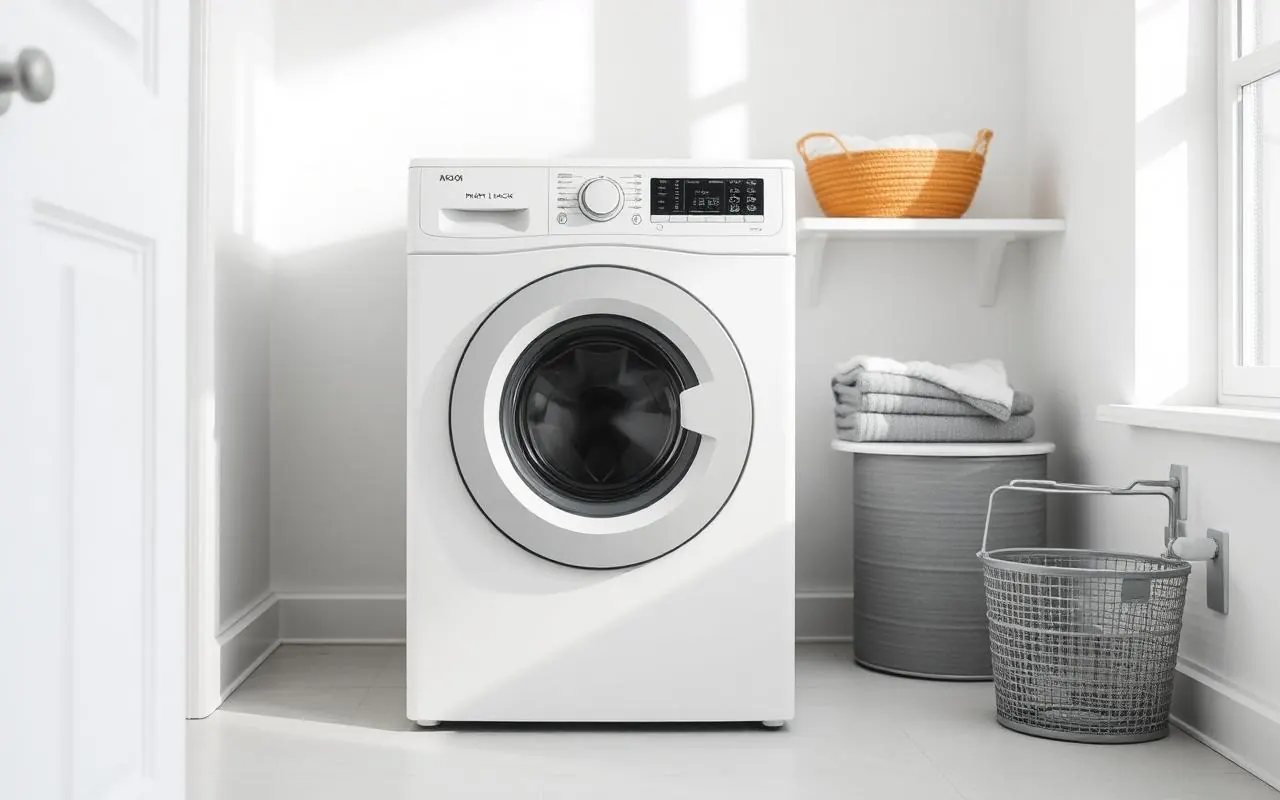
A Maytag washer F9E1 error often reports a long-drain condition: the control did not see the expected water-level change during draining. The exact definition and approved procedure can vary, so verify the complete model manual.
F9E1 at a glance
| Observation | Possible category | Safe first step |
|---|---|---|
| Water remains in the basket | Drain path may be restricted | Stop adding loads and protect the floor |
| Visible hose is kinked | Accessible restriction | Correct it only when the machine is stopped and stable |
| Heavy suds are visible | Detergent may be interfering | Follow the model-approved cancel or drain procedure |
| Pump hums but water does not move | Obstruction or pump trouble may exist | Stop repeated cycles and arrange diagnosis |
| Code returns with little water | Sensing, wiring, or control may be involved | Record conditions and arrange service |
Immediate safety response
Stop the cycle. For active leakage, water near wiring, burning odor, repeated breaker trips, or damaged power components, disconnect power only when the plug or breaker is safely accessible.
Do not tilt an unsecured washer, reach into a hidden pump, open live panels, or probe electrical components. A washer can retain substantial water even when the basket appears nearly empty.
Verify the model
Record the complete model and serial number. Check Maytag owner support for the model’s drain-hose arrangement, cancel or drain process, accessible filter instructions, detergent requirements, and code definition.
Front-load and top-load products can have different access and procedures. Do not copy a pump-filter method from another model.
Safe accessible checks
Inspect the visible drain hose for kinks, crushing, freezing, leakage, or an arrangement that conflicts with the installation instructions. Check the standpipe height, insertion, and air-gap requirements against the manual.
Look for excessive suds and confirm that the detergent type and amount match the washer and product label. Do not add vinegar, solvents, or improvised chemicals to collapse foam.
Use only the model-approved method for draining retained water. Prepare towels and a suitable container if the manufacturer provides an owner-accessible filter or emergency drain procedure.
Possible causes
A long-drain condition can involve:
- Kinked, crushed, frozen, or restricted drain hose
- Standpipe or household drain problem
- Excessive suds
- Pump-filter or coin-trap obstruction where the model has owner access
- Drain-pump damage
- Pressure or water-level sensing problem
- Wiring, connector, or control fault
The code does not identify one failed part.
Resetting the washer
Use only the reset or power-cycle instructions for the exact model. A reset cannot remove an obstruction, repair a pump, correct a hose installation, or fix sensing and wiring faults.
If the code returns, stop repeating cycles. Record the load, selected cycle, water level, pump sound, and visible hose condition.
When to get service
Arrange qualified service when retained water cannot be removed through the approved procedure, internal pump access is required, the code returns, or the washer leaks.
Stop immediately for burning odor, damaged wiring, repeated breaker trips, active water near electrical parts, a cracked pump housing, or an unstable stacked installation.
What a useful diagnosis includes
Request the obstruction location or failed component, evidence, pump and sensing results, hose and household-drain findings, required repair, complete estimate, and safety status.
Ask how drainage and leak-free operation will be verified after repair. A report that only repeats “F9E1” is incomplete.
Warranty and documentation
Save the code photo, model label, detergent information, installation details, service history, diagnosis, and authorization. Contact Maytag, the retailer, installer, or service-contract provider before unauthorized internal work when coverage may apply.
Final guidance
Treat F9E1 as a long-drain condition that needs model-specific verification. Protect the floor, inspect only accessible hose and detergent issues, use the approved drain process, and arrange service when the cause is internal or the code returns.
The condition the washer is detecting
A drain-related fault appears when the control does not see the water level fall as expected within the time the cycle allows. Everything between the tub and the standpipe is therefore in scope: the drain pump and its filter, the hose routing and height, the standpipe and the household drain behind it, the pressure-sensing path the control uses to judge water level, and the wiring between those parts and the board.
Because the code describes a timing expectation rather than a broken part, the most useful early question is whether water is leaving the machine slowly, intermittently, or not at all. Each answer points somewhere different.
Installation causes people overlook
Drain hose height is a frequent and entirely non-mechanical cause. A hose inserted too far into the standpipe can siphon; one routed too high can exceed the pump's lift capability; one pushed behind the machine during installation or after cleaning behind the appliance can kink out of sight.
The household drain itself matters too. A standpipe that is partially blocked, shared with a sink that also drains slowly, or lacking adequate venting will produce a slow-drain fault that no washer part will fix. Watch whether a nearby sink gurgles or backs up when the machine drains.
Owner checks within the manual
Where the model documents an owner-accessible drain filter, follow that procedure exactly: power off, water contained, and a shallow tray ready, since a surprising volume can be held in the pump housing. Coins, buttons, hair clips, and fabric fragments are the usual finds.
Inspect the visible hose run for kinks and confirm the standpipe height against the installation manual. Run a drain or rinse-and-spin cycle and listen: a pump that hums without moving water, a pump that is silent, and a pump that runs normally while water stays put are three different diagnoses.
When to stop and call
Arrange service if the filter is clear and correctly seated, the hose and standpipe are correct, and the fault persists; if water leaks during the check; if the pump is silent; or if the code appears alongside other faults. Repeated fault clearing on a machine that will not drain leaves standing water in the tub and risks odour and overflow.
What to expect from the repair
Request the measured evidence, the failed component, parts availability, and the complete quote covering diagnosis, labour, and any return visit. Drain pumps are among the less expensive washer parts, so a straightforward pump replacement usually favours repair. The comparison shifts toward replacement when the control board, wiring harness, or bearings are implicated, or when the machine has an accumulated repair history.
Related articles
Disclosure: This article is informational and not a substitute for Maytag instructions or qualified service. The site may earn a commission from eligible links.
Frequently asked questions
Related guides
Bosch Dishwasher E18 Error: Meaning and Safe Checks
Learn what a Bosch dishwasher E18 error may mean, safe water-supply checks, why the model manual matters, and when to arrange qualified service.
KitchenAid Oven F9 E0 Error: Meaning and Safe Response
Learn what a KitchenAid oven F9 E0 code may mean, why electrical supply or miswiring matters, safe first steps, and when qualified service is required.
Bosch Dishwasher E15 Error: Meaning and Safe Troubleshooting
See what E15 can mean on a Bosch dishwasher, the safe first steps, why tilting is risky, possible leak sources, and when to arrange qualified service.
Disclaimer: Pricing reflects US national averages as of the publication date and varies by region, brand, and labor rates. This article is informational and does not replace professional inspection or repair advice. See our full disclaimer.