LG Washer OE Error Code: Safe Troubleshooting
Written by
Editorial Team
Research and editorial staff
Dates
Last updated
What changed: Expanded the OE guide beyond 1,000 words and removed universal code meanings, fixed repair prices, unsafe impeller and hose work, component certainty, approval promises, and unsupported success rates.
Checked by our editors.How we estimate repair costsEditorial policy
Sources
- LG washer support — LG Electronics
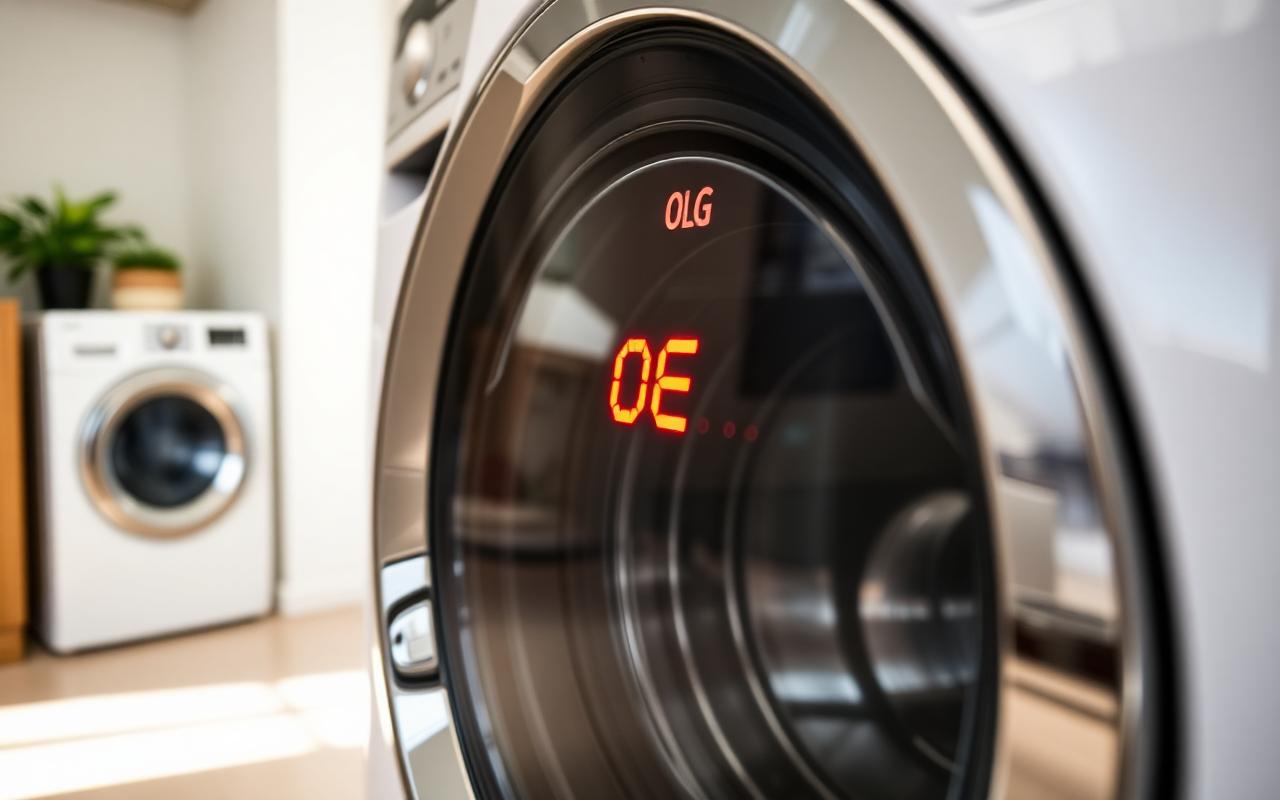
An LG washer displaying OE may have detected that water did not drain as expected. The meaning, timing threshold, filter location, and approved owner procedures can vary by product family, top-load or front-load design, market, and model year. Verify the full model number before following troubleshooting instructions.
Treat OE as a symptom of a drainage condition, not proof that the drain pump has failed.
Immediate safety response
Stop the cycle for active leakage, water near electrical connections, smoke, burning odor, arcing, damaged wiring, violent movement, or repeated breaker trips. Close accessible water valves and disconnect power only when safe.
A washer with an OE condition may retain substantial water. Do not force the door, tilt the machine, or remove a filter without preparing for controlled drainage according to the manual.
Find the complete model number
Locate the rating label where LG specifies for the appliance. Record the complete model and serial number, not only the brand or product family.
Use LG support to find the correct owner manual and troubleshooting page. Similar-looking washers may have different filter access, drain procedures, and code definitions.
Record the fault
Before resetting, photograph the display and note:
- Exact code and any other indicators
- Cycle and options
- Load type and size
- When the cycle stopped
- Amount of water remaining
- Pump sounds or silence
- Leakage or odor
- Recent installation, moving, or plumbing work
- Previous intermittent drainage problems
These observations help distinguish an appliance fault from loading, installation, or household drainage.
Verify the official meaning
On many LG models, OE relates to an outlet or drain condition. The washer may stop because the measured water level did not fall within an expected period.
That condition can involve an owner-accessible filter, drain hose, standpipe, household drain, pump, pressure or water-level system, wiring, control, installation, cold conditions, or foreign material. The code alone does not identify one component.
Use only the official reset procedure
Follow the model manual for canceling, draining, resetting, or power cycling. A reset can clear a temporary control state only after the underlying condition is corrected.
If OE returns, stop repeating resets. Repeated operation can worsen a leak, overheat a pump, or leave the washer full of water.
Drain retained water safely
Some front-load models provide an owner-accessible emergency drain hose near a lower service door. Other designs use different procedures or do not provide owner access.
Follow the exact manual. Use a low container and towels, drain in small amounts, and expect more water than one pan may hold. Let hot wash water cool before draining. Keep power disconnected as directed.
Do not open the main door while the water level could spill onto the floor.
Owner-accessible filter
If the manual identifies a drain-pump filter for routine owner cleaning, follow its steps. Remove foreign material carefully because coins, pins, glass, and sharp objects may be present.
Do not reach into internal machinery, force a pump impeller, or remove panels. Reinstall the filter and cap exactly as instructed; an improperly seated filter can create a leak.
Some top-load or other LG models may not have the same owner-accessible filter. Do not apply front-load directions universally.
Drain hose inspection
Inspect only the visible hose path. Look for crushing, sharp bends, freezing, damage, an incorrect standpipe position, or recent movement. Follow LG's installation requirements for hose height, insertion, securing, and air gap.
Do not disconnect a hose full of water without a safe containment plan. A hose placed incorrectly can cause slow draining, siphoning, or water returning to the machine.
Household drain and standpipe
A slow or backed-up standpipe can prevent the washer from draining even when its pump works. Observe whether water rises or spills at the standpipe during an approved drain attempt.
Stop before overflow. Household drain cleaning may require a plumber and is separate from appliance repair.
Cold-weather conditions
In cold locations, frozen hoses or residual water can create drainage problems. Follow LG's approved thawing guidance for the model and protect electrical parts.
Do not apply open flame, boiling water, or uncontrolled heat. Inspect for split hoses or leakage after thawing.
Load and detergent factors
Excess detergent or unsuitable detergent can create foam that affects draining and sensing. Heavy or absorbent loads can retain water and complicate balancing.
Use the detergent type and quantity stated in the manual. Do not add improvised chemicals or mix cleaners.
Pump diagnosis
Noise, humming, grinding, or silence can be useful evidence but does not prove a pump failure. A blocked path, damaged impeller, wiring, control output, or water-level issue can produce similar behavior.
A qualified technician should use model-specific procedures to inspect the pump, electrical supply, hoses, and control signals safely.
Water-level sensing
The washer may rely on a pressure sensor, hose, or another level-detection system to determine whether water remains. A restriction, leak, wiring fault, or sensor problem can cause the control to report drainage trouble.
Do not replace the sensor merely because the tub appears empty. Ask for test evidence.
Wiring and control possibility
Connectors, wiring, relays, and controls can affect pump operation and level readings. These should be evaluated after accessible obstructions, installation, and household drainage are checked.
Internal electrical work belongs to a qualified technician. Do not probe energized components.
Installation-related OE
If the code began after installation, relocation, floor work, or drain service, record the timing. Hose height, insertion, kinking, standpipe capacity, transit hardware, leveling, and connection errors may matter.
Contact the installer where appropriate and retain photographs and invoices.
What a diagnosis should include
Request a written report identifying:
- Model-specific code meaning
- Amount and location of retained water
- Drain-path condition
- Pump operation and evidence
- Water-level system findings
- Installation or household-drain contribution
- Required repair
- Parts availability
- Complete estimate
- Repair warranty
A report that says only “OE equals pump” is not enough.
Repair cost
There is no dependable universal OE repair price. Cost depends on whether the remedy is owner maintenance, hose or standpipe correction, plumbing, pump, sensor, wiring, control, access, or water-damage work.
Obtain an itemized local quote covering diagnosis, parts, labor, moving or unstacking, water removal, shipping, tax, reinstallation, and leak testing.
Repair or replace
Compare the written diagnosis and full repair scope with installed replacement. Consider current condition, prior failures, parts availability, existing coverage, stacking, pedestal compatibility, plumbing, timing, and repair warranty.
Do not apply one age, dollar, or percentage threshold automatically.
Manufacturer warranty and recalls
Check the issued warranty, purchase date, registration, parts and labor terms, motor provisions, installer warranty, authorized-service requirements, and official recall notices.
Contact LG before unauthorized internal work when coverage may apply. The OE display does not guarantee a particular repair.
Home-warranty coverage
A service contract may cover a listed washer and eligible failed component, subject to cause, effective date, maintenance, installation, service fee, limits, exclusions, and authorization.
Filters, foreign objects, external drains, hoses, access, and resulting damage may be handled separately. Review the exact agreement before non-emergency outside work.
Water damage
The appliance failure and damage to flooring, walls, cabinetry, or belongings may be treated separately by a warranty, homeowners insurance, installer, plumber, or no coverage.
Mitigate safely, photograph conditions, retain receipts, and notify relevant providers. Do not assume one contract covers the entire incident.
After repair
Obtain the final diagnosis, replaced-part details, invoice, test results, and repair warranty. Confirm that the technician ran the model-specific drain and leak test.
Monitor initial use according to service guidance. Stop if OE, leakage, burning odor, or abnormal pump noise returns.
Prevention
Follow the LG manual for detergent, load size, filter care where applicable, hose installation, leveling, tub cleaning, and cold-weather protection. Inspect accessible hoses and drains periodically.
Maintenance reduces avoidable problems but cannot prevent every pump, sensor, wiring, control, or plumbing issue.
Questions for LG or the technician
- What does OE mean for this exact model?
- What owner drain and filter steps are approved?
- Is the household drain involved?
- Was the pump tested under the correct conditions?
- Was the level-sensing system checked?
- Is the washer safe to use?
- What part and labor are required?
- Is moving or unstacking included?
- What warranty applies?
- What is the complete total?
Final guidance
Treat LG OE as a model-specific drainage condition. Make leaks and electrical hazards safe, preserve the code, use the official procedure for retained water and owner-accessible cleaning, and seek diagnosis if the fault returns.
Avoid forced doors, uncontrolled water release, internal electrical work, and replacing the pump based only on the code.
Related articles
- Washing Machine Repair Cost Guide
- Repair or Replace a Washing Machine?
- Does a Home Warranty Cover a Washer and Dryer?
Disclosure: This article is informational and not a substitute for LG instructions or qualified service. The site may earn a commission from eligible links. Commercial relationships do not determine the guidance.
Frequently asked questions
Related guides
Bosch Dishwasher E15 Error Code: Safe Troubleshooting
Learn how to respond safely to a Bosch dishwasher E15 code, verify its model-specific meaning, document leakage, check approved basics, and arrange service.
Dishwasher Error Codes: A Safe Troubleshooting Guide
Learn how to interpret dishwasher error codes safely, locate the correct model manual, check water and drainage basics, document faults, and decide when to call a technician.
GE Oven F3 Error Code: Safe Troubleshooting
Learn how to respond safely to a GE oven F3 code, verify its model-specific meaning, document the fault, use approved resets, and arrange qualified diagnosis.
Disclaimer: Pricing reflects US national averages as of the publication date and varies by region, brand, and labor rates. This article is informational and does not replace professional inspection or repair advice. See our full disclaimer.