Dishwasher Error Codes: A Safe Troubleshooting Guide
Written by
Editorial Team
Research and editorial staff
Dates
Published
Last updated
What changed: Replaced unsupported universal code meanings, fixed repair prices, electrical tests, lifespan rules, and warranty promises with a model-specific safety and diagnosis guide exceeding 1,000 words.
Checked by our editors.How we estimate repair costsEditorial policy
Sources
- Bosch owner support — Bosch
- Whirlpool product help — Whirlpool
- GE Appliances support — GE Appliances
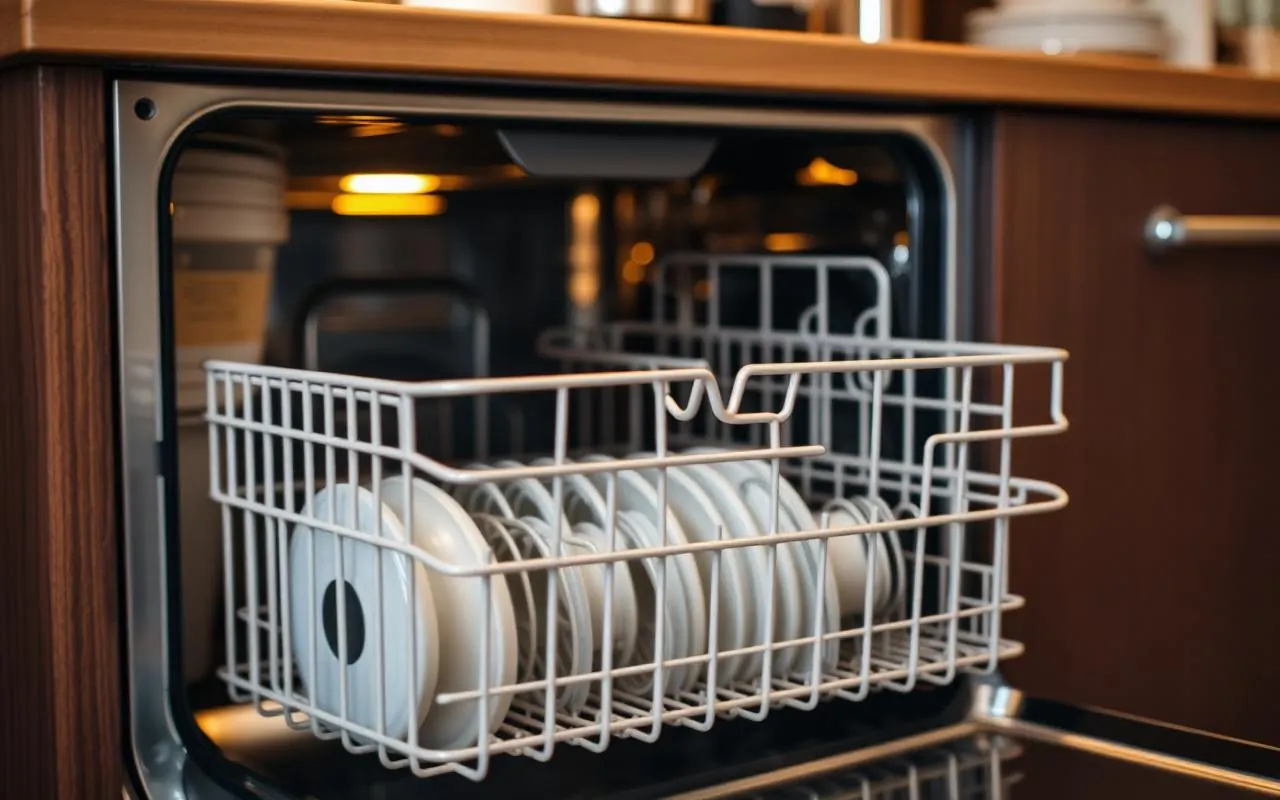
Dishwasher error codes are diagnostic clues, not universal diagnoses. The same letters or numbers can mean different things across brands, model families, control revisions, and markets. Even within one brand, a code can change meaning between platforms.
Record the complete display, locate the exact model manual, and follow only user procedures approved for that model. Do not replace a part from a generic code list alone.
Safety first
Stop using the dishwasher and seek qualified help if you see water near electrical connections, smell burning or melting material, hear arcing, find a damaged cord, see smoke, or repeatedly trip a breaker.
For active leakage, stop the cycle and close the dishwasher's water shutoff only if it is accessible and safe. Keep people away from wet electrical areas. Follow emergency guidance when there is fire or shock risk.
Dishwashers combine electricity, water, heat, moving parts, sharp edges, and sometimes hardwired connections. Internal electrical measurements, panel removal, wiring work, and leak diagnosis should be left to a qualified person unless the manufacturer explicitly provides a safe owner procedure.
Record the code accurately
Before clearing anything, photograph the display and note:
- Every letter, number, and symbol
- Whether the code is solid or flashing
- Which indicator lights are on
- The selected cycle and options
- When the code appears
- Sounds, odors, heat, or leakage
- Whether water entered or drained
- Recent installation, plumbing, or power work
Some displays alternate portions of a code. Record the full sequence.
Find the model number
Open the door only after the machine is stopped. Look for a rating label on the door edge, frame, or another location stated by the manufacturer. Copy the complete model and serial number.
Do not rely only on the brand name or appearance. Closely related models can use different service information.
Use authoritative instructions
Search the manufacturer's support site using the full model number. Download the use-and-care manual, installation guide, and any official error-code or troubleshooting document.
Check that the publication applies to the correct market and model revision. If the manual does not explain the code, contact manufacturer support or a qualified technician.
Understand code categories
Many dishwasher faults relate broadly to water supply, drainage, leakage, heating, temperature sensing, door or latch status, circulation, controls, or communication. These categories help describe symptoms, but they do not identify the failed part by themselves.
For example, a drainage message can result from a blocked filter, kinked hose, plumbing restriction, pump obstruction, failed pump, sensor issue, wiring problem, or installation condition. Diagnosis must distinguish among them.
Safe initial check: power and controls
Read the manual's reset or cancel procedure. Some models use a button sequence; others specify a power interruption. Follow only the official method and do not access wiring.
A reset may clear a temporary control state. If the code returns, record when it reappears. Repeated resets can erase useful information and do not repair a persistent fault.
If the breaker trips again, do not keep resetting it. Electrical protection devices can indicate a hazardous condition.
Safe initial check: door and latch area
Confirm that racks, utensils, and dishes are not preventing the door from closing. Inspect the accessible latch area for debris without disassembling it.
Do not force the door or bypass an interlock. A door code can involve alignment, loading, installation, the latch, wiring, or the control.
Safe initial check: water supply
If the manual allows, confirm the under-sink dishwasher valve is open, the household water service is available, and the visible supply hose is not sharply kinked.
Do not disconnect pressurized hoses unless qualified to do so. Stop for swelling, corrosion, active leakage, or damaged connections.
A fill-related code does not automatically mean the inlet valve has failed.
Safe initial check: filter and tub
After the machine is cool and powered down as the manual directs, inspect the accessible filter and sump area. Remove visible food debris according to the cleaning instructions.
Do not reach into an area where broken glass or sharp objects may be present. Use appropriate protection and never force an impeller or component.
A dirty filter can affect performance, but clearing it will not fix every drainage or circulation fault.
Safe initial check: drain path
Inspect the visible drain hose for kinks and check the sink connection or air gap where applicable. If the dishwasher was recently installed or the disposal was replaced, installation details can matter.
Do not remove panels or disconnect hoses without the appropriate skill and safety precautions. A blockage can exist beyond the visible path.
Water remaining in the tub
A small amount of water in a designated sump can be normal for some models. Standing water above the filter area, dirty water returning after drainage, or leakage requires model-specific troubleshooting.
Record whether the pump runs, whether the sink drains, and whether the water returns later. These observations help a technician without assuming a diagnosis.
Leak or overflow codes
Treat any leak indication seriously. Stop the cycle and inspect only visible areas. Water in a base pan may activate protection even when no water appears on the floor.
Possible sources include hoses, pumps, seals, overfilling, oversudsing, leveling, installation, or plumbing. Do not tilt a dishwasher to clear a code; moving trapped water without finding the source can create additional risk.
Heating and temperature codes
Heating faults can involve the heater, temperature sensor, circulation, control, wiring, water level, or another condition. These are not appropriate for generic resistance tests from an unsourced article.
Do not open electrical compartments or energize exposed components. A qualified technician should use model-specific service information and safe test procedures.
Control and communication codes
A communication message can involve controls, user interface, wiring, connectors, power quality, moisture, or software state. It does not prove that the main board must be replaced.
Follow the official reset procedure once if appropriate. If the fault persists, professional diagnosis is usually more reliable than replacing expensive electronic parts by guesswork.
Detergent and oversudsing
Wrong detergent, excessive detergent, spilled rinse aid, or unusually soft water can create foam and drainage symptoms. Use only products and quantities approved by the manufacturer.
Do not add improvised chemicals to cancel foam unless the manufacturer instructs it. Mixing cleaners can be dangerous and can damage components.
Installation-related faults
A new or recently moved dishwasher can show errors because of a closed valve, kinked hose, incorrect drain connection, poor leveling, trapped packaging, wiring issue, or incompatible plumbing arrangement.
Contact the installer when timing suggests an installation problem. Preserve photographs and invoices.
Prepare for a service call
Provide:
- Complete model and serial number
- Exact code and photograph
- When the code occurs
- Cycle and options
- Water entry and drainage observations
- Leakage, odor, or noise
- Recent work or power events
- Troubleshooting already completed
- Warranty or service-contract details
Ask for a written diagnosis, parts list, labor estimate, and total quote before authorizing non-emergency work.
Repair cost
There is no reliable universal price for a code. Cost depends on the actual failed component, model, local labor, access, parts, taxes, and additional damage.
Obtain itemized local quotes. A filter cleaning, hose correction, pump replacement, leak repair, or electronic diagnosis can have very different scope even when the initial display is similar.
Repair or replace
Compare:
- Written diagnosis
- Complete repair price
- Installed replacement price
- Dishwasher condition
- Parts availability
- Remaining manufacturer coverage
- Repeat-failure history
- Efficiency and features
- Cabinet and plumbing compatibility
- Household priorities
Do not use age or one dollar threshold as an automatic rule. An older simple machine with an available low-cost part may be worth repairing, while a newer unit with extensive damage may not be.
Manufacturer warranty
Check the purchase date, registration, parts and labor terms, component-specific coverage, authorized-service requirements, and exclusions. Keep the receipt and installation record.
Do not assume all dishwasher warranties last the same period or cover controls, racks, tubs, labor, and travel equally.
Home-warranty coverage
A home warranty may cover selected mechanical failures, but eligibility depends on the current agreement, component, cause, effective date, service fee, limits, exclusions, maintenance, installation, and authorization.
Open the claim before arranging outside repair unless immediate safety mitigation is necessary or the agreement says otherwise. Request written reasoning for a denial.
Homeowners insurance and recalls
Insurance and service contracts cover different events. Sudden resulting water damage may be treated separately from the appliance failure, subject to policy terms.
Search official recall information using the full model and serial range. A recall remedy follows the recall notice rather than the ordinary warranty or repair process.
Prevention and maintenance
Follow the model manual for filter cleaning, detergent, rinse aid, loading, water temperature, spray-arm inspection, and cleaning cycles. Maintain the sink drain, air gap, and disposal connection where applicable.
Maintenance reduces avoidable problems but cannot prevent every component failure.
What not to do
Avoid:
- Guessing code meaning from brand alone
- Replacing boards or pumps without diagnosis
- Repeatedly resetting a tripping breaker
- Bypassing door switches
- Working on energized wiring
- Tilting a leaking unit to hide the code
- Mixing cleaning chemicals
- Assuming warranty approval
- Running the dishwasher during an active leak
Final guidance
Treat a dishwasher code as the start of diagnosis. Record it, identify the full model, use the official manual, complete only safe owner checks, and obtain qualified service for persistent, electrical, heating, or leaking faults.
Model-specific evidence is more reliable than a universal code chart or fixed repair-price claim.
Related articles
- Dishwasher Repair Cost Guide
- Does a Home Warranty Cover a Dishwasher?
- Repair or Replace an Appliance?
- Appliance Warranty Claims
Disclosure: This article is informational and not a substitute for manufacturer instructions or qualified service. The site may earn a commission from eligible links. Commercial relationships do not determine the guidance.
Frequently asked questions
Related guides
 Typical oven repair$130–$400
GE Oven F3 Error Code: Safe Troubleshooting
Learn how to respond safely to a GE oven F3 code, verify its model-specific meaning, document the fault, use approved resets, and arrange qualified diagnosis.
 Typical washer repair$125–$450
LG Washer OE Error Code: Safe Troubleshooting
Learn how to respond safely to an LG washer OE code, verify its model-specific meaning, drain retained water, inspect approved items, and arrange diagnosis.
Typical washer repair$125–$450Samsung Washer 4C Error Code: Safe Troubleshooting
Learn how to respond safely to a Samsung washer 4C code, verify its model-specific meaning, inspect approved water-supply items, and arrange qualified diagnosis.
Disclaimer: Pricing reflects US national averages as of the publication date and varies by region, brand, and labor rates. This article is informational and does not replace professional inspection or repair advice. See our full disclaimer.