Bosch Dishwasher E15 Error Code: Safe Troubleshooting
Written by
Editorial Team
Research and editorial staff
Dates
Last updated
What changed: Expanded the E15 guide beyond 1,000 words and removed unsafe tilting, energized leak inspection, universal code meaning, fixed repair prices, DIY board work, and warranty promises.
Checked by our editors.How we estimate repair costsEditorial policy
Sources
- Bosch owner support — Bosch
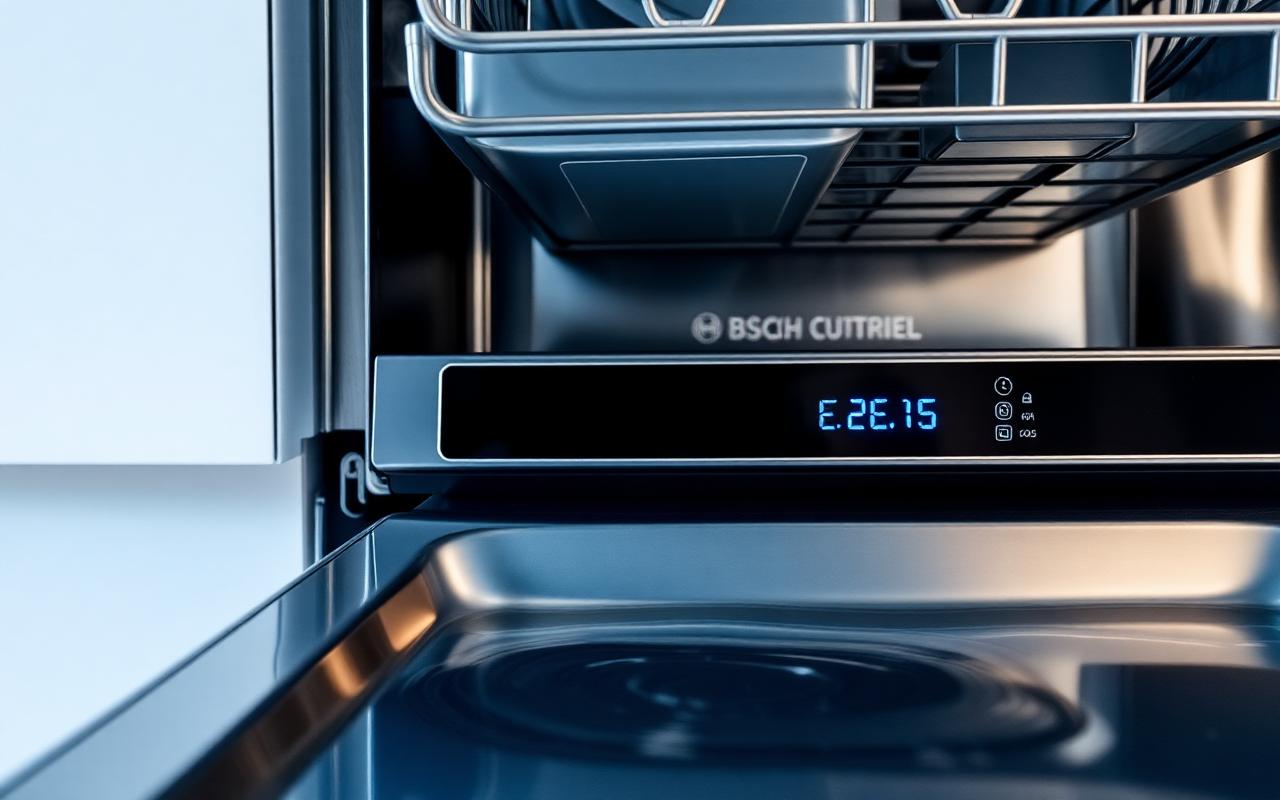
A Bosch dishwasher showing E15 requires a safety-first response. On many Bosch models, the code relates to the water-protection system detecting water in the appliance base or another leak condition. Code meanings and recommended procedures can vary by model, market, and control platform, so confirm the official manual using the complete model number.
Do not treat E15 as a code that should simply be cleared. If water reached the base, the source must be identified before normal operation resumes.
Immediate response
Stop the cycle. If water is actively leaking onto the floor, avoid wet electrical areas and close the dishwasher's accessible water shutoff only when safe. Disconnect power through an accessible plug or breaker only when it can be done without entering a wet area.
For smoke, burning odor, arcing, shock risk, or a large uncontrolled leak, follow emergency and utility guidance. Protect people and property before troubleshooting.
Do not tilt the dishwasher
Some unofficial instructions recommend tilting the appliance to drain its base. This can move water toward wiring, controls, flooring, cabinetry, or other components. It can also strain hoses and connections while hiding the leak that triggered the protection system.
Use Bosch's instructions for the exact model or arrange qualified service. Removing detected water without finding its source is not a repair.
Find the complete model number
After the machine is stopped and safe, locate the rating label where Bosch specifies, often along a door or frame area. Record the full model identifier and serial or production information.
Search Bosch owner support for that exact identifier. A similar-looking dishwasher or a partial model name may use different code definitions and service procedures.
Save evidence before resetting
Photograph the display, floor, cabinets, visible moisture, hose connections, and rating label. Record:
- Complete code and any flashing sequence
- Cycle and options
- When the code appeared
- Whether the drain pump continued running
- Visible water location
- Sounds or odors
- Recent installation or plumbing work
- Detergent used
- Previous intermittent leaks
This information helps a technician identify the source and supports warranty or insurance communication.
Verify the official meaning
Read the use-and-care manual and Bosch support information for the specific model. Follow only owner-level checks stated there.
The code may identify a protective response rather than the failed component. Water in a base area can come from several sources, so the display alone does not prove that a valve, hose, seal, pump, or sensor must be replaced.
Possible sources to discuss with a technician
Potential sources can include:
- Supply connection or inlet assembly
- Internal fill, circulation, or drain hose
- Pump or sump area
- Door sealing or spray pattern
- Excess foam
- Overfill or water-level control
- Tub or internal joint
- Installation or leveling
- External sink, disposal, or plumbing leak
- Water spilled during loading or nearby cleaning
This list is not a diagnosis. The location and timing of moisture must be traced safely.
Visible external checks
Without removing panels or energizing exposed parts, inspect the accessible area around the dishwasher, sink cabinet, shutoff, supply line, drain hose, disposal connection, and floor. Look for moisture that may come from household plumbing rather than the appliance.
Do not place hands into hidden wet spaces containing wiring. Do not run the dishwasher with panels removed to search for drips.
Detergent and excess foam
Incorrect detergent, too much detergent, or spilled rinse aid can create excessive foam and leakage symptoms. Review Bosch's detergent and rinse-aid instructions for the exact model.
Do not add improvised chemicals to counteract foam. Mixing cleaners can create hazardous reactions or damage components.
Installation-related causes
If E15 began after installation, moving the appliance, flooring work, disposal replacement, or plumbing service, document the timing. Hose routing, connections, leveling, cabinet fit, and drain configuration may be relevant.
Contact the installer when appropriate. Keep installation invoices and photographs. An installation issue and a defective appliance can require different remedies.
Door-area moisture
Food debris, loading interference, a damaged seal, poor alignment, spray deflection, or installation can contribute to water escaping near the door. Inspect only accessible surfaces when the appliance is cool and de-energized.
Do not assume a door gasket must be replaced from visible moisture alone. A technician should identify the path and cause.
Base-pan or protection-system activation
If the official model information confirms that E15 indicates base water or protection activation, the dishwasher may continue protective pumping or prevent normal operation. Do not defeat the float, switch, or water-protection device.
A faulty sensor is possible, but it should not be assumed until the base and leak path are evaluated. Bypassing protection can create flood and electrical risk.
Resetting the control
Use only the reset or power-cycle procedure stated in the model manual. A reset may clear a temporary control state after the underlying condition is corrected.
If E15 returns, stop using the machine. Repeated resets can conceal an intermittent leak and provide no evidence that the appliance is safe.
When professional service is appropriate
Arrange qualified service when:
- E15 returns
- Water is visible beneath or around the unit
- The source is not external and obvious
- Internal access is required
- The appliance is hardwired
- Cabinetry or panels complicate removal
- There is corrosion, damaged wiring, or burning odor
- Manufacturer coverage may apply
Tell the technician not only the code but also the exact model, cycle stage, and water location.
What the diagnosis should include
Request a written report identifying:
- Where water was found
- Source of the leak
- Failed or affected component
- Evidence supporting the conclusion
- Installation or plumbing contribution
- Required repair
- Safety status
- Parts availability
- Complete estimate
- Repair warranty
A report that says only “E15” is incomplete.
Repair cost
There is no dependable universal repair price for E15. Cost depends on whether the issue is external plumbing, installation, detergent, a connection, hose, valve, pump, sump, seal, sensor, wiring, or control. Model, labor, access, parts, shipping, and location also matter.
Obtain an itemized local quote. Ask whether diagnosis, removal, reinstallation, leak testing, tax, and cabinetry work are included.
Repair or replace
Compare the written diagnosis and complete repair cost with installed replacement. Also consider current condition, prior leaks, parts availability, remaining coverage, repair warranty, cabinetry, panel compatibility, and household timing.
Do not use one age, dollar, or percentage threshold automatically. A contained repair can suit an older dishwasher, while extensive water or electrical damage can make a newer unit impractical to repair.
Manufacturer warranty
Check the purchase date, issued warranty, registration, parts and labor terms, water-protection provisions, installer warranty, and authorized-service requirements. Contact Bosch before unauthorized internal work when coverage may apply.
Do not assume E15 automatically qualifies for a specific remedy.
Home-warranty coverage
A service contract may cover a listed dishwasher and eligible failed component, subject to cause, effective date, maintenance, installation, service fee, limits, exclusions, and authorization.
Water damage, external plumbing, access, or unauthorized repair may be handled separately. Open a claim before non-emergency work when the agreement requires it.
Property damage
The dishwasher failure and damage to floors, cabinets, walls, or belongings may be treated separately by a home warranty, homeowners insurance, installer, manufacturer, or no coverage.
Mitigate safely, document the area, retain receipts, and notify relevant providers. Do not assume one contract covers the entire event.
After repair
Obtain the final diagnosis, replaced-part information, invoice, leak-test result, and repair warranty. Confirm that the protection system is functioning and the machine completes the approved test procedure without leakage.
Monitor the accessible area during initial use according to service guidance. Stop immediately if the code or moisture returns.
Prevention
Follow the Bosch manual for detergent, rinse aid, filter cleaning, loading, spray-arm clearance, water supply, and maintenance. Periodically inspect accessible hoses and the sink cabinet for moisture.
Maintenance reduces avoidable problems but does not prevent every seal, valve, hose, pump, sensor, or installation failure.
Questions for Bosch or the technician
- What does E15 mean for this full model number?
- What owner actions are approved?
- Where was water detected?
- What is the verified source?
- Is the water-protection system working correctly?
- Is the unit safe to reconnect?
- What part and labor are required?
- Does installation or plumbing contribute?
- What warranty applies?
- What is the complete repair cost?
Final guidance
Treat Bosch E15 as a possible water-protection event, not a reset-only inconvenience. Stop active leakage, verify the model-specific instructions, preserve evidence, and obtain a source-based diagnosis before reuse.
Avoid tilting shortcuts, energized leak inspection, protection-device bypasses, and part replacement based only on the code.
Related articles
- Dishwasher Error Codes
- Dishwasher Repair Cost Guide
- Repair or Replace a Dishwasher?
- Does a Home Warranty Cover a Dishwasher?
Disclosure: This article is informational and not a substitute for Bosch instructions or qualified service. The site may earn a commission from eligible links. Commercial relationships do not determine the guidance.
Frequently asked questions
Related guides
Dishwasher Error Codes: A Safe Troubleshooting Guide
Learn how to interpret dishwasher error codes safely, locate the correct model manual, check water and drainage basics, document faults, and decide when to call a technician.
GE Oven F3 Error Code: Safe Troubleshooting
Learn how to respond safely to a GE oven F3 code, verify its model-specific meaning, document the fault, use approved resets, and arrange qualified diagnosis.
LG Washer OE Error Code: Safe Troubleshooting
Learn how to respond safely to an LG washer OE code, verify its model-specific meaning, drain retained water, inspect approved items, and arrange diagnosis.
Disclaimer: Pricing reflects US national averages as of the publication date and varies by region, brand, and labor rates. This article is informational and does not replace professional inspection or repair advice. See our full disclaimer.