Should You Repair or Replace a Washing Machine?
Written by
Editorial Team
Research and editorial staff
Dates
Last updated
What changed: Expanded the decision guide beyond 1,000 words without unsupported fixed prices, lifespan rules, efficiency savings, warranty promises, DIY electrical work, or automatic thresholds.
Checked by our editors.How we estimate repair costsEditorial policy
Sources
- ENERGY STAR clothes washers — ENERGY STAR
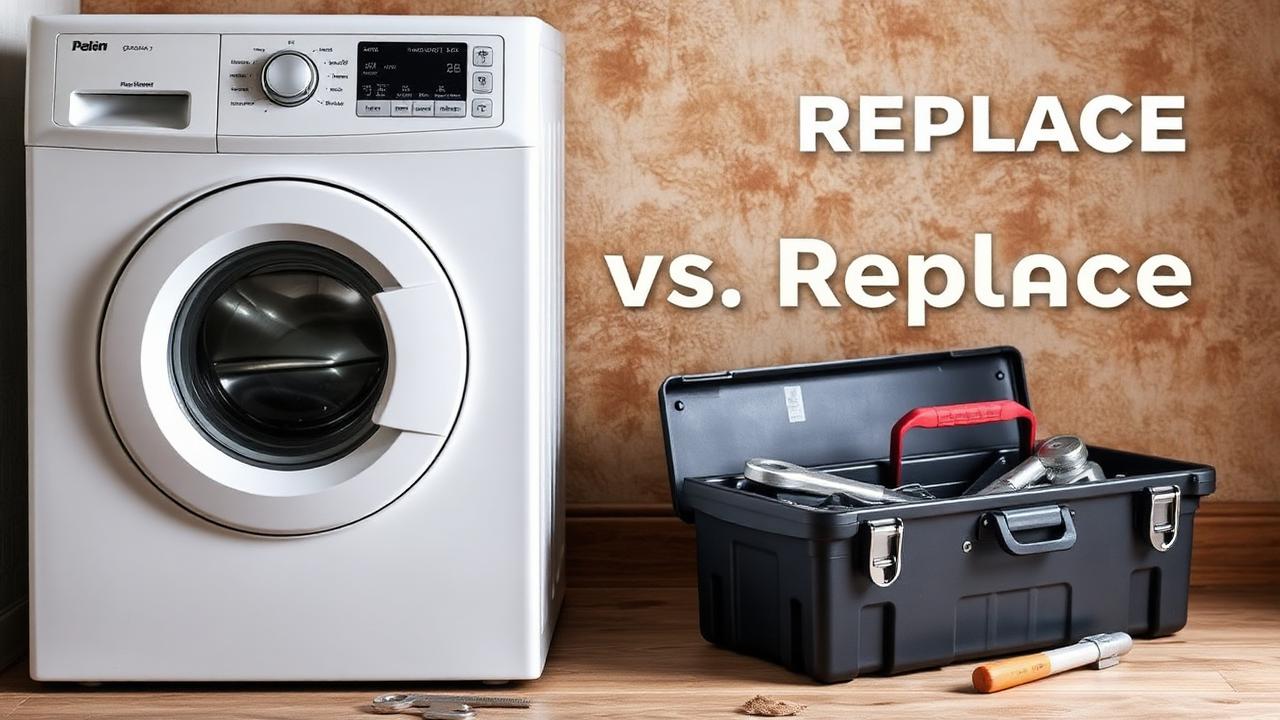
A washing-machine repair-or-replace decision should begin with safety and a written diagnosis. A washer that will not drain, spin, fill, or remain balanced can have loading, plumbing, installation, pump, lock, suspension, drive, motor, sensor, wiring, or control problems.
Do not decide from a generic age, repair price, or percentage rule. Compare complete repair with complete installed replacement for the exact model and laundry space.
Stop leaks and electrical hazards
Stop the washer for active leakage, water near electrical connections, smoke, burning odor, arcing, damaged wiring, repeated breaker trips, or uncontrolled movement. Close accessible water valves and disconnect power only when safe.
Mitigate property damage and follow emergency guidance. Internal electrical testing, heavy tub work, and major disassembly require suitable qualifications.
Identify the exact washer
Record:
- Manufacturer
- Complete model and serial number
- Top-load or front-load design
- Freestanding, stacked, or built-in installation
- Capacity
- Purchase date or approximate age
- Symptoms and error codes
- Prior repairs
- Existing warranties or service contracts
Photograph the rating label, hoses, drain, floor, and leak location.
Get a written diagnosis
Ask the technician to identify the failed component, cause, evidence, required repair, related damage, parts status, safety concern, and repair warranty.
A no-spin symptom can result from drainage, load balance, door locking, belt or drive parts, suspension, motor, sensors, wiring, or controls. A loud cycle does not automatically prove failed bearings.
Complete repair cost
Include diagnosis, parts, labor, shipping, tax, moving, unstacking, plumbing or electrical work, hose replacement, floor protection, reassembly, leveling, leak testing, and warranty.
Clarify whether the diagnostic charge is credited and whether the underlying cause could damage the replacement part.
Complete installed replacement cost
Include the washer, delivery, haul-away, hoses, shutoff or drain work, drain pan, pedestal, stacking kit, unstacking and restacking, electrical changes, floor protection, permits, code work, and tax.
Measure doors, stairs, alcoves, cabinetry, and hookups. Verify capacity, door swing, drainage, voltage, and dryer compatibility.
Drainage problems
A washer that does not drain can have an accessible filter obstruction, foreign object, hose problem, pump, sensor, wiring, control, installation, or household drain restriction.
Follow only safe owner procedures in the model manual. Prepare for retained water. Correcting a building drain differs from replacing the appliance.
Spin and vibration problems
Load balance, leveling, transit bolts, floor strength, suspension, drive components, bearings, tub parts, sensors, and controls can affect spinning.
Stop a machine that walks, strikes surrounding surfaces, or moves violently. Ask whether installation correction or mechanical repair is required.
Leak source
A leak can come from fill hoses, drain hose, valves, pump, dispenser, door boot, tub, seals, oversudsing, leveling, or household plumbing.
Do not run repeated cycles to reproduce a dangerous leak. Separate appliance repair, plumbing, flooring, and restoration in the quote.
Front-load and top-load designs
Design affects parts, access, labor, capacity, maintenance, and replacement choices. Front-load products may involve door boots, locks, counterweights, suspension, and complex bearing access. Top-load platforms vary in drive, transmission, suspension, lid lock, and tub construction.
Do not assume one design is always cheaper or more reliable. Evaluate the exact model.
Bearing, tub, and drive repairs
These repairs can require extensive disassembly, special tools, and several related components. Ask whether the quote includes seals, hardware, calibration, and leak testing.
A high-labor repair can still make sense when the machine is otherwise sound, the part is covered, or replacement installation is difficult. It can favor replacement when damage is broad or parts are unavailable.
Smaller component repairs
Pumps, valves, locks, switches, controls, sensors, and accessible drive components may have a narrower scope. Still, a low-cost part can involve meaningful labor and access.
Require diagnosis. Replacing a pump without correcting debris or drainage can leave the root problem unresolved.
Current condition
Inspect the tub, drum, bearings, suspension, cabinet, rust, seals, hoses, controls, wiring, dispenser, door or lid, and installation. One isolated failure differs from corrosion, structural damage, or multiple symptoms.
Use actual condition rather than assuming future failures from age.
Prior repair history
List previous diagnoses, repairs, dates, costs, and warranties. Determine whether the current symptom is a recurrence or a separate issue.
Repeated service can favor replacement, but check whether prior work remains covered.
Parts availability
Confirm exact part numbers, supplier status, lead times, condition, return rules, and warranty. A repair can become impractical when structural assemblies or controls are unavailable.
Ask whether authorized alternatives exist rather than assuming replacement is the only remedy.
Manufacturer and recall coverage
Review manufacturer parts and labor terms, motor or tub provisions, installer warranty, retailer protection, credit-card benefits, recall remedies, and prior repair warranties.
Use the full model and serial range. Obtain required authorization before outside service.
Home-warranty coverage
A service contract may cover a listed washer and eligible component, subject to effective date, cause, maintenance, installation, service fee, limits, exclusions, and authorization.
The administrator may select repair, replacement, reimbursement, or cash settlement. Compare the written benefit with the complete repair or installation scope.
Resulting water damage
The appliance failure and damage to flooring, walls, cabinets, or belongings may be treated differently by a service contract, homeowners insurance, installer, or other agreement.
Mitigate safely, photograph conditions, and notify relevant providers. Do not count uncertain reimbursement as guaranteed.
Water and energy use
Use official labels for the exact replacement and local utility rates. Actual use depends on load size, cycle selection, water temperature, detergent, household frequency, and utility cost.
Avoid universal savings claims. Efficiency can support replacement when other factors are close, but calculate it for the household.
Capacity and laundry needs
Compare drum capacity, cycle duration, fabric care, accessibility, noise, controls, and load frequency. A larger product may reduce cycle count but may not fit the space or household workflow.
Separate desired upgrades from the cost of restoring current function.
Matching and stacking
Replacing a washer can affect stacking kits, pedestals, dimensions, controls, finish, door swing, and dryer compatibility. A repair agreement may not replace a matching dryer.
Include necessary compatibility work in replacement cost. Cosmetic matching is a preference, not always a functional requirement.
Timing
Compare technician availability, parts lead time, laundromat or temporary laundry cost, replacement stock, delivery, installation, and site work.
An in-stock washer can still be delayed by access, plumbing, drainage, electrical, or stacking requirements.
Repair warranty
Ask who warrants parts and labor, for how long, and what happens if the same symptom returns. Clarify whether another diagnostic, travel, or access charge applies.
A repair warranty does not cover unrelated future failures.
Environmental considerations
Repair can extend useful life and avoid disposal, while replacement can improve standardized water and energy performance. Actual use, local recycling, product condition, and expected service life matter.
Neither choice is universally greener.
Decision worksheet
Compare:
- Safety
- Diagnosis certainty
- Complete repair cost
- Installed replacement cost
- Existing coverage
- Parts and timing
- Current condition
- Prior repairs
- Repair warranty
- Water and energy use
- Capacity and usability
- Installation disruption
- Matching and stacking
Mark unknown values rather than turning estimates into guarantees.
Questions for the technician
- What failed and why?
- What evidence supports the diagnosis?
- Are plumbing, loading, or installation involved?
- Is the washer safe?
- Is the part available?
- Is access, reassembly, and testing included?
- What warranty applies?
- What is the complete repair total?
Questions for the installer
- Does the washer fit the route and space?
- Are hoses, drain, shutoffs, pan, pedestal, and stacking included?
- Is plumbing or electrical work required?
- Are delivery, haul-away, leveling, testing, and tax included?
- What happens if the machine does not fit?
Final guidance
Repair can fit when diagnosis is clear, the washer is otherwise sound, parts are available, and complete cost and timing are acceptable. Replacement can fit when structural damage is extensive, multiple problems exist, parts are unavailable, or installed replacement offers better overall value.
No single age, bearing diagnosis, repair price, or percentage threshold decides every washer.
Related articles
- Washing Machine Repair Cost Guide
- Does a Home Warranty Cover a Washer and Dryer?
- LG Washer OE Error Code
Disclosure: This article is informational and not a substitute for qualified diagnosis or installation. The site may earn a commission from eligible links. Commercial relationships do not determine the guidance.
Frequently asked questions
Related guides
Should You Repair or Replace a Dishwasher?
Decide whether to repair or replace a dishwasher using a written diagnosis, complete repair and installation quotes, condition, parts, coverage, and safety.
Should You Repair or Replace a Dryer?
Decide whether to repair or replace a clothes dryer using diagnosis, complete quotes, fire and gas safety, venting, parts, coverage, efficiency, and installation.
Should You Repair or Replace a Refrigerator?
Decide whether to repair or replace a refrigerator using diagnosis, complete quotes, food safety, parts, coverage, energy use, installation, and household needs.
Disclaimer: Pricing reflects US national averages as of the publication date and varies by region, brand, and labor rates. This article is informational and does not replace professional inspection or repair advice. See our full disclaimer.