Should You Repair or Replace a Dishwasher?
Written by
Editorial Team
Research and editorial staff
Dates
Last updated
What changed: Expanded the decision guide beyond 1,000 words without unsupported fixed prices, lifespan rules, efficiency savings, warranty promises, or automatic age and percentage thresholds.
Checked by our editors.How we estimate repair costsEditorial policy
Sources
- ENERGY STAR dishwashers — ENERGY STAR
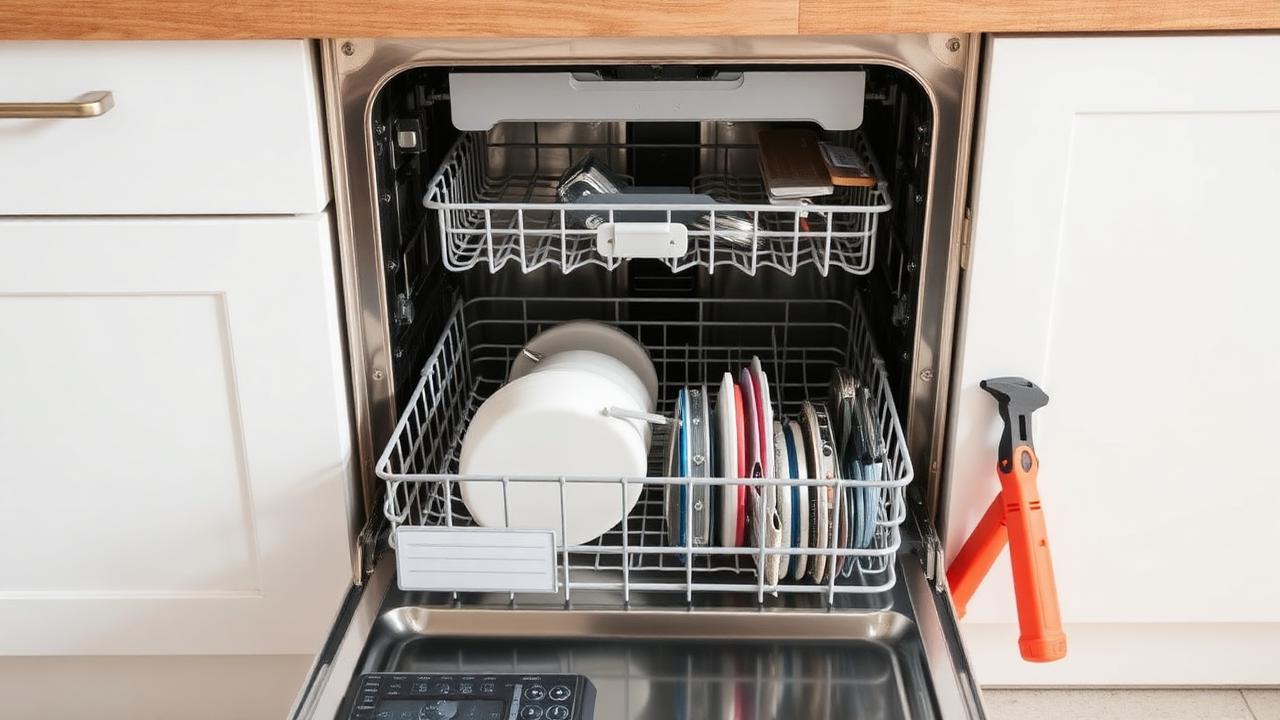
A dishwasher repair-or-replace decision should begin with a written diagnosis, not age, a generic price range, or a percentage rule. Similar symptoms can result from maintenance, installation, plumbing, electrical, or component failures with very different costs.
Compare complete repair with complete installed replacement for the exact home.
Address safety first
Stop using the dishwasher for active leakage, water near electricity, smoke, burning odor, arcing, damaged wiring, or repeated breaker trips. Mitigate water safely and follow emergency guidance.
Do not keep operating an unsafe unit to confirm a symptom. Safety can justify immediate disconnection even before the economic decision is complete.
Get a written diagnosis
Ask the technician to state the failed component, cause, evidence, repair scope, related damage, parts status, and whether the unit is safe.
A no-drain symptom can involve a filter, hose, plumbing restriction, pump, sensor, control, wiring, or installation. A code identifies a detected condition, not necessarily the failed part.
Identify the exact model
Record the full model and serial number, installation, purchase date or approximate age, prior repairs, condition, features, and existing coverage. Search official support and parts using the complete identifier.
Parts and labor can differ across models that look nearly identical.
Calculate complete repair cost
Include diagnosis, part, labor, shipping, tax, removal, reinstallation, plumbing, electrical work, cabinet or panel access, leak testing, and repair warranty.
Clarify whether the diagnostic fee is credited. Ask whether another condition could damage the replacement part.
Calculate installed replacement cost
Include the new appliance, delivery, haul-away, supply line, drain work, cord or hardwiring, floor protection, cabinet or countertop modification, panel transfer, permits, code work, and tax.
Measure the opening and verify connections. A retail price is not the total project.
Consider current condition
Inspect racks, coating, tub, door, hinges, seals, controls, pumps, wiring, and installation. One isolated repair in an otherwise sound machine differs from corrosion, repeated leaks, or multiple failing systems.
Do not assume one failure means another is imminent. Use observed condition and documented history.
Parts availability
Confirm the exact part number, supplier status, lead time, warranty, and whether the component is new, authorized, aftermarket, rebuilt, or used.
A delayed part can affect the decision for a household that needs rapid restoration. Unavailable parts do not automatically require replacement if a documented alternative exists.
Repair warranty
Ask what parts and labor are warranted, by whom, for how long, and what is excluded. Determine whether another service fee or labor charge applies if the same symptom returns.
A stronger repair warranty can reduce the risk of choosing repair, but it does not cover unrelated future failures.
Existing manufacturer protection
Check manufacturer parts and labor coverage, component-specific terms, installer warranty, retailer plan, credit-card benefit, recall remedy, and prior repair warranty.
Obtain authorization before outside service where required. Existing coverage can change the net cost substantially.
Home-warranty coverage
A service contract may cover a listed dishwasher and eligible failed component, subject to effective date, cause, maintenance, installation, service fee, limit, exclusions, and authorization.
The administrator may choose repair, replacement, reimbursement, or cash settlement. Compare the approved benefit with the full project rather than assuming no out-of-pocket cost.
Water damage
A dishwasher leak can damage floors, cabinets, walls, or belongings. The component repair and resulting property damage may be treated separately by a service contract, homeowners insurance, installer, or no coverage.
Document and mitigate the incident. Include restoration in the household's total decision, but do not count uncertain reimbursement as guaranteed.
Cleaning and maintenance checks
Follow the model manual for filter cleaning, spray-arm inspection, detergent, rinse aid, loading, and drain connections. A safe owner procedure can resolve a maintenance condition.
Do not disassemble wiring, pressurized connections, or internal pumps without appropriate skill. Maintenance does not explain every fault.
Installation problems
Recent installation, disposal replacement, plumbing work, flooring, or cabinet changes can cause hose routing, drain, leveling, door, or connection problems. Ask whether installer responsibility or warranty applies.
Correcting installation may be preferable to replacing a functioning appliance.
Performance and features
Compare cleaning, drying, noise, capacity, controls, accessibility, cycle needs, and compatibility. Replacement may add desired features, but optional upgrades should be separated from the cost of restoring function.
A new appliance does not guarantee better performance in every installation.
Energy and water use
Use official labels and ENERGY STAR data for the exact replacement. Compare standardized consumption with the current unit and actual household use.
Do not rely on a universal savings claim. Efficiency may support replacement when other factors are already close, but should be calculated locally.
Timing
Compare repair scheduling, part lead time, replacement availability, delivery, installation, and return policies. A fast retail delivery can still be delayed by electrical, plumbing, cabinet, or panel work.
Ask for realistic dates in writing where possible.
Premium and panel-ready models
Built-in, integrated, drawer, and panel-ready dishwashers can involve custom fronts, hinges, cabinetry, and specialized service. Their replacement scope may be much greater than a standard unit.
Verify whether the existing panel and opening are compatible. This can favor repair when the core appliance remains supportable.
Repeated failures
List prior diagnoses, dates, repairs, and costs. Distinguish recurrence of the same root cause from unrelated issues.
Repeated repair can support replacement, but avoid assuming every future component will fail. Use actual history.
Environmental considerations
Repair can avoid manufacturing and disposal impacts, while replacement can improve standardized energy or water performance. Local recycling, appliance condition, expected use, and efficiency affect the comparison.
Do not treat either choice as universally greener.
Decision worksheet
Score both options for safety, complete cost, warranty, parts, timing, expected usability, installation disruption, efficiency, features, and household preference.
Mark uncertain values. Do not turn an uncertain settlement or savings estimate into a guaranteed benefit.
Questions for the technician
- What failed and why?
- What evidence supports the diagnosis?
- Is another issue likely to damage the repair?
- Is the part available?
- Is removal and reinstallation included?
- What warranty applies?
- Is the machine safe?
- What is the full repair total?
Questions for the installer
- Does the opening fit?
- Are water, drain, and power connections suitable?
- Is cabinet or floor work required?
- Are delivery, haul-away, and testing included?
- What happens if the new unit does not fit?
Final guidance
Repair can fit when the diagnosis is clear, the machine is otherwise sound, parts are available, and the complete cost and timing are acceptable. Replacement can fit when damage is extensive, multiple problems exist, parts are unavailable, or installed replacement offers better overall value.
No age, component, or percentage threshold decides every dishwasher.
Related articles
Disclosure: This article is informational and not a substitute for qualified diagnosis or installation. The site may earn a commission from eligible links. Commercial relationships do not determine the guidance.
Frequently asked questions
Related guides
Should You Repair or Replace a Dryer?
Decide whether to repair or replace a clothes dryer using diagnosis, complete quotes, fire and gas safety, venting, parts, coverage, efficiency, and installation.
Should You Repair or Replace a Refrigerator?
Decide whether to repair or replace a refrigerator using diagnosis, complete quotes, food safety, parts, coverage, energy use, installation, and household needs.
Should You Repair or Replace a Washing Machine?
Decide whether to repair or replace a washing machine using diagnosis, complete quotes, leak safety, parts, coverage, efficiency, installation, and household needs.
Disclaimer: Pricing reflects US national averages as of the publication date and varies by region, brand, and labor rates. This article is informational and does not replace professional inspection or repair advice. See our full disclaimer.