Bosch Dishwasher E18 Error: Meaning and Safe Checks
Written by
Editorial Team
Research and editorial staff
Dates
Published
Last updated
What changed: Corrected the draft's drain-versus-fill conflict, removed unsafe internal procedures, and added model-specific Bosch verification and safe water-supply checks.
Checked by our editors.How we estimate repair costsEditorial policy
Sources
- Bosch dishwasher E18 support — Bosch
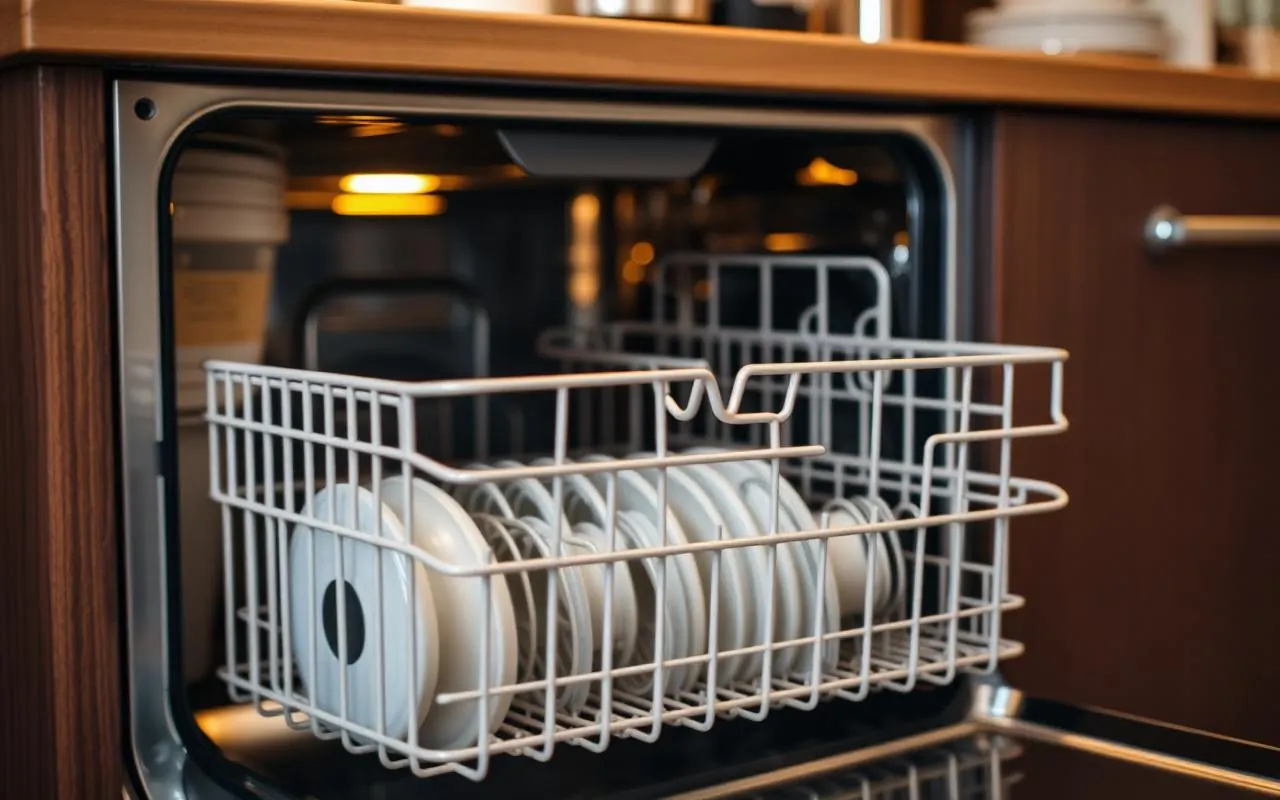
A Bosch dishwasher E18 error should be treated as a model-specific diagnostic clue. On many Bosch models, E18 relates to insufficient or interrupted water entering the dishwasher; it should not be described as a universal drain code.
E18 at a glance
| Observation | Possible meaning | Safe first step |
|---|---|---|
| Code appears during filling | Water supply may be restricted | Record the code and check the exact model manual |
| Visible supply hose is kinked | Accessible flow restriction | Stop the appliance and correct it only if safely accessible |
| Other faucets have weak flow | Household supply may be involved | Check the property water service |
| Code returns after an approved reset | The cause remains | Stop repeating resets and arrange diagnosis |
| Water is leaking | Hose, connection, or appliance problem | Avoid wet electrical areas and shut off water only when safe |
The table is for triage, not diagnosis.
Verify the exact model
Record the complete model and serial information from the rating label. Similar-looking dishwashers can use different controls and procedures. Use Bosch owner support and the manual for that exact model.
The code reports a condition detected by the control, not necessarily the failed component. A restricted supply, installation issue, inlet assembly, flow sensing, wiring, or control problem can produce similar symptoms.
Immediate safety response
Stop the cycle. For active leakage, avoid wet electrical areas. Disconnect power or water only when the shutoff can be reached safely. Follow emergency guidance for smoke, arcing, burning odor, shock risk, or uncontrolled water.
Do not remove panels, run the machine with exposed components, bypass sensors, or perform energized tests. Avoid pulling out a hardwired or built-in dishwasher unless qualified to do so.
Safe accessible checks
Confirm that household water service is available and the dishwasher’s accessible shutoff is open. Inspect the visible supply hose for a kink, crushing, or leakage. Review recent installation, plumbing work, or movement that could have affected the line.
Follow the Bosch manual before cleaning any accessible inlet screen. Shut off power and water as directed. Do not use pliers to pull an internal screen unless the manufacturer provides that owner procedure for the exact model.
Possible causes
Categories to discuss with a technician include:
- Closed or restricted water supply
- Kinked, crushed, or damaged inlet hose
- Low household flow
- Installation or routing problem
- Inlet valve or water-protection assembly
- Flow sensor or pressure-related input
- Wiring, connector, or control fault
This list is not a part diagnosis.
Resetting E18
Use only the reset or power-cycle process in the model manual. A reset may clear a temporary state after the cause is corrected. It cannot repair a restriction, leaking hose, failed valve, sensor, wiring, or control.
If E18 returns, record when it appears and whether any water enters. Stop repeating the reset and arrange qualified service.
When to get service
Arrange service when accessible supply checks do not resolve the condition, internal access is required, the appliance is hardwired, or the code returns. Stop immediately for leakage, water near wiring, repeated breaker trips, burning odor, or a damaged supply hose.
Tell the technician the full model, code, cycle stage, recent plumbing work, visible conditions, and results of approved checks.
What a useful diagnosis includes
Request the detected condition, failed component, evidence, cause, required repair, parts availability, complete estimate, and safety status. A report that only says “E18” is incomplete.
Ask how normal fill and leak-free operation will be verified after the repair. Check manufacturer, retailer, installer, and service-contract coverage before unauthorized internal work.
Repair or replace
Compare complete repair cost with installed replacement only after diagnosis. Consider parts availability, prior failures, condition, remaining coverage, repair warranty, cabinet fit, plumbing, electrical connection, and downtime.
Do not use one age or price threshold automatically. A contained inlet repair can make sense on an older dishwasher, while extensive water or wiring damage can make replacement practical on a newer one.
Final guidance
Treat Bosch E18 as a possible water-supply or fill condition, verify the exact model information, complete only safe accessible checks, and obtain a source-based diagnosis before internal repair or continued operation.
What the control is actually measuring
A fill-related code is generated when the control does not see the water it expects within the time or volume window the program allows. That expectation depends on inlet pressure, the condition of the inlet assembly, the sensing method used on that model, and the program stage. Because the control reports a missed expectation rather than a named broken part, two dishwashers showing the same code can need completely different work.
This is why a parts-first approach is expensive. Replacing an inlet valve on a machine whose supply stop is half closed will appear to work briefly and then fail again. Ask for the measured evidence: supply pressure or flow at the connection, the behaviour of the inlet assembly when energised, and whether the control registers water arriving at all.
Conditions that commonly precede the code
Note whether anything changed recently in the home. Plumbing repairs, a shut-off left partially closed, water-heater work, a new filter, municipal main work, or a seasonal pressure drop can all reduce flow to a dishwasher without affecting sinks noticeably. Freezing weather can restrict a line routed through an exterior wall or an unheated cabinet run.
Installation history matters as well. A hose routed behind a pulled-out appliance, a crushed line behind a cabinet toe kick, or a supply connection reused across several installations are all realistic contributors that no replacement part will address.
Document before you call
Write down the full model and serial number, the exact code text, the point in the cycle when it appears, whether any water is heard entering, whether the fault clears after an approved reset, and how quickly it returns. Add photographs of the rating label, the visible supply hose, and the shut-off position.
This record shortens the visit and reduces the chance of a diagnosis based on assumption. It also gives you a factual basis if the first repair does not resolve the problem and a second visit becomes necessary.
Cost expectations without guessing
A realistic quote separates the diagnostic charge, parts, labour, and any plumbing work performed by another trade. A supply-side correction is usually the least expensive outcome; an inlet assembly replacement sits in the middle; control or wiring work sits at the top and is where a repair-versus-replace comparison becomes relevant.
Ask whether the diagnostic fee is credited against the repair, whether the quote covers a return visit if the code reappears, and how long the labour warranty runs. Those three answers change the real cost more than the headline price does.
Related articles
Disclosure: This article is informational and not a substitute for Bosch instructions or qualified service. The site may earn a commission from eligible links.
Frequently asked questions
Related guides
KitchenAid Oven F9 E0 Error: Meaning and Safe Response
Learn what a KitchenAid oven F9 E0 code may mean, why electrical supply or miswiring matters, safe first steps, and when qualified service is required.
Maytag Washer F9E1 Error: Safe Drainage Checks
Learn what a Maytag washer F9E1 error may mean, safe checks for standing water and the drain path, and when pump or sensor diagnosis needs service.
Bosch Dishwasher E15 Error: Meaning and Safe Troubleshooting
See what E15 can mean on a Bosch dishwasher, the safe first steps, why tilting is risky, possible leak sources, and when to arrange qualified service.
Disclaimer: Pricing reflects US national averages as of the publication date and varies by region, brand, and labor rates. This article is informational and does not replace professional inspection or repair advice. See our full disclaimer.