Samsung Washer 4C Error Code: Safe Troubleshooting
Written by
Editorial Team
Research and editorial staff
Dates
Last updated
What changed: Expanded the 4C guide beyond 1,000 words and removed universal code equivalence, fixed prices, unsafe filter-screen removal, component certainty, pressure assumptions, and warranty promises.
Checked by our editors.How we estimate repair costsEditorial policy
Sources
- Samsung washer support — Samsung
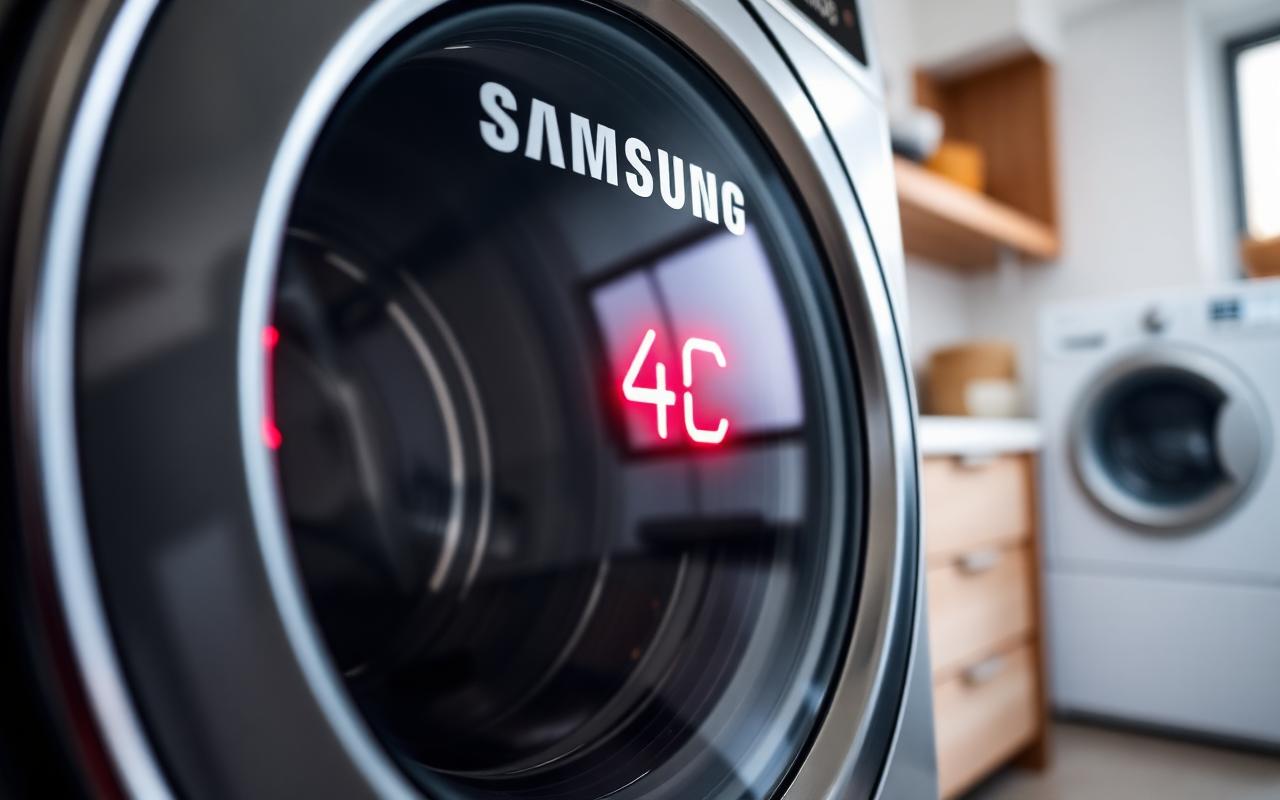
A Samsung washer displaying 4C may have detected that water did not enter or was not measured as expected. The exact definition, related code variants, fill timing, and approved checks depend on the complete model, product platform, market, and installation.
Treat 4C as a water-supply or fill clue, not proof that one valve or sensor has failed.
Immediate safety response
Stop the washer for active leakage, water near electrical connections, smoke, burning odor, arcing, damaged wiring, repeated breaker trips, or violent movement. Close accessible supply valves and disconnect power only when safe.
Do not remove hoses or screens while the supply is pressurized. Keep towels and a container ready if the official procedure requires disconnection.
Find the complete model number
Locate the rating label where Samsung specifies. Record the entire model and serial number, including suffixes.
Use Samsung support to find the correct owner manual, installation guide, warranty, and troubleshooting information. Similar-looking washers may use different codes and procedures.
Record the fault
Before resetting, photograph the display and note:
- Exact code and any suffix
- Cycle and temperature selection
- Load type and size
- Whether water entered
- Hot, cold, or both supplies involved
- Sounds from the inlet area
- Leakage or unusual odor
- Recent installation, moving, plumbing, or well work
- Whether other fixtures have normal flow
Do not translate the display into another code without model-specific confirmation.
Verify the official meaning
On many Samsung models, 4C relates to water supply or filling. The machine may not have detected the expected water level or flow within the control's conditions.
Potential contributors include closed or partially open valves, visible hose restriction, inlet screens, household pressure, temperature selection, frozen lines, valve operation, water-level sensing, wiring, controls, siphoning, drainage, or installation. The code alone does not identify one component.
Use the official reset procedure
Follow the manual for canceling, draining, or power cycling. A reset may clear a temporary state after water service or a power interruption.
If 4C returns, stop repeating resets. A reset cannot repair inadequate supply, a failed valve, damaged wiring, sensing problems, freezing, or leakage.
Check household water service
Confirm that water service is available and that other fixtures behave normally. If the home uses a well, pump, filtration, or softening system, record recent changes or low-flow conditions.
Do not use an improvised bucket test as a universal pressure measurement. A qualified plumber can evaluate pressure and flow safely when needed.
Check accessible supply valves
If safe and permitted by the installation, confirm the washer's hot and cold valves are in the operating position specified by the manual. A valve can appear open while being damaged or restricted internally.
Do not force corroded, leaking, or seized valves. Shutoff repair is plumbing work and may be separate from appliance service.
Inspect visible fill hoses
Look for crushing, sharp bends, freezing, blistering, corrosion, leakage, or incorrect hot and cold connections. Follow Samsung's requirements for hose type, routing, and connection.
Do not pull the washer aggressively or strain hoses. Replace damaged supply hoses using appropriate parts and qualified installation.
Inlet screens
Some models and instructions allow inspection or cleaning of accessible inlet screens. Follow the exact manual: turn off water, relieve pressure as directed, protect the floor, and avoid damaging or removing screens unless instructed.
Screens are part of the valve assembly on many products. Puncturing, deforming, or omitting them can create debris entry or leakage.
Hot and cold selection
Some cycles require particular supplies or evaluate temperature. Reversed hoses, a closed hot or cold valve, or unsuitable incoming temperature can contribute to fill errors on certain models.
Use the installation diagram for the exact washer. Do not assume a related code variant has the same meaning across every model.
Frozen supply conditions
In cold spaces, hoses, valves, or household pipes may freeze. Follow Samsung and plumbing guidance for safe thawing.
Do not use open flame, boiling water, or uncontrolled heat. Inspect for cracks and leakage after thawing.
Drainage and siphoning
Incorrect drain-hose height, insertion, sealing, or routing can allow water to siphon out while the washer fills. The control may interpret the falling level as a supply problem.
Compare the installation with the model guide. Household drain configuration may require a plumber.
Detergent and loading
Excess detergent, unsuitable detergent, or unusual loads can affect sensing and cycle behavior, though they do not explain every 4C code.
Use the detergent type and amount specified by Samsung. Do not mix cleaners or add improvised chemicals.
Inlet-valve diagnosis
The water inlet valve is an electrically controlled component. Low or absent flow can involve its screens, solenoids, mechanical valve, wiring, control signal, or household supply.
A technician should use model-specific tests and verify both supply and electrical operation before replacement. Do not probe energized circuits.
Water-level sensing
The control may use a pressure sensor, hose, flow measurement, or other inputs depending on the model. Restrictions, leaks, wiring, or sensor faults can misreport the water level.
Do not replace a pressure sensor merely because water is visible or absent. Ask for test evidence.
Wiring and control possibility
Connectors, wiring harnesses, relays, and the control can affect filling. These are generally evaluated after supply, installation, hoses, and accessible conditions are checked.
Internal electrical diagnosis belongs to a qualified technician.
Installation-related 4C
If the code began after delivery, moving, hose replacement, plumbing work, or water-service changes, document the timing. Closed valves, reversed hoses, kinks, transit setup, drain routing, and leaks may be relevant.
Contact the installer where appropriate and keep invoices and photographs.
What a diagnosis should include
Request a written report identifying:
- Model-specific code definition
- Household supply and valve findings
- Hose and screen condition
- Inlet-valve operation
- Water-level or flow-sensing findings
- Drain and installation contribution
- Required repair
- Parts availability
- Complete estimate
- Repair warranty
A report that says only “4C equals inlet valve” is incomplete.
Repair cost
There is no dependable universal 4C repair price. Cost depends on whether the remedy involves a valve position, hose, inlet screen, household plumbing, freezing, valve assembly, sensor, wiring, control, access, or water damage.
Obtain an itemized local quote including diagnosis, parts, labor, moving or unstacking, shipping, tax, reconnection, and leak testing.
Repair or replace
Compare the written diagnosis and complete repair cost with installed replacement. Consider current condition, prior failures, parts availability, existing coverage, stacking, plumbing, efficiency, timing, and repair warranty.
Do not apply one age, dollar, or percentage threshold automatically.
Manufacturer warranty and recalls
Check the issued warranty, purchase date, registration, parts and labor terms, motor provisions, installer warranty, authorized-service requirements, and official recall notices.
Contact Samsung before unauthorized internal work when coverage may apply. A 4C code does not guarantee a particular remedy.
Home-warranty coverage
A service contract may cover a listed washer and eligible component, subject to cause, effective date, maintenance, installation, service fee, limits, exclusions, and authorization.
Supply hoses, household valves, plumbing, screens, access, and resulting damage may be handled separately. Review the exact contract.
Water damage
The washer failure and damage to flooring, walls, cabinetry, or belongings can be treated separately by a warranty, homeowners insurance, installer, plumber, or no coverage.
Mitigate safely, photograph conditions, retain receipts, and notify relevant providers. Do not assume one approval covers the full incident.
After repair
Obtain the final diagnosis, part number, invoice, test results, and repair warranty. Confirm that the technician checked supply, filling, drainage, and leaks under the model-specific test.
Monitor initial cycles according to service guidance. Stop if 4C, leakage, burning odor, or abnormal valve behavior returns.
Prevention
Follow Samsung's manual for supply valves, hoses, inlet screens where owner service is allowed, detergent, loading, drain installation, and cold-weather protection. Inspect accessible hoses and connections periodically.
Maintenance reduces avoidable problems but cannot prevent every valve, sensor, wiring, control, or plumbing issue.
Questions for Samsung or the technician
- What does 4C mean for this exact model?
- Are related code variants different?
- Which owner checks are approved?
- Is household pressure or flow adequate?
- Were both valve channels tested?
- Was water-level sensing evaluated?
- Is the machine safe?
- Is access and reconnection included?
- What warranty applies?
- What is the complete repair total?
Final guidance
Treat Samsung 4C as a model-specific fill or supply condition. Stop leaks and electrical hazards, preserve the code, verify the manual, and complete only approved visible checks before seeking qualified diagnosis.
Avoid universal code equivalence, forced valves, damaged screens, energized testing, and part replacement based only on the display.
Related articles
- Washing Machine Repair Cost Guide
- Repair or Replace a Washing Machine?
- Does a Home Warranty Cover a Washer and Dryer?
Disclosure: This article is informational and not a substitute for Samsung instructions or qualified service. The site may earn a commission from eligible links. Commercial relationships do not determine the guidance.
Frequently asked questions
Related guides
Bosch Dishwasher E15 Error Code: Safe Troubleshooting
Learn how to respond safely to a Bosch dishwasher E15 code, verify its model-specific meaning, document leakage, check approved basics, and arrange service.
Dishwasher Error Codes: A Safe Troubleshooting Guide
Learn how to interpret dishwasher error codes safely, locate the correct model manual, check water and drainage basics, document faults, and decide when to call a technician.
GE Oven F3 Error Code: Safe Troubleshooting
Learn how to respond safely to a GE oven F3 code, verify its model-specific meaning, document the fault, use approved resets, and arrange qualified diagnosis.
Disclaimer: Pricing reflects US national averages as of the publication date and varies by region, brand, and labor rates. This article is informational and does not replace professional inspection or repair advice. See our full disclaimer.