Should You Repair or Replace an Oven?
Written by
Editorial Team
Research and editorial staff
Dates
Last updated
What changed: Expanded the decision guide beyond 1,000 words without unsupported fixed prices, lifespan rules, resistance tests, warranty promises, or automatic age and percentage thresholds.
Checked by our editors.How we estimate repair costsEditorial policy
Sources
- Consumer Product Safety Commission recalls — U.S. Consumer Product Safety Commission
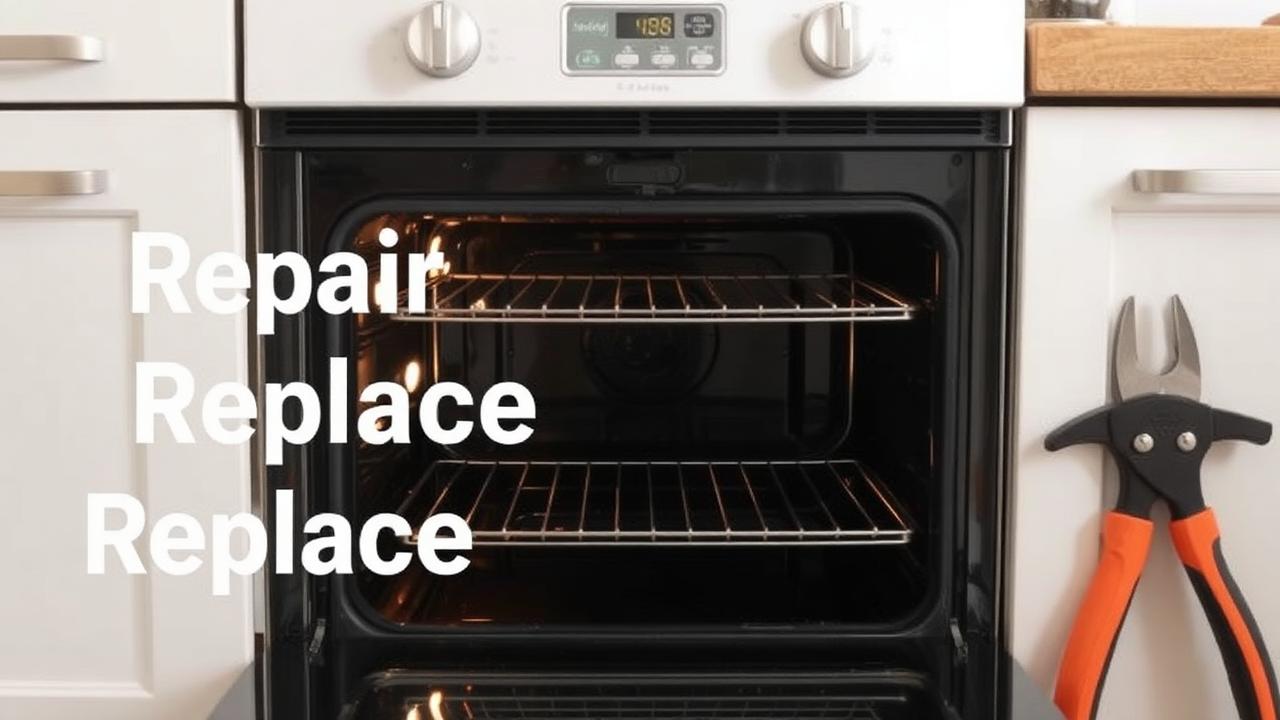
An oven, range, stove, or cooktop repair-or-replace decision begins with safety and qualified diagnosis. No heat, uneven temperature, ignition trouble, a dead surface element, or an error code can involve power, gas supply, elements, ignition, sensors, controls, wiring, airflow, installation, or settings.
Do not decide from a generic age, fixed repair range, or percentage rule. Compare complete repair with complete installed replacement for the exact appliance and kitchen.
Address gas and electrical hazards
If you smell gas, follow gas-utility and emergency guidance. Leave when directed, avoid flames, and do not operate switches or attempt repairs. Stop using an appliance for smoke, arcing, damaged wiring, repeated breaker trips, uncontrolled heat, or cracked cooking glass.
Internal gas work, high-voltage testing, hardwiring, and heavy built-in removal require qualified service.
Identify the exact appliance
Record:
- Manufacturer
- Complete model and serial number
- Gas, electric, dual-fuel, or induction design
- Freestanding, slide-in, wall oven, or cooktop installation
- Purchase date or approximate age
- Symptoms and codes
- Prior repairs
- Existing warranties or service contracts
- Cabinet, ventilation, and utility details
Photograph the rating label and installation.
Get a written diagnosis
Ask the technician to identify the failed component, cause, evidence, required repair, related damage, parts status, safety condition, and repair warranty.
An oven that does not heat does not automatically need an element or igniter. Supply, sensors, relays, wiring, controls, settings, and safety devices can produce similar symptoms.
Complete repair cost
Include diagnosis, parts, labor, shipping, tax, removal, reinstallation, gas or electrical work, cabinetry, calibration, safety testing, and repair warranty.
Clarify whether the diagnostic charge is credited and whether another condition could damage the new component.
Complete installed replacement cost
Include the appliance, delivery, haul-away, cabinet or countertop modification, trim, gas connector, shutoff work, electrical circuit or receptacle, ventilation, anti-tip installation, permits, code work, flooring protection, and tax.
Verify opening dimensions, fuel, voltage, clearance, ventilation, door swing, and delivery path. Retail price alone is incomplete.
Appliance type matters
Freestanding ranges, slide-in ranges, wall ovens, cooktops, double ovens, induction products, and commercial-style appliances have different replacement and access requirements.
A built-in or specialty appliance can justify a larger repair because replacement may involve cabinetry, trim, utilities, and limited compatible models. Compare like with like.
Heating and ignition problems
Electric ovens can involve supply, heating components, sensors, controls, relays, wiring, or thermal protection. Gas ovens can involve supply, ignition, flame sensing, valves, controls, wiring, or ventilation.
Do not perform live-voltage, resistance, gas-pressure, or combustion tests without appropriate qualifications and model-specific procedures.
Temperature and cooking performance
Preheating, cookware, rack position, door opening, calibration, convection airflow, sensors, elements, ignition, and controls can affect results.
Use official calibration guidance and document patterns. A household thermometer can support observations but does not diagnose the failed part.
Surface cooking problems
Gas burner symptoms can involve moisture, debris, burner alignment, ignition, switches, wiring, controls, or supply. Electric and induction surfaces can involve elements, receptacles, controls, sensors, cookware compatibility, fans, wiring, or power modules.
A single surface failure may be repairable independently of the oven. Do not replace the whole appliance before diagnosis.
Control boards and interfaces
Electronic controls can be expensive or unavailable, but a dead display does not prove that the main board failed. Power, wiring, fuses, temperature protection, user interface, and communication can be involved.
Ask whether the board can be repaired or rebuilt and what warranty applies. Do not order nonreturnable electronics based on a generic code.
Door, hinge, and glass condition
A damaged door can affect heat, safety, and performance. Evaluate hinges, springs, latch, seals, glass, trim, and frame.
Doors are heavy and assemblies may be tensioned. Confirm whether complete removal, glass, alignment, and testing are included in the quote.
Current condition
Inspect cooking surfaces, oven cavity, racks, doors, controls, wiring, rust, spills, seals, burners, ventilation, and installation. One isolated fault differs from structural damage, repeated overheating, multiple dead functions, or unavailable components.
Use observed condition rather than predicting future failure from age.
Prior repair history
List previous diagnoses, dates, parts, costs, and warranties. Determine whether the present issue is a recurrence or an unrelated failure.
Repeated repairs can favor replacement, but check whether previous work remains under warranty.
Parts availability
Confirm exact part numbers, supplier status, lead times, condition, return rules, and warranty. Older or specialty models may have scarce control boards, glass, trim, or induction modules.
Ask about authorized replacements or rebuilding before concluding that no repair is possible.
Manufacturer and recall coverage
Review manufacturer parts and labor terms, component-specific coverage, installer warranty, retailer protection, credit-card benefits, recall remedies, and prior repair warranties.
Use the complete model and serial range. Obtain authorization before outside repair when required.
Home-warranty coverage
A service contract may cover a listed oven, range, or cooktop and eligible component, subject to effective date, cause, fuel type, maintenance, installation, service fee, limits, exclusions, and authorization.
The administrator may choose repair, replacement, reimbursement, or cash settlement. Compare the approved amount with the full project, including utilities and cabinetry.
Safety upgrades and code work
Replacement or repair can reveal unsuitable wiring, receptacles, gas connectors, shutoffs, ventilation, clearances, anti-tip protection, or permits. These may be required but excluded from a repair or warranty benefit.
Request an itemized scope separating appliance work, required safety work, code work, and optional upgrades.
Changing fuel type
Switching between gas, electric, dual fuel, and induction can require new circuits, gas capping or extension, ventilation review, cookware, permits, and utility planning.
Treat a fuel conversion as a renovation decision, not merely an appliance replacement. Obtain qualified quotes.
Features and cooking needs
Compare capacity, burner arrangement, convection, induction, controls, accessibility, cleaning method, ventilation, and household cooking patterns. Separate required functions from optional upgrades.
Do not count the entire cost of a desired premium upgrade as the cost of restoring current function.
Energy use
Cooking energy depends heavily on fuel, local rates, frequency, cookware, appliance design, and household behavior. Use official product information and local utility costs.
Avoid universal savings or payback claims. Efficiency may be one factor when the decision is otherwise close.
Timing
Compare technician availability, part lead time, replacement stock, delivery, built-in removal, cabinet work, utility changes, and inspection. An appliance in stock may not be ready for use immediately.
Use safe temporary cooking options rather than operating hazardous equipment.
Repair warranty
Ask who warrants parts and labor, for how long, and what happens if the same symptom returns. Clarify whether travel, diagnosis, removal, or calibration is included.
A repair warranty reduces limited risk but does not cover unrelated future failures.
Environmental considerations
Repair can extend useful life and avoid disposal. Replacement can improve controls, safety, or standardized efficiency. Actual use, local recycling, and the condition of the appliance matter.
Neither choice is universally better environmentally.
Decision worksheet
Compare:
- Safety
- Diagnosis certainty
- Complete repair cost
- Installed replacement cost
- Existing coverage
- Parts availability
- Timing
- Current condition
- Prior repairs
- Repair warranty
- Utility and cabinet work
- Cooking performance
- Features and accessibility
Mark unknowns rather than turning estimates into guarantees.
Questions for the technician
- What failed and why?
- What evidence supports the diagnosis?
- Is supply, ventilation, or installation involved?
- Is the appliance safe?
- Is the part available?
- Is removal, reinstallation, calibration, and testing included?
- What warranty applies?
- What is the complete repair total?
Questions for the installer
- Does the replacement fit the opening and delivery route?
- Are fuel, voltage, ventilation, anti-tip, and clearance suitable?
- Is cabinet, countertop, trim, or floor work required?
- Are delivery, haul-away, connection, permits, testing, and tax included?
- What happens if the product does not fit?
Final guidance
Repair can fit when diagnosis is clear, the appliance is otherwise sound, parts are available, and complete cost and timing are acceptable. Replacement can fit when safety damage is extensive, multiple problems exist, parts are unavailable, or installed replacement offers better overall value.
No single age, control-board diagnosis, repair price, or percentage threshold decides every oven or range.
Related articles
Disclosure: This article is informational and not a substitute for qualified diagnosis or installation. The site may earn a commission from eligible links. Commercial relationships do not determine the guidance.
Frequently asked questions
Related guides
Should You Repair or Replace a Dryer?
Decide whether to repair or replace a clothes dryer using diagnosis, complete quotes, fire and gas safety, venting, parts, coverage, efficiency, and installation.
Should You Repair or Replace a Dishwasher?
Decide whether to repair or replace a dishwasher using a written diagnosis, complete repair and installation quotes, condition, parts, coverage, and safety.
Should You Repair or Replace a Refrigerator?
Decide whether to repair or replace a refrigerator using diagnosis, complete quotes, food safety, parts, coverage, energy use, installation, and household needs.
Disclaimer: Pricing reflects US national averages as of the publication date and varies by region, brand, and labor rates. This article is informational and does not replace professional inspection or repair advice. See our full disclaimer.