Do Home Warranties Cover Old Appliances?
Written by
Editorial Team
Research and editorial staff
Dates
Published
Last updated
What changed: Expanded the contract-specific eligibility guide beyond 1,000 words without restoring unsupported age, replacement, or pre-existing-condition assertions.
Checked by our editors.How we estimate repair costsEditorial policy
Sources
- Federal Trade Commission consumer advice — Federal Trade Commission
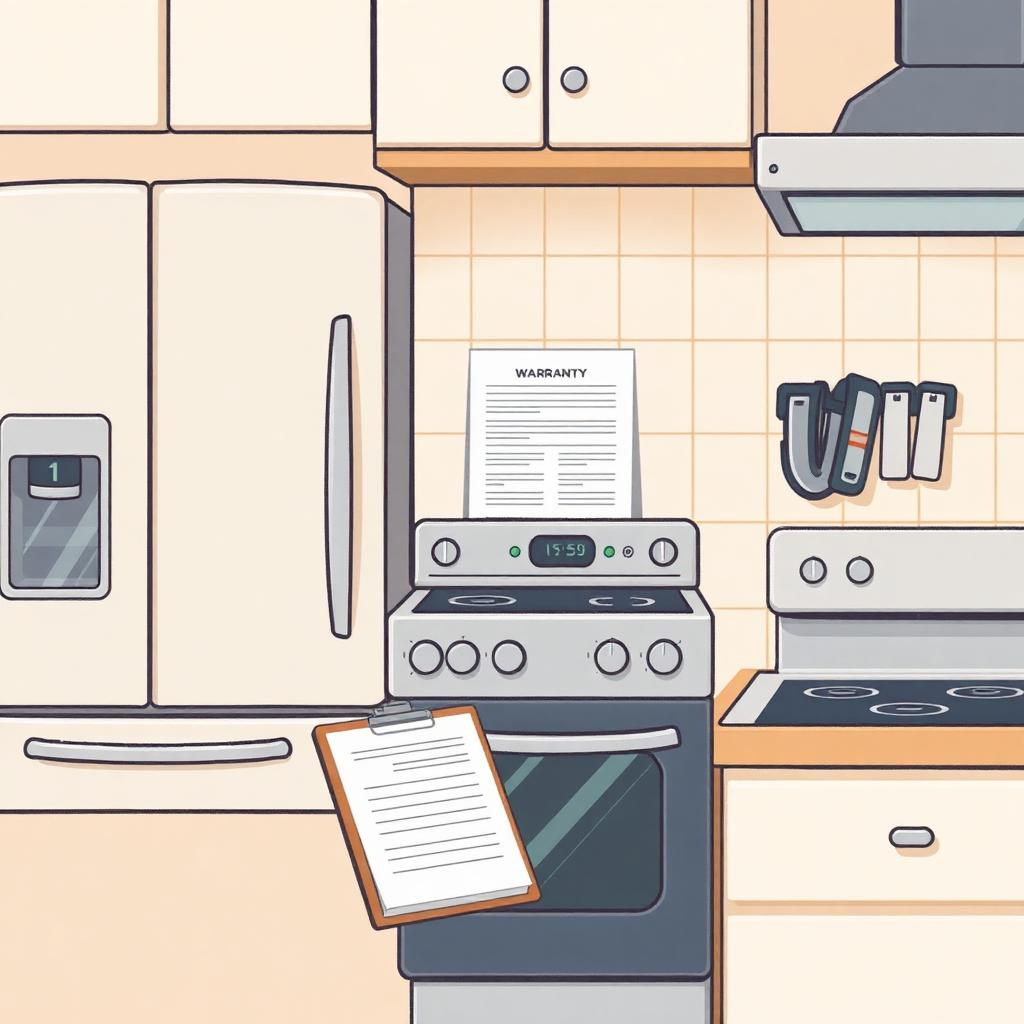
Older appliances are not uniformly covered or excluded by home warranties. An appliance's age can matter, but it is only one part of eligibility and claim handling. The agreement issued for the property, plan, provider, location, and effective date controls.
A sales statement that a plan covers appliances “regardless of age” should be checked against the definitions, exclusions, limits, and replacement provisions. Age may not be an express exclusion while condition, existing problems, maintenance, parts availability, or settlement limits still affect the outcome.
Start with the contract
Obtain the complete sample agreement before purchase and the final agreement after enrollment. Confirm that they match the property and plan you selected.
Search for:
- Appliance definitions
- Covered-items list
- Age or eligibility restrictions
- Existing or detectable conditions
- Effective date and waiting period
- Maintenance and installation requirements
- Service fees and authorization
- Per-item and aggregate limits
- Obsolete or unavailable parts
- Repair, replacement, and cash-settlement rights
- Cancellation, renewal, and transfer
Do not rely only on a comparison table or phone summary.
Does the plan state an age limit?
Some agreements may state that age alone does not exclude a covered item. Others may impose age, model, condition, inspection, or documentation requirements. Read the exact language.
Even when no age limit appears, age can be relevant to parts availability, prior wear, repair feasibility, efficiency, and settlement value. That does not mean an administrator may invent a new exclusion. It means the existing contract provisions still need to be applied to the diagnosed failure.
Was the appliance included?
Confirm the exact appliance, quantity, and location. A plan may cover one primary refrigerator while requiring an add-on for another. Laundry appliances may be included in one tier and optional in another. Portable, outdoor, garage, commercial, or specialty units may be treated differently.
Record the brand, full model number, serial number, and installation address. If the plan uses add-ons, keep the order confirmation showing the selected option.
When did coverage and symptoms begin?
Create a timeline:
- Appliance purchase and installation, if known
- Home purchase or inspection
- Prior repairs and reported symptoms
- Contract purchase date
- Effective date
- End of any waiting period
- First sign of the current problem
- Claim date
Be accurate. A new plan should not be assumed to cover an appliance that was already broken, leaking, noisy, or performing poorly before coverage began.
Existing-condition language
Contracts can define pre-existing, known, unknown, or detectable conditions differently. Some focus on whether a reasonable inspection would have revealed the problem. Others exclude any condition that existed before the effective date.
Review whether the agreement requires an inspection or maintenance records. If you recently purchased the home, keep the inspection report, seller disclosures, repair requests, and closing documents. These records can support timing, but they can also document a known problem.
Do not alter or hide prior information. If a claim is disputed, request the specific contract language and evidence supporting the decision.
Condition at enrollment
Document how the appliance operated near enrollment without dismantling it or creating unsafe tests. You might retain dated photographs, temperature logs, cycle observations, or an inspection report where appropriate.
Documentation does not guarantee eligibility, and normal operation on one day does not prove that no internal condition existed. Its value is providing a clearer history.
Maintenance requirements
Older appliances can have longer maintenance histories and missing records. Check what the contract actually requires rather than assuming every receipt is mandatory.
Locate the manufacturer's manual and follow its instructions for filters, vents, coils, seals, loading, detergent, cleaning, drainage, and inspection. Keep dated notes and receipts when practical.
A provider may rely on a technician's finding that installation or maintenance contributed to failure. Ask for that finding in writing and compare it with the manual and contract.
Installation issues
Improper installation, blocked ventilation, incorrect drainage, unsuitable electrical supply, water-pressure problems, gas connections, unlevel placement, or cabinet restrictions can affect appliance performance.
An appliance may have worked for years despite an installation issue. That history does not automatically establish warranty eligibility. Diagnose the present failure and review how the agreement treats installation-related damage.
Parts availability
Older appliances can remain mechanically serviceable while critical parts become unavailable. Confirm the exact model and serial number because production revisions may use different components.
Ask the technician and administrator:
- What part failed?
- Is the diagnosis confirmed?
- Is the part currently in stock?
- Is it original, aftermarket, refurbished, or used?
- Is a substitute approved?
- What warranty applies?
- What happens if the part is obsolete?
A listing on a parts website does not prove inventory. Verify availability before approving extensive disassembly.
Repair rights
The administrator may retain the right to select the service provider and decide whether an eligible appliance is repaired, replaced, reimbursed, or settled. Age alone does not establish which remedy will be offered.
If repair is authorized, confirm whether diagnosis, labor, parts, shipping, refrigerant, return visits, access, removal, and reinstallation count toward the benefit limit.
Replacement is not automatic
An old appliance that cannot be repaired does not necessarily qualify for a new version of the same brand, features, color, or configuration. The contract may allow a comparable replacement, cash settlement, reimbursement, store credit, depreciated value, or another remedy.
Review whether replacement includes:
- Delivery
- Haul-away
- Installation and reconnection
- Required cords, hoses, pans, or kits
- Cabinet, countertop, or trim modification
- Custom panels and handles
- Utility or ventilation changes
- Permits, code upgrades, and taxes
For a built-in product, these related costs can exceed the difference between appliance models.
Benefit limits
Check per-item, per-component, per-claim, annual, and aggregate limits. Some agreements may apply different limits to selected parts, missing records, or certain settlement situations.
Ask how previous claims affect the remaining benefit and which costs are counted against it. Do not compare a limit with a retail replacement price until you understand whether diagnosis, labor, shipping, installation, or tax also consumes the limit.
Appliance-by-appliance review
Refrigerators
Record actual temperatures, cooling changes, frost, water, noise, door sealing, and symptom dates. A cooling complaint can involve airflow, fans, controls, sensors, defrost components, door issues, or the sealed system. The diagnosis—not age—should identify the repair path.
For built-in refrigerators, include custom panels, cabinetry, ventilation, water connections, floor protection, and removal in the service plan.
Dishwashers
Poor cleaning or drainage can involve loading, filters, detergent, water conditions, plumbing connections, pumps, controls, or installation. A leak can arise from a hose, seal, pump, tub, valve, or surrounding plumbing.
Stop using a leaking dishwasher when continued operation could increase damage. Property restoration may fall outside the appliance benefit.
Washers
Document leaks, noise, vibration, spin, drainage, controls, and recent loads. Leveling, overloading, detergent, water supply, drainage, and stacked access can affect service.
A switch or hose issue is different from a bearing, tub, motor, or structural problem. Ask for a written diagnosis before discussing whether the appliance is too old to repair.
Dryers
Dryer performance depends on the appliance and exhaust system. Restricted venting can cause long drying time and excess heat. Confirm that the diagnosis considers airflow, power or gas supply, controls, sensors, heating components, and installation.
Gas odor, smoke, burning smell, sparking, or damaged wiring requires safety-first action.
Ovens, ranges, and cooktops
Cooking products can involve gas, high voltage, heating elements, ignition, sensors, controls, glass, and built-in access. Appliance age does not determine whether a particular element, board, valve, or structural issue qualifies.
If there is uncontrolled heat, gas odor, sparking, or damaged wiring, stop use and follow manufacturer or emergency guidance.
Microwaves
Microwaves can retain dangerous high voltage after unplugging. Internal diagnosis is for qualified service. Built-in and combination products can add trim, cabinet, electrical, and fit considerations to repair or replacement.
Filing a claim on an older appliance
Follow the contract's process:
- Stop use if continued operation is unsafe or damaging.
- Record symptoms and dates.
- Contact the administrator before hiring service unless emergency terms say otherwise.
- Provide accurate model, serial, plan, and history information.
- Save the claim number and authorization.
- Request the technician's written diagnosis.
- Review the coverage decision and limit calculation.
- Appeal within the stated deadline if evidence or terms were misunderstood.
Avoid performing unauthorized work or discarding parts before the administrator completes review.
Buying coverage for aging equipment
List every appliance, estimated age, known condition, repair history, and replacement constraints. Compare the plan's premium and fees with its actual covered items, limits, exclusions, and local service access.
Consider keeping a repair reserve. Coverage transfers some contractual risk but does not remove maintenance, downtime, denied-claim, installation, or replacement risk.
When coverage may offer useful budgeting support
A plan may fit when several eligible appliances are operating, the contract clearly addresses relevant failures, local service is available, limits are meaningful, and the household prefers predictable contract costs over self-funding uncertain repairs.
This is not a prediction of savings. A household may pay premiums and receive no approved claim, while another may receive a covered repair subject to fees.
When self-funding may fit better
A repair reserve may fit when known problems are excluded, limits are low relative to installed replacement, the household prefers its own technicians, service availability is poor, or the contract covers few relevant items.
Compare actual terms and household finances rather than using a universal rule based on age or number of appliances.
Documents to keep
Maintain a folder containing the contract, add-ons, receipts, inspection report, disclosures, photographs, model and serial numbers, maintenance records, prior repairs, claim correspondence, technician reports, and settlement offers.
These records help establish a timeline and allow a reviewer to compare the claim with the written agreement.
Related articles
- Appliance Lifespan Guide
- Appliance Repair vs Replacement
- Home Warranty vs Appliance Warranty
- Appliance Warranty Claims
Disclosure: This article is informational. Eligibility and remedies vary by contract, provider, appliance, property, and jurisdiction. The site may earn a commission from eligible links, without changing our editorial standards.
Frequently asked questions
Related guides

Are Home Warranties Worth It for Appliances? 2026 Guide
Evaluate appliance home-warranty value using total cost, covered components, service fees, limits, exclusions, contractor rules, and repair-fund alternatives.

Appliance Warranty vs Repair Cost: How to Decide
Compare an appliance warranty claim with direct repair or replacement using service fees, limits, exclusions, timing, technician choice, and total cost.
Does a Home Warranty Cover a Dishwasher?
Learn how to verify dishwasher coverage, components, exclusions, limits, service fees, claim authorization, and repair-or-replacement terms.
Disclaimer: Pricing reflects US national averages as of the publication date and varies by region, brand, and labor rates. This article is informational and does not replace professional inspection or repair advice. See our full disclaimer.