Home Warranty Guides

Are Extended Appliance Warranties Worth It? A Homeowner's Guide

By Editorial Team
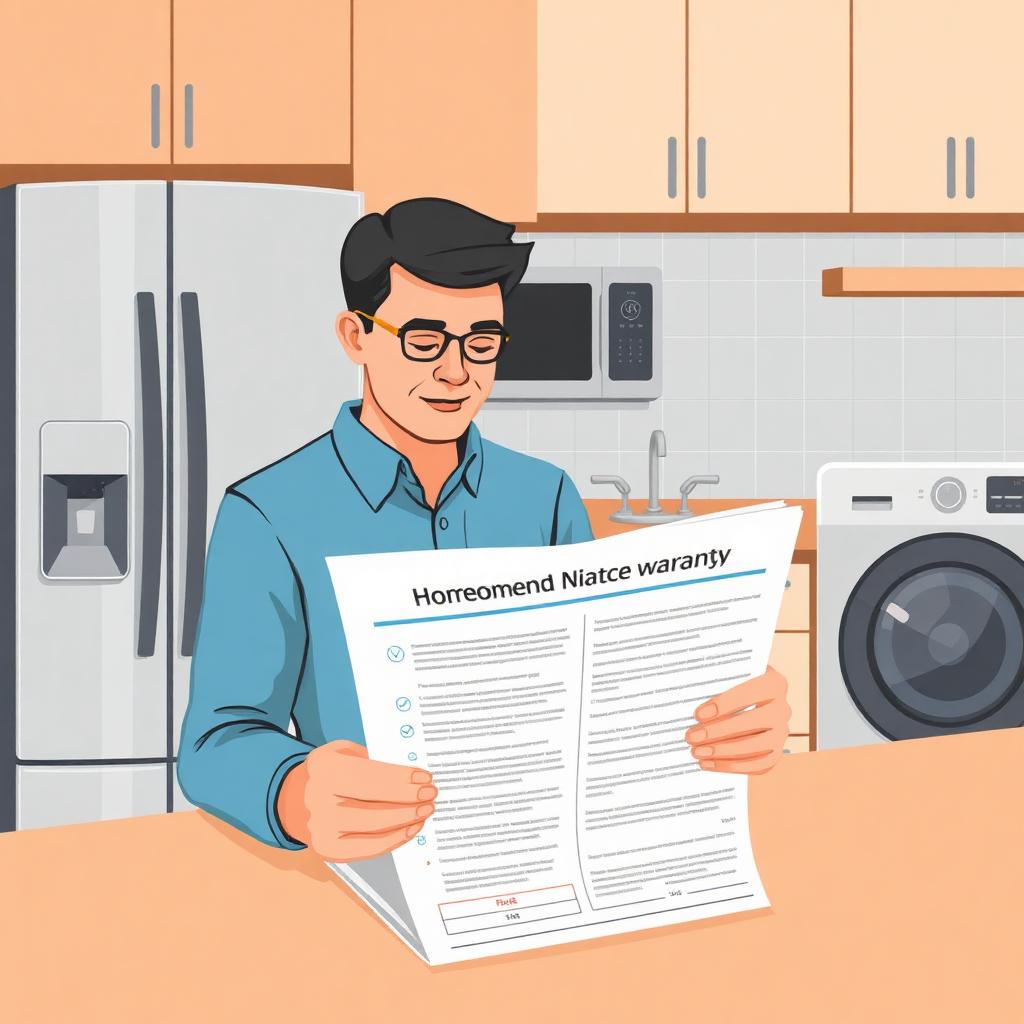
Homeowner reviewing an extended appliance warranty plan beside kitchen appliances

Are Extended Appliance Warranties Worth It? A Homeowner's Guide

Extended appliance warranties sound comforting when you are standing at checkout buying a refrigerator, washer, dryer, dishwasher, range, or wall oven. A salesperson may describe the plan as protection against expensive repairs, surprise breakdowns, and service call headaches. For some homeowners, that protection can be useful. For others, the warranty costs more than it is likely to save.

The real answer depends on the appliance, the purchase price, the repair risk, the coverage terms, and your tolerance for surprise expenses.

A good extended appliance warranty can help if a major appliance breaks after the manufacturer warranty expires and the repair would otherwise be expensive. But many plans include deductibles, service fees, claim limits, exclusions, and repair-versus-replacement rules that make the value less obvious than the sales pitch suggests.

This guide explains when extended appliance warranties are worth considering, when they are usually not worth it, and how to compare warranty pricing against realistic appliance repair costs.

💡 Quick takeaway: Extended appliance warranties are most useful for expensive appliances with high repair costs and complex parts. They are usually less compelling for cheaper appliances, older appliances, or products that are easy to replace.

What is an extended appliance warranty?

An extended appliance warranty is a service contract that provides repair coverage after the original manufacturer warranty ends. It may be offered by the retailer, the manufacturer, a third-party warranty company, or a home warranty provider.

Most new appliances already include a manufacturer warranty. This is commonly one year, though some parts may be covered longer. For example, certain refrigerator compressors, washer motors, or sealed-system components may have longer limited parts coverage. However, those longer warranties may not include labor.

An extended warranty is designed to add protection beyond that initial warranty period.

Coverage may include:

  • Parts
  • Labor
  • Service diagnosis
  • In-home repair visits
  • Replacement if repair is not practical
  • Food loss reimbursement in some refrigerator plans
  • Power surge protection in some plans
  • No-lemon replacement provisions in some plans

But coverage can vary significantly. Two plans with similar names may have very different service fees, exclusions, and claim limits.

Extended warranty vs. home warranty

An extended appliance warranty usually covers one appliance. A home warranty typically covers several appliances and home systems under one contract.

For example:

  • An extended refrigerator warranty covers one refrigerator.
  • A home warranty may cover a refrigerator, dishwasher, oven, washer, dryer, plumbing system, electrical system, and HVAC system, depending on the plan.

The tradeoff is that home warranties often have more exclusions and service call fees. They may also use their own contractor network and decide whether to repair or replace an item.

Extended appliance warranties are often more targeted. If you buy a manufacturer-backed plan for a specific appliance, the service may be more specialized. But you are also paying for protection on one item only.

For a broader comparison, see our related guide: Home Warranty vs Appliance Warranty: What's the Difference?

Why extended appliance warranties can be tempting

Appliance repairs are not cheap. A single service call can cost more than many homeowners expect, especially if the appliance uses electronic control boards, sealed refrigeration parts, sensors, pumps, motors, or specialty components.

Common repair expenses may include:

  • Diagnostic fee
  • Labor charge
  • Parts
  • Return visit fee if parts must be ordered
  • Emergency or weekend surcharge
  • Haul-away or replacement installation costs if repair is not worthwhile

A refrigerator compressor problem, oven control board failure, washer bearing issue, or dishwasher pump repair can quickly turn into a large bill.

Because of this, an extended warranty can feel like a way to cap your risk. Instead of worrying about a $500 repair, you pay a fixed amount upfront or monthly.

That peace of mind has value, especially for homeowners who do not keep a large emergency repair fund.

⚠️ Important: Peace of mind is real, but it is not the same as financial value. A warranty can still make you feel safer while being statistically unlikely to pay for itself.

When extended appliance warranties are most likely worth it

Extended appliance warranties are most worth considering when several of the following conditions apply.

1. The appliance is expensive to replace

A $2,500 refrigerator is a very different risk than a $450 countertop-style dishwasher or basic dryer.

The more expensive the appliance, the more financial exposure you have if something major fails. Premium appliances may also use proprietary parts, custom panels, built-in configurations, or specialized service requirements.

Extended coverage may make more sense for:

  • French door refrigerators
  • Built-in refrigerators
  • Counter-depth refrigerators
  • Wall ovens
  • Induction cooktops
  • High-end ranges
  • Front-load washers
  • Washer-dryer towers
  • Smart appliances with electronic controls
  • Built-in dishwashers with premium features

If the appliance costs enough that replacement would be painful, warranty coverage deserves a closer look.

2. Repairs are commonly expensive

Some appliances are simply more expensive to repair than others.

Refrigerators are a good example. They contain fans, sensors, control boards, compressors, evaporators, condensers, water lines, ice makers, defrost components, and sealed-system parts. A small issue may be affordable, but a sealed-system or compressor repair can be costly.

Dishwashers can also become expensive if the problem involves a motor, pump, leak, or control board. Wall ovens and ranges may involve control panels, igniters, heating elements, sensors, and specialty labor.

A warranty can be more useful when a likely repair costs several hundred dollars.

Related repair guides:

3. The warranty covers both parts and labor

Some plans sound generous but only cover certain parts. Labor may be excluded, limited, or covered for a shorter period.

Labor can be a major part of appliance repair cost. If a warranty covers parts but leaves you responsible for labor, your out-of-pocket cost may still be high.

Before buying, check whether the plan covers:

  • In-home diagnosis
  • Labor
  • Parts
  • Return trips
  • Replacement parts shipping
  • Removal and reinstallation for built-in appliances
  • Replacement if the appliance cannot be repaired

A plan that covers both parts and labor is usually more valuable than a limited parts-only warranty.

4. The service fee is low or nonexistent

Some warranties require a service fee each time you file a claim. Others do not.

A service fee is not automatically bad. Home warranties commonly charge service fees. But you need to include that fee when calculating value.

Example:

  • Warranty cost: $180
  • Service fee: $75
  • Repair value: $250

If you file one claim, your total cost is effectively $255. In that case, the warranty did not save much unless the repair would have been more expensive.

If the repair would have cost $600, then the same warranty may provide meaningful savings.

5. The appliance is difficult to service or install

Built-in and integrated appliances are often more complicated than freestanding appliances. Repairs may require more labor, careful removal, or specialty parts.

Examples include:

  • Built-in refrigerators
  • Panel-ready dishwashers
  • Wall ovens
  • Downdraft cooktops
  • Slide-in ranges with tight cabinetry
  • Stacked laundry units
  • Compact appliances in condos or apartments

If accessing or replacing the appliance is difficult, repair coverage can become more valuable.

6. You want predictable expenses

Some homeowners prefer paying a known amount for protection rather than gambling on future repair costs. This is not always the cheapest approach, but it can be reasonable if predictable budgeting matters.

If an unexpected $400 or $700 repair would be stressful, warranty coverage may provide practical value even if the expected long-term savings are uncertain.

When extended appliance warranties are usually not worth it

Extended warranties are not always bad, but many are poor deals for common appliance purchases.

Here are situations where you may want to skip the plan.

1. The appliance is inexpensive

If an appliance costs $400 to $700, an extended warranty may not make financial sense. A major repair could cost nearly as much as replacement, and the warranty itself may represent a large percentage of the purchase price.

Example:

  • Appliance price: $500
  • Warranty price: $130
  • Likely repair after warranty: $200 to $300

In this case, you may be better off saving the warranty money toward future replacement.

This is especially true for basic microwaves, lower-cost dishwashers, entry-level dryers, and budget ranges.

2. The manufacturer warranty is already strong

Some appliances include longer parts warranties for specific components. If the most expensive parts are already covered, an extended plan may overlap with existing protection.

Check the manufacturer warranty before buying extra coverage. Look for:

  • Full warranty period
  • Limited parts warranty
  • Labor coverage
  • Compressor coverage
  • Motor coverage
  • Tub or drum coverage
  • Control board coverage
  • Exclusions
  • Registration requirements

If the extended warranty begins immediately rather than after the manufacturer warranty ends, part of the plan may duplicate coverage you already have.

3. Your credit card extends warranty protection

Some credit cards offer extended warranty benefits on eligible purchases. These benefits vary and may have limits, but they can sometimes add an extra year of protection after the manufacturer warranty.

If you used a card with this benefit, buying a separate extended warranty may be less attractive.

Review your card's benefit guide carefully. Check:

  • Eligible items
  • Maximum reimbursement
  • Claim documentation
  • Excluded purchases
  • Warranty length limits
  • Whether refurbished or used appliances qualify

4. The plan has many exclusions

Warranty exclusions can dramatically reduce value.

Common exclusions may include:

  • Cosmetic damage
  • Accidental damage
  • Improper installation
  • Lack of maintenance
  • Pre-existing conditions
  • Commercial use
  • Rust or corrosion
  • Pest damage
  • Power surge damage unless specifically included
  • Water damage
  • Consumable parts
  • Filters
  • Hoses
  • Light bulbs
  • Knobs
  • Shelves
  • Ice maker accessories
  • Food spoilage unless included

A plan may also deny claims if the appliance was not installed according to manufacturer instructions or if you cannot provide proof of maintenance.

5. The claim limit is too low

Some warranties limit how much they will pay per claim, per year, or over the life of the plan.

If the claim limit is low, the warranty may not protect you from the expensive repair you are worried about.

For example, a plan that caps refrigerator repair at $500 may not fully cover a major sealed-system repair. A plan that caps replacement at depreciated value may not pay enough to buy a comparable new appliance.

6. You are likely to replace instead of repair

If you prefer replacing appliances once they become unreliable, an extended warranty may be less useful.

This is especially true for appliances near the lower end of the price range. If a repair would lead you to buy a new appliance anyway, paying for a warranty may not be worthwhile.

How to compare warranty cost against repair risk

A simple way to evaluate an extended appliance warranty is to compare the plan cost to likely repair costs.

Ask these questions:

  1. How much does the appliance cost?
  2. How much does the warranty cost?
  3. Is there a service fee?
  4. What repairs are covered?
  5. What repairs are excluded?
  6. What is the maximum payout?
  7. How long does coverage last?
  8. How likely is the appliance to need repair during that period?
  9. Would I repair the appliance or replace it?
  10. Could I cover the repair out of savings?

A warranty becomes more attractive when the covered repair cost is high, the warranty price is reasonable, and the service fee is low.

Example: refrigerator extended warranty

Suppose you buy a refrigerator for $1,900.

The extended warranty costs $250 for four years after the manufacturer warranty. There is no service fee. The plan covers parts and labor, including electronic controls, cooling components, and in-home service.

If one covered repair costs $450, the warranty pays for itself. If the refrigerator has no problems, you lose the $250.

This may be a reasonable choice because refrigerator repairs can be expensive and replacement is costly.

Example: basic dryer extended warranty

Suppose you buy a basic electric dryer for $550.

The extended warranty costs $140. The service fee is $75. Common dryer repairs might cost $150 to $350.

If you file one modest claim, your total warranty-related cost may be $215. The savings may be small. If the dryer needs a major repair, you may decide to replace it instead.

This warranty is less compelling.

Appliance-by-appliance warranty value

Refrigerators

Refrigerators are among the better candidates for extended coverage because they are expensive, run constantly, and can involve costly parts.

Coverage may be especially useful for:

  • French door refrigerators
  • Built-in refrigerators
  • Smart refrigerators
  • Refrigerators with ice makers and water dispensers
  • Counter-depth models
  • Premium brands

Check whether the plan covers sealed-system repairs and labor. These are often the expensive refrigerator issues homeowners worry about.

Dishwashers

Dishwasher warranties can be worthwhile for higher-end models. Pumps, motors, control boards, and leak repairs can be costly.

However, for budget dishwashers, replacement may make more sense than paying for extensive coverage.

Look for coverage of:

  • Circulation pump
  • Drain pump
  • Motor
  • Control board
  • Leaks
  • Heating element
  • Door latch
  • In-home labor

Washers

Washers can be expensive to repair, especially front-load models and high-efficiency machines. Motor, bearing, control board, and drain system problems may justify coverage.

Extended warranties may be more valuable for:

  • Front-load washers
  • Large-capacity washers
  • Smart washers
  • Washer-dryer combos
  • Stacked laundry systems

Dryers

Dryers are often simpler than washers, especially basic electric models. Many dryer repairs are moderate rather than extreme.

Extended coverage may be less valuable for basic dryers, but more useful for premium gas dryers, smart dryers, or stacked units that are harder to service.

Ovens, ranges, and cooktops

Cooking appliances can be worth covering if they are built-in, high-end, or use expensive electronic controls.

Coverage may be useful for:

  • Wall ovens
  • Induction cooktops
  • Dual-fuel ranges
  • Premium gas ranges
  • Smart ovens
  • Downdraft cooktops

Check whether glass cooktop damage is covered. Many plans exclude accidental cracks or cosmetic damage.

Microwaves

Extended warranties are usually less attractive for countertop microwaves because replacement is often affordable.

Built-in microwaves and microwave drawers are different. They are more expensive and may involve installation labor, trim kits, and specialty parts.

Questions to ask before buying

Before saying yes to an extended appliance warranty, ask for the full terms in writing.

Important questions include:

  • When does coverage start?
  • Does it overlap with the manufacturer warranty?
  • Are parts and labor both covered?
  • Is in-home service included?
  • Is there a deductible or service fee?
  • Who performs the repair?
  • Can I choose my own technician?
  • What happens if parts are unavailable?
  • What happens if the appliance cannot be repaired?
  • Is replacement new, refurbished, or cash value?
  • Are there claim limits?
  • Are there annual limits?
  • Are power surges covered?
  • Is food loss covered for refrigerators?
  • Are cosmetic parts excluded?
  • Can I cancel the plan?
  • Is the warranty transferable if I sell my home?

If the salesperson cannot answer clearly, do not rely on verbal promises. The written contract controls the coverage.

🧾 Tip: Take a photo of the warranty brochure and save the receipt, model number, serial number, and plan confirmation. Warranty claims often require documentation.

Extended warranty red flags

Be cautious if you see any of these warning signs:

  • The plan price is more than 20% to 30% of the appliance price
  • The service fee is high
  • The claim limit is low
  • The plan starts immediately and overlaps existing coverage
  • Replacement is based on depreciated value
  • The company can choose cash payout instead of repair
  • Many common failures are excluded
  • You cannot see the full contract before purchase
  • The plan requires strict maintenance records
  • The appliance is inexpensive and easy to replace

A warranty should reduce uncertainty, not create more of it.

Should you buy from the retailer, manufacturer, or home warranty company?

Each option has pros and cons.

Retailer extended warranty

Retailer plans are convenient because they are offered at purchase. Some include easy scheduling, replacement options, or no-lemon policies.

However, the retailer may use third-party administrators. Service quality can vary by location.

Manufacturer extended warranty

Manufacturer plans may provide access to authorized service technicians and genuine parts. This can be valuable for premium appliances.

The downside is that manufacturer plans may cost more and may only cover that specific appliance.

Home warranty plan

A home warranty may cover multiple appliances and systems. This can be useful if you want broader protection.

However, home warranties commonly include service fees, exclusions, coverage caps, and contractor network limitations.

If your main concern is one expensive new appliance, a dedicated appliance plan may be cleaner. If your concern is multiple older appliances and systems, a home warranty may be worth comparing.

A simple rule of thumb

Consider an extended appliance warranty when:

  • The appliance costs more than $1,000
  • A major repair would cost $400 or more
  • The plan covers parts and labor
  • The service fee is low
  • The plan does not duplicate existing coverage
  • The coverage term extends into the appliance's higher-risk years
  • You would rather repair than replace

Skip or think twice when:

  • The appliance is inexpensive
  • The warranty costs a large percentage of the appliance price
  • The plan has a high service fee
  • The appliance already has strong coverage
  • You can comfortably self-insure
  • The exclusions are broad
  • The payout limits are low

Self-insuring: the alternative to an extended warranty

Instead of buying extended warranties, some homeowners set aside repair money.

For example, if you skip a $200 warranty on a dishwasher, $160 warranty on a dryer, and $250 warranty on a refrigerator, you could place $610 into a repair fund.

That money remains yours if nothing breaks. It can also be used for appliances, plumbing, HVAC, or other home repairs.

Self-insuring works best if you have the discipline to save and the ability to handle a surprise repair bill.

Final verdict: are extended appliance warranties worth it?

Extended appliance warranties can be worth it, but only selectively.

They make the most sense for expensive, complex appliances where one covered repair could exceed the plan cost. Refrigerators, wall ovens, premium dishwashers, front-load washers, and built-in appliances are stronger candidates.

They are less compelling for budget appliances, countertop appliances, and products where replacement is more practical than repair.

The best approach is not to automatically accept or reject every warranty. Compare the plan cost, service fee, coverage, exclusions, and claim limits against realistic repair costs for that appliance.

⚠️ Disclaimer: This article is for general informational purposes only. Warranty terms, repair prices, appliance reliability, and service availability vary by brand, model, provider, and location. Always read the full contract before purchasing coverage.

FAQ

Are extended appliance warranties worth it?

Extended appliance warranties can be worth it for expensive appliances with high repair costs, especially refrigerators, wall ovens, and premium laundry machines. They are less useful for lower-cost appliances where a single repair may cost nearly as much as replacement.

What appliances are most worth covering?

Refrigerators, built-in ovens, cooktops, washers, dryers, and dishwashers are often the most practical appliances to consider because repairs can be expensive and service calls add up quickly.

When should I skip an extended appliance warranty?

You may want to skip coverage if the appliance is inexpensive, already covered by a manufacturer warranty, purchased with a credit card that extends warranty protection, or close to the end of its useful life.

Is an appliance warranty the same as a home warranty?

No. An appliance extended warranty usually covers one specific appliance. A home warranty may cover multiple systems and appliances under one service contract, but it usually has service fees, exclusions, and coverage limits.

What should I check before buying an extended warranty?

Review the plan cost, service fee, parts and labor coverage, exclusions, claim limits, repair-versus-replacement rules, cancellation terms, and whether the plan starts after the manufacturer warranty ends.

Frequently asked questions

Extended appliance warranties can be worth it for expensive appliances with high repair costs, especially refrigerators, wall ovens, and premium laundry machines. They are less useful for lower-cost appliances where a single repair may cost nearly as much as replacement.

Related guides

Disclaimer: Pricing reflects US national averages as of the publication date and varies by region, brand, and labor rates. This article is informational and does not replace professional inspection or repair advice. See our full disclaimer.