Home Warranty vs Appliance Warranty: What's the Difference?
Written by
Editorial Team
Research and editorial staff
Dates
Published
Last updated
What changed: Expanded the contract comparison beyond 1,000 words without restoring unsupported universal scope, cost, age, service, or winner claims.
Checked by our editors.How we estimate repair costsEditorial policy
Sources
- Federal Trade Commission consumer advice — Federal Trade Commission
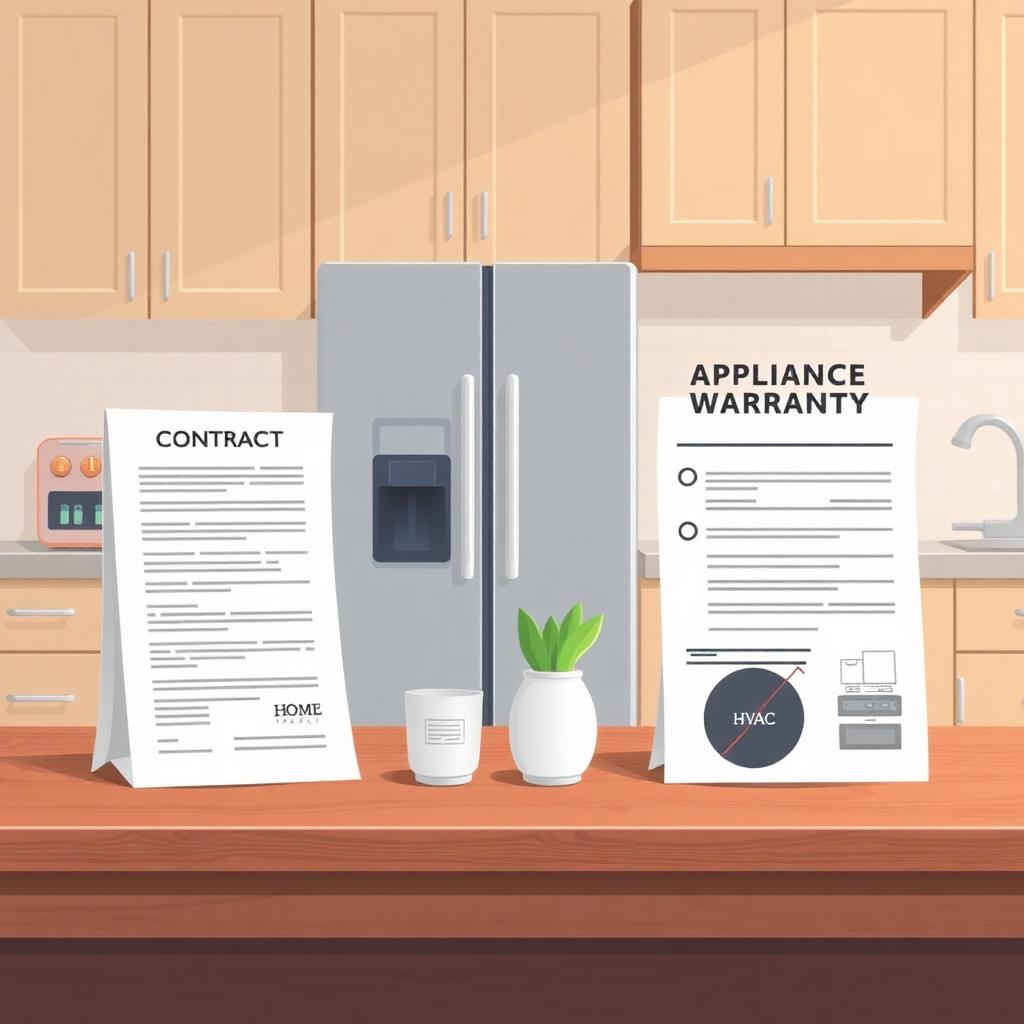
The terms “home warranty,” “appliance warranty,” “extended warranty,” “protection plan,” and “service contract” are sometimes used inconsistently. A product's marketing name does not determine what it covers. Start with the seller, administrator, covered property, effective dates, and governing agreement.
A home warranty often refers to a service contract tied to a residence and a list of home systems or appliances. An appliance warranty or protection plan generally follows one identified product. Those are useful starting descriptions, not universal rules. Some household plans cover only selected systems, and some appliance programs provide benefits beyond mechanical repair.
Compare the actual agreements
Place the documents side by side and review the same factors:
| Factor | Questions to ask |
|---|---|
| Provider | Who sold, issued, administers, and performs service? |
| Covered property | Which address, products, systems, and components are listed? |
| Effective dates | When does coverage begin and end? Is there a waiting period? |
| Eligible failures | Which defects, breakdowns, or causes qualify? |
| Cost | What are the premium, deductible, service fee, and other charges? |
| Service | Who authorizes, diagnoses, and completes work? |
| Limits | Are there per-item, per-claim, aggregate, or replacement limits? |
| Remedy | Who chooses repair, replacement, reimbursement, or settlement? |
| Exclusions | What circumstances, parts, and expenses are excluded? |
| Cancellation | How can the agreement be canceled, and how is any refund calculated? |
Do not compare only monthly price or a checklist on a sales page. A lower-priced plan can provide less useful protection if it excludes the appliance, component, failure, or service expense that concerns you.
Scope of a home warranty
A home-warranty agreement may organize coverage by systems, appliances, combined packages, or optional add-ons. The contract should define each covered item and may distinguish between primary and additional units, built-in and portable products, or standard and specialty equipment.
For every item, check:
- Whether the item is expressly listed
- Which components are covered or excluded
- Whether coverage is based on named components or broader language
- Which causes of failure qualify
- Whether age, condition, maintenance, or installation affects eligibility
- Whether an add-on is required
- Whether a separate limit applies
A phrase such as “kitchen appliances” is not enough to establish that every refrigerator, freezer, microwave, range, dishwasher, wine cooler, or ice maker is included.
Scope of an appliance warranty
An appliance warranty may be provided by a manufacturer, retailer, plan administrator, credit-card benefit, or third party. It generally applies to a particular product, but the product must be properly identified and eligible.
Check the full model and serial number, purchase date, seller, installation date, registration requirements, and coverage term. Parts and labor can have different periods. Some components may have longer or shorter coverage than the appliance as a whole.
Also determine whether the agreement is a manufacturer's written warranty, an optional service contract, an insurance product, or another arrangement under applicable law. The label can affect rights, administration, and cancellation terms.
Effective dates and overlap
Coverage can begin at purchase, delivery, installation, registration, expiration of another warranty, or a later contract date. Never assume an “extended” plan begins only after manufacturer coverage ends. It may run concurrently.
Create a timeline showing:
- Purchase and delivery
- Installation
- Manufacturer coverage
- Retailer or protection-plan coverage
- Credit-card benefit period
- Home-warranty effective dates
- Any waiting period
Overlap may duplicate protection without extending it. It can also create coordination questions about which provider should handle the claim first.
Service process
A home warranty may require you to contact the administrator before arranging service. It may assign a provider, require a network technician, or authorize an outside technician under stated conditions.
An appliance warranty may direct you to the manufacturer, retailer, administrator, or an authorized servicer. Service can be in-home, carry-in, mail-in, depot, or another method depending on the product and location.
Before buying, ask:
- Who is the first contact?
- Is advance authorization required?
- Can you choose the technician?
- What if no provider serves your area?
- Who pays diagnosis if the claim is denied?
- Are repeat visits included?
- What documentation is required?
- What escalation or appeal process exists?
Service availability is especially important for built-in, premium, rural, or specialty products.
Fees and total cost
Compare more than the plan price. Potential charges include deductibles, service-call fees, per-trade fees, trip charges, diagnosis, shipping, access, installation, modification, permits, taxes, disposal, and amounts above benefit limits.
Use several realistic scenarios:
- No covered claim during the term
- One eligible diagnosis and repair
- A denied claim after a service visit
- Multiple visits for one issue
- An appliance that cannot be repaired
- A failure that exceeds the plan limit
Calculate what you would pay under each contract. Do not use a hypothetical savings figure as if it predicts actual results.
Limits
Look for per-item, per-component, per-claim, annual, and aggregate limits. An add-on may have its own lower limit. Some agreements use different limits when records are missing, when equipment is older, or when access or code work is needed.
Confirm whether limits include diagnosis, labor, parts, tax, shipping, and installation. A stated benefit can be consumed differently depending on the contract's accounting method.
Repair, replacement, and settlement
Neither type of agreement should be assumed to guarantee the exact replacement you prefer. The administrator may retain the right to choose repair, replacement, reimbursement, store credit, cash settlement, or another remedy.
Review how a replacement is selected and valued. Ask whether the remedy includes:
- Comparable capacity and essential function
- Brand, color, finish, and optional features
- Delivery and removal
- Installation and reconnection
- Trim, panels, mounting, and accessories
- Cabinet, countertop, ventilation, or utility changes
- Permits, code upgrades, and taxes
For built-in products, excluded installation work can be significant even when the appliance benefit is approved.
Exclusions
Read exclusions together with the coverage grant. Common topics to inspect include accidental or cosmetic damage, misuse, commercial use, improper installation, unauthorized repair, maintenance, pests, rust, corrosion, power events, water events, environmental conditions, existing problems, recalls, consumables, accessories, and secondary damage.
Do not assume a common exclusion is present or absent. Quote the actual language when asking the provider for clarification.
Existing-condition language
Home warranties and service plans can treat conditions existing before the effective date differently. Review definitions of known, unknown, detectable, pre-existing, and pre-existing damage. Check whether an inspection, maintenance record, or proof of operation is required.
A new agreement is not a dependable way to pay for an appliance that is already broken or showing symptoms. Document condition and dates honestly.
Existing protection
Before purchasing either option, review:
- Manufacturer warranty
- Retailer return and protection terms
- Credit-card benefits
- Builder or installer warranty
- Homeowners or renters insurance
- Utility or membership programs
- Prior repair warranty
- Statutory consumer rights
These protections cover different risks. Homeowners insurance, for example, is not interchangeable with a service contract. Overlap should be evaluated using the actual terms rather than broad labels.
One appliance versus several items
A single-product plan can be easier to evaluate because its cost and scope can be compared with one appliance. A household plan can spread protection across several listed items but introduces more limits, categories, and service scenarios.
Count only the items and failures actually covered. Do not assign value to systems you do not own, optional items you did not purchase, or remedies that are capped below your likely installed cost.
Technician choice and service quality
If choosing your own technician matters, confirm it before purchase. An agreement may require a network or authorized provider and may not reimburse unauthorized work.
Investigate local availability using the exact product or address. Ask what happens if a provider cannot be dispatched within a reasonable period. Also review whether you can obtain a second opinion and who pays for it.
Cancellation and transfer
Check the cancellation period, fees, refund method, claims deduction, and required notice. For a home warranty, review what happens when the property is sold. For an appliance plan, review whether coverage follows the owner, product, or purchaser and whether transfer requires a form or fee.
Do not assume transfer is automatic.
A practical decision framework
- List the products and systems you want to protect.
- Record existing coverage and dates.
- Obtain current sample agreements for your location and plan.
- Mark each relevant item, component, and failure.
- Compare total cost under realistic scenarios.
- Review service access and authorization.
- Compare limits and replacement methods.
- Identify excluded installation and access expenses.
- Review cancellation, renewal, and transfer.
- Decide whether keeping a repair reserve better matches your risk tolerance.
Neither choice is universally better. The stronger fit is the agreement that addresses the risks you care about at an acceptable total cost and with a service process you can use.
Related articles
- Extended Warranty vs Home Warranty
- Are Extended Appliance Warranties Worth It?
- Are Home Warranties Worth It for Appliances?
- What Does an Appliance Warranty Cover?
Disclosure: This article is informational and not legal or financial advice. The site may earn a commission from eligible links, without changing our editorial standards.
Frequently asked questions
Related guides

Appliance Warranty vs Repair Cost: How to Decide
Compare an appliance warranty claim with direct repair or replacement using service fees, limits, exclusions, timing, technician choice, and total cost.
Does a Home Warranty Cover a Dishwasher?
Learn how to verify dishwasher coverage, components, exclusions, limits, service fees, claim authorization, and repair-or-replacement terms.
Does a Home Warranty Cover a Refrigerator?
Learn how to verify refrigerator coverage, sealed-system terms, secondary-unit rules, service fees, limits, exclusions, and replacement methods.
Disclaimer: Pricing reflects US national averages as of the publication date and varies by region, brand, and labor rates. This article is informational and does not replace professional inspection or repair advice. See our full disclaimer.