Common Appliance Problems That Are Not Worth Repairing
Written by
Editorial Team
Research and editorial staff
Dates
Published
Last updated
Checked by our editors.How we estimate repair costsEditorial policy
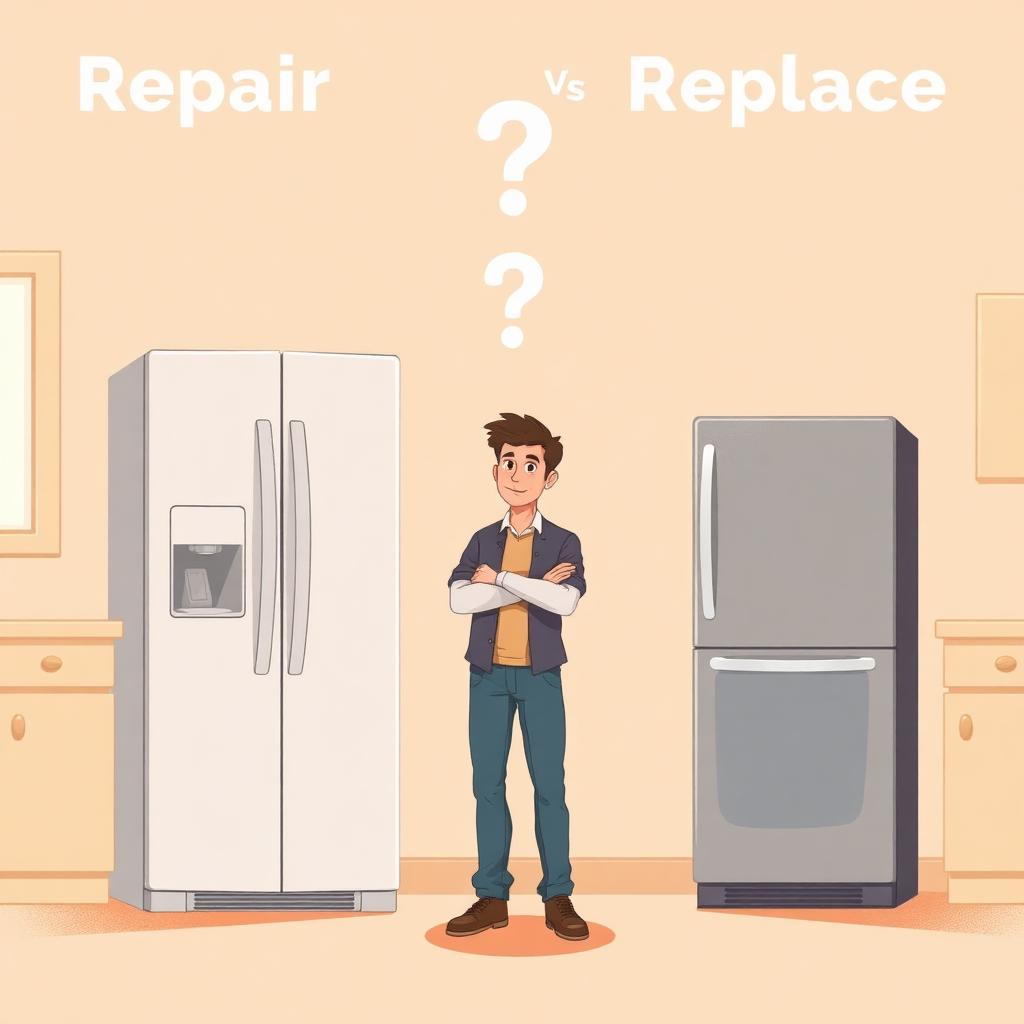
Common Appliance Problems That Are Not Worth Repairing
Some appliance repairs are clearly worth doing. A dryer belt, oven igniter, dishwasher latch, or refrigerator door gasket may be a practical fix. Other problems are different. They are expensive, labor-intensive, risky, or likely to return.
Common appliance problems that may not be worth repairing include old refrigerator compressor failures, washer bearing or tub problems, cracked glass cooktops, leaking dishwasher tubs, repeated control board failures, and issues where parts are discontinued.
The key is not just the repair cost. You also need to consider appliance age, replacement cost, reliability, warranty coverage, and whether the repair will actually extend the appliance's life.
💡 Quick takeaway: A repair may not be worth it when it costs close to half the price of replacement, the appliance is old, parts are unavailable, or the same appliance keeps breaking.
The repair vs replace rule
A common rule of thumb is the 50% rule:
If the repair costs more than half the price of a comparable new appliance, replacement deserves serious consideration.
This rule is especially useful when the appliance is already near the end of its expected lifespan.
Related guides:
1. Old refrigerator compressor failure
A refrigerator compressor is one of the most expensive refrigerator components to replace. Compressor or sealed-system repairs may require specialty labor and can be costly.
Compressor repair may not be worth it if:
- The refrigerator is old
- The appliance is a basic model
- The repair cost is close to replacement
- Other cooling problems have happened before
- Parts or refrigerant service are difficult
- Warranty coverage has expired
Compressor repair may be worth considering if:
- The refrigerator is newer
- The appliance is built-in
- The refrigerator is premium
- The repair is covered by warranty
- Replacement would be much more expensive
Related guide: Refrigerator Repair Cost Guide
2. Refrigerator sealed-system leaks on older units
Sealed-system problems can be expensive and uncertain. A refrigerant leak, evaporator issue, condenser issue, or sealed-system restriction may require advanced diagnosis and labor.
On an older refrigerator, replacement often makes more sense unless the unit is premium or built-in.
Warning signs include:
- Refrigerator not cooling
- Freezer thawing
- Compressor running constantly
- Repeated cooling repairs
- Frost pattern problems
- Technician reports sealed-system failure
3. Washer bearing failure
Washer bearing failure can create loud roaring, grinding, or rumbling during the spin cycle.
Bearing repair can be labor-intensive because the washer may need significant disassembly. In some models, the bearing is tied to a tub assembly, making the repair even more expensive.
Bearing repair may not be worth it if:
- Washer is old
- Repair cost is high
- Tub assembly is required
- Washer has other issues
- Replacement cost is reasonable
- Parts are hard to find
Related guide: Washing Machine Repair Cost Guide
4. Washer tub or drum failure
A washer tub or drum problem can be expensive and may not make sense on an older machine.
Replacement may be better if:
- Tub is cracked
- Drum is damaged
- Washer leaks repeatedly
- Repair requires major disassembly
- Appliance is near end of lifespan
- Previous repairs have already happened
A minor hose or pump leak is different. Those can be worth repairing. The concern is major structural failure.
5. Cracked glass cooktop
Cracked glass cooktops can be expensive to replace. In many cases, accidental glass damage is not covered by warranty.
Repair may not be worth it if:
- Glass replacement cost is high
- Cooktop is older
- Crack affects safety
- Replacement unit is affordable
- Other controls are aging
- Warranty excludes glass damage
Do not continue using a cracked cooktop if it creates a safety risk. Get professional guidance.
6. Induction module failure on an older cooktop
Induction cooktops use electronic modules and controls. These parts can be expensive.
Repair may not be worth it if:
- Cooktop is old
- Multiple zones fail
- Module is expensive
- Parts are backordered
- Control board is also suspect
- Replacement cost is close to repair
Induction repairs may make more sense on newer or premium models.
7. Dishwasher tub leaks
A dishwasher leak from a hose, gasket, or pump may be repairable. A leak from the tub itself is more serious.
A leaking dishwasher tub may not be worth repairing because the tub is a major component and labor may be high.
Replacement may be better if:
- Dishwasher is older
- Tub is cracked
- Leak caused cabinet damage
- Motor or pump is also aging
- Repair approaches replacement cost
Related guide: Dishwasher Repair Cost Guide
8. Repeated dishwasher pump or motor failures
One pump repair may be worthwhile. Repeated pump, motor, or drainage failures may suggest the appliance is no longer reliable.
Think twice if:
- It has already been repaired recently
- Cleaning performance is poor
- Racks are rusting
- Control issues are starting
- The dishwasher is past midlife
- Replacement cost is reasonable
9. Repeated control board failures
Modern appliances rely on control boards. A control board replacement can be expensive, and repeated failures are a red flag.
Repeated board failures may happen with:
- Refrigerators
- Ovens
- Dishwashers
- Washers
- Dryers
- Ranges
- Smart appliances
If a new board fails again, there may be an underlying electrical, moisture, wiring, or design issue.
Replacement may be smarter if the appliance is older and the cause is unclear.
10. Discontinued parts
Sometimes the problem is not the repair cost. It is part availability.
Repair may not be practical if:
- Part is discontinued
- Only used parts are available
- Shipping takes weeks
- Technician cannot guarantee repair
- Substitute parts are unreliable
- The appliance is already old
This is common with older built-in appliances, premium models, and less common brands.
11. Major repairs on cheap appliances
Some appliances are inexpensive enough that major repair rarely makes sense.
Examples:
- Basic countertop microwave
- Low-cost dishwasher
- Older garbage disposal
- Entry-level dryer with motor failure
- Small compact appliance
If replacement is affordable and repair cost is high, replacement is usually simpler.
12. Repairs after water or fire damage
Damage from flooding, fire, smoke, severe electrical events, or pest infestation may make repair risky.
Even if one part can be replaced, hidden damage may remain.
In these cases, replacement may be safer and more practical. Also check homeowners insurance and warranty exclusions.
When an expensive repair may still be worth it
Not every expensive repair is a bad idea.
Repair may still be worth it if:
- Appliance is newer
- Warranty covers the repair
- Appliance is built-in
- Replacement is very expensive
- Comparable models are unavailable
- Repair is clearly diagnosed
- Technician expects a durable fix
- Appliance has been reliable otherwise
Related guide: Most Expensive Appliances to Repair
Warranty coverage can change the decision
If a repair is covered by warranty, it may be worth doing even if the retail repair cost would be high.
Check:
- Service fee
- Claim limit
- Parts coverage
- Labor coverage
- Replacement rules
- Exclusions
- Whether pre-approval is required
Related guide: Appliance Warranty vs Repair Cost
Questions to ask before approving a major repair
Ask the technician:
- What exactly failed?
- What caused the failure?
- Is this a common issue?
- Are other parts likely to fail soon?
- How old is the appliance?
- Are parts available?
- Is the repair guaranteed?
- Would you repair or replace it?
- What would replacement cost?
- Could the problem return?
For expensive repairs, consider a second opinion.
Related guides
- Appliance Repair vs Replacement
- Appliance Lifespan Guide
- Most Expensive Appliances to Repair
- Cheapest Appliances to Repair
Final recommendation
Some appliance problems are simply not worth repairing, especially when the appliance is old, unreliable, or facing a major component failure. Compressor failures, washer bearings, cracked glass cooktops, leaking dishwasher tubs, repeated control board failures, and discontinued parts often push homeowners toward replacement.
Use the 50% rule as a starting point, then consider appliance age, reliability, parts availability, warranty coverage, and replacement cost. The best decision is the one that gives you the strongest long-term value, not just the lowest bill today.
⚠️ Disclaimer: This article is for general informational purposes only. Appliance repair costs, diagnosis, safety risks, warranty coverage, labor rates, and part availability vary by brand, model, location, provider, and technician. Always consult a qualified professional before making repair, replacement, or warranty decisions.
Frequently asked questions
Related guides
Appliance Repair vs Replacement: When to Fix or Replace
Should you repair or replace a broken appliance? Learn how to compare repair cost, appliance age, reliability, warranty coverage, and replacement value.

Freezer Repair or Replace: 2026 Decision Guide
Compare freezer repair and replacement using diagnosis, food safety, sealed-system condition, parts, energy use, complete costs, and warranty coverage.
Garbage Disposal Repair or Replace: 2026 Decision Guide
Compare garbage-disposal repair and replacement using leak location, jams, motor condition, electrical safety, plumbing fit, installation cost, and warranty terms.
Disclaimer: Pricing reflects US national averages as of the publication date and varies by region, brand, and labor rates. This article is informational and does not replace professional inspection or repair advice. See our full disclaimer.