Cheapest Appliances to Repair: How to Estimate Cost
Written by
Editorial Team
Research and editorial staff
Dates
Published
Last updated
What changed: Expanded the affordability guide beyond 1,000 words without restoring unsupported appliance rankings or universal low-cost claims.
Checked by our editors.How we estimate repair costsEditorial policy
Sources
- Home appliance repairers occupational data — U.S. Bureau of Labor Statistics
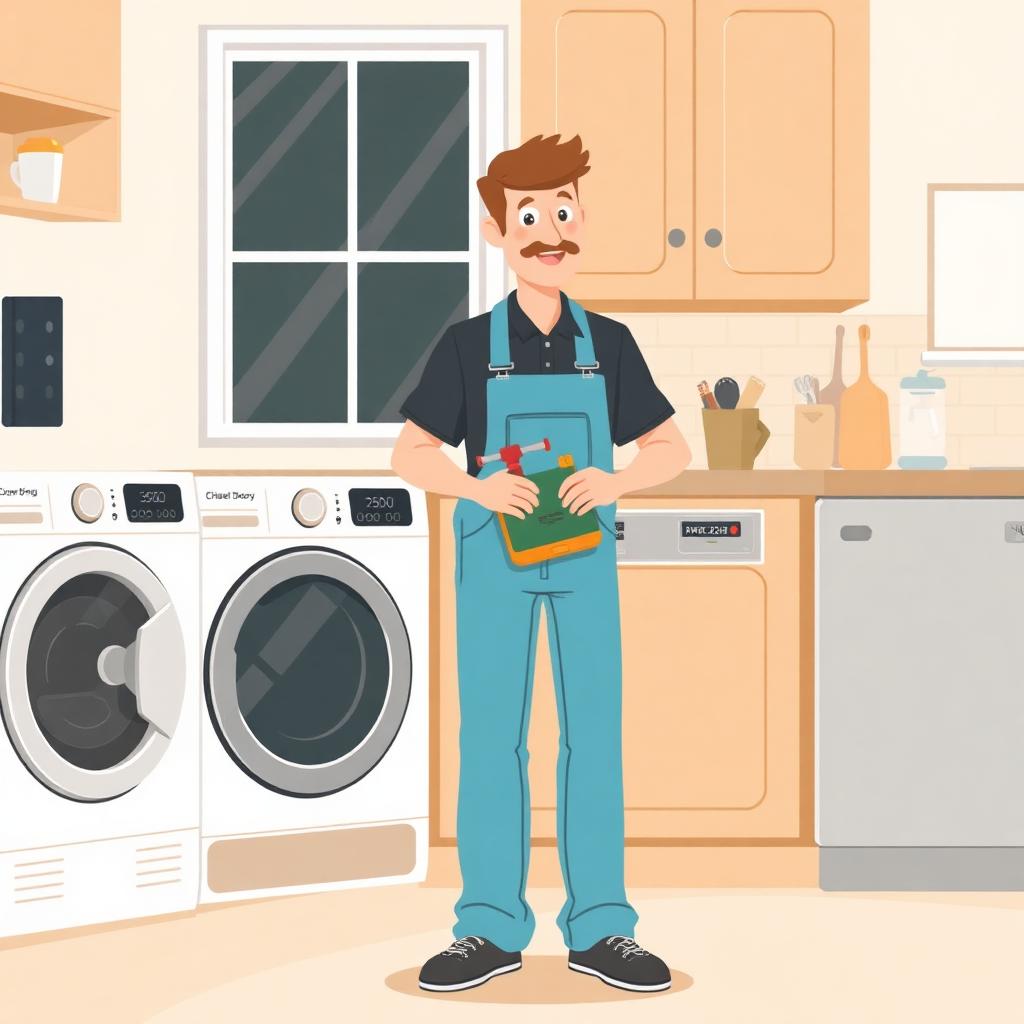
No appliance type is guaranteed to be inexpensive to repair. The failed component, exact model, access, part supply, local labor, and service timing determine the estimate. A basic dryer with a major motor or control problem can cost more to fix than a premium refrigerator that only needs an accessible sensor.
Instead of relying on a ranking, look for repair characteristics that tend to reduce diagnosis time, labor, parts cost, and uncertainty.
Characteristics of a lower-cost repair
A repair is more likely to produce a manageable estimate when:
- The symptom has a clear, confirmed cause
- The component is easy to access
- The replacement part is common and in stock
- The work uses standard tools and procedures
- The appliance can remain in place
- One technician can handle it safely
- No gas, refrigerant, high-voltage, or utility modification is involved
- The provider can diagnose and complete the job in one visit
- Local technicians regularly service the model
- The repair includes a clear warranty
These are tendencies, not promises. Even a common part can be difficult to reach on a particular model.
Diagnosis determines affordability
“Not starting,” “not heating,” “not draining,” and “making noise” are symptoms, not diagnoses. Each can arise from a simple obstruction, installation condition, utility problem, wiring fault, control issue, or major assembly.
Ask the technician to explain what tests were performed and why the proposed part or adjustment should solve the issue. Replacing parts by guessing can turn an apparently cheap repair into several unsuccessful visits.
Error codes should be treated as diagnostic clues. They can identify a system or abnormal condition without proving which component failed.
Common parts and broad service support
Repairs may be easier to price when multiple suppliers stock the correct part and many local providers understand the appliance. Confirm the full model and serial number, because similar product names can use different components across production runs.
Ask whether the estimate uses an original, aftermarket, refurbished, or used part. Compare warranty and compatibility rather than price alone. A cheap part that cannot be returned or fails early may not create a low-cost repair overall.
Access can outweigh part price
An inexpensive component may require extensive disassembly. Built-in refrigerators, wall ovens, panel-ready dishwashers, stacked laundry, microwave drawers, and tightly installed cooktops can require floor protection, trim removal, utility disconnection, lifting, and reinstallation.
Send installation photographs before the appointment and ask whether the estimate assumes normal access. Confirm whether two technicians, special equipment, cabinet work, or another trade will be needed.
Dryer repair considerations
Dryers are sometimes described as inexpensive to repair because some models use familiar components and straightforward layouts. That description should not be applied to every failure.
A heating complaint can involve airflow, vent installation, power supply, controls, sensors, heating components, wiring, or a gas system. Restricted venting can reduce performance and create a safety concern without being an internal appliance defect.
A qualified diagnosis should evaluate the appliance and the relevant installation. Heat-pump, gas, stacked, connected, or tightly installed dryers may require different service than a basic freestanding electric model.
Oven and range considerations
Some cooking-appliance components can be individually replaceable, but gas, high voltage, glass, controls, induction electronics, and built-in access can increase scope.
A burner or heating complaint should be diagnosed before a part is ordered. Confirm whether the proposal includes removal, gas or electrical checks, calibration, reinstallation, and testing. If there is a gas odor, sparking, damaged wiring, cracked critical surface, or uncontrolled heating, prioritize safety and manufacturer or emergency guidance.
Dishwasher considerations
A dishwasher that does not drain might have a blocked filter, hose problem, disposal connection issue, pump fault, wiring problem, or installation condition. A door problem might involve alignment, latching, sealing, or cabinetry.
Simple cleaning or adjustment should not be confused with a pump, tub, or control repair. Water leakage requires prompt attention because continuing to run the appliance can increase property damage. Cabinet and flooring restoration are separate costs from appliance repair.
Washer considerations
Washer estimates vary with the exact failure and installation. A valve, hose, switch, pump, control, bearing, motor, suspension, or tub issue can produce very different work.
Leveling, loading, detergent, drainage, water supply, and stacked access can influence symptoms and service time. For leaks or severe movement, stop use until the cause is understood. Confirm whether unstacking, moving, draining, and reconnecting are included.
Refrigerator considerations
A refrigerator can have a relatively accessible door, fan, valve, sensor, or defrost problem, but it can also require electronic or sealed-system work. “Not cooling” does not reveal which category applies.
Record actual temperatures and symptom timing. Ask whether door sealing, airflow, coils, fans, controls, and installation were checked before a major component is proposed. Built-in and panel-ready products may add access and reinstallation work.
Microwave considerations
A countertop microwave may have a low replacement price relative to professional service, but that does not make internal repair a safe do-it-yourself task. Microwaves can retain dangerous high voltage after being unplugged.
Built-in, drawer, and combination units involve fit, trim, cabinetry, electrical connections, and installation. Compare the professional repair estimate with a compatible installed replacement, not a generic countertop product.
Garbage-disposal considerations
Some disposal problems may involve a reset, jam, switch, drain connection, power supply, motor, corrosion, or a body leak. Turn off power and follow manufacturer safety instructions before any inspection.
The appliance price is only one part of replacement. Plumbing, electrical work, mounting compatibility, leaks, disposal, and local labor matter. Obtain a complete scope before assuming replacement is automatically cheaper than diagnosis.
Why a simple repair still has a service minimum
Even when installation takes little time, the company must schedule the appointment, travel, diagnose the problem, obtain the correct part, perform the work, test the appliance, process payment, and support any repair warranty.
That workflow explains why a part's online price does not equal the delivered repair price. Ask whether the diagnostic fee is credited and whether travel, return visits, taxes, and warranty are included.
Comparing estimates fairly
Compare providers on the same scope:
- Confirmed diagnosis
- Part number and part type
- Labor and access work
- Travel and diagnostic charges
- Shipping and return visits
- Taxes, disposal, and permits
- Timing and part availability
- Parts-and-labor warranty
- Possible additional work
A low verbal number can become expensive when essential items are omitted. Request the total in writing.
When a modest repair is worthwhile
A lower-cost repair may be practical when the diagnosis is clear, the appliance is otherwise in good condition, the component is available, the provider offers a useful warranty, and the completed repair should restore acceptable performance.
Also consider replacement disruption. Built-in fit, long delivery times, accessibility, matching units, or utility work can make an isolated repair attractive even when the appliance is older.
When a modest repair may be poor value
A small repair is not automatically wise when the appliance has serious corrosion, repeated unrelated failures, water or fire damage, unsafe operation, discontinued critical parts, poor performance, or an installation that also needs correction.
Ask whether the proposed work addresses the root cause and whether other known problems remain. Do not keep approving small repairs without reviewing the complete condition.
Maintenance and prevention
Follow the model's manual rather than generic schedules. Keep vents, filters, seals, drains, and airflow paths maintained where the manufacturer instructs. Use correct detergents and loads, address leaks promptly, and avoid bypassing safety devices.
Maintenance cannot prevent every defect or guarantee low costs. It can reduce avoidable service and give a technician better information about the appliance's history.
Repair versus replacement
Do not rely on an appliance ranking or fixed percentage. Compare the confirmed repair with a suitable installed replacement. Include delivery, installation, utilities, cabinetry, permits, trim, disposal, energy use, downtime, and warranty.
The lowest immediate price is not always the lowest total cost. Evaluate the expected result, remaining risks, and household priorities.
Related guides
- Most Expensive Appliances to Repair
- Average Appliance Repair Cost by Type
- Why Appliance Repairs Cost So Much
- Appliance Repair vs Replacement
Disclosure: This article provides general estimating guidance. Local prices and diagnoses vary by model, provider, installation, timing, and location.
Frequently asked questions
Related guides
Average Appliance Repair Cost by Type: 2026 Estimate Guide
Estimate appliance repair costs by comparing diagnosis, labor, parts, access, location, model complexity, warranty coverage, and replacement alternatives.

Most Expensive Appliances to Repair: Cost-Risk Guide
Identify high-cost appliance repairs by diagnosis, parts, labor, specialized work, built-in access, model support, and installed replacement cost.
Why Appliance Repairs Cost So Much
Understand appliance repair estimates, including diagnosis, travel, labor, parts, specialized tools, access, return visits, overhead, and repair warranties.
Disclaimer: Pricing reflects US national averages as of the publication date and varies by region, brand, and labor rates. This article is informational and does not replace professional inspection or repair advice. See our full disclaimer.